 Guide On Map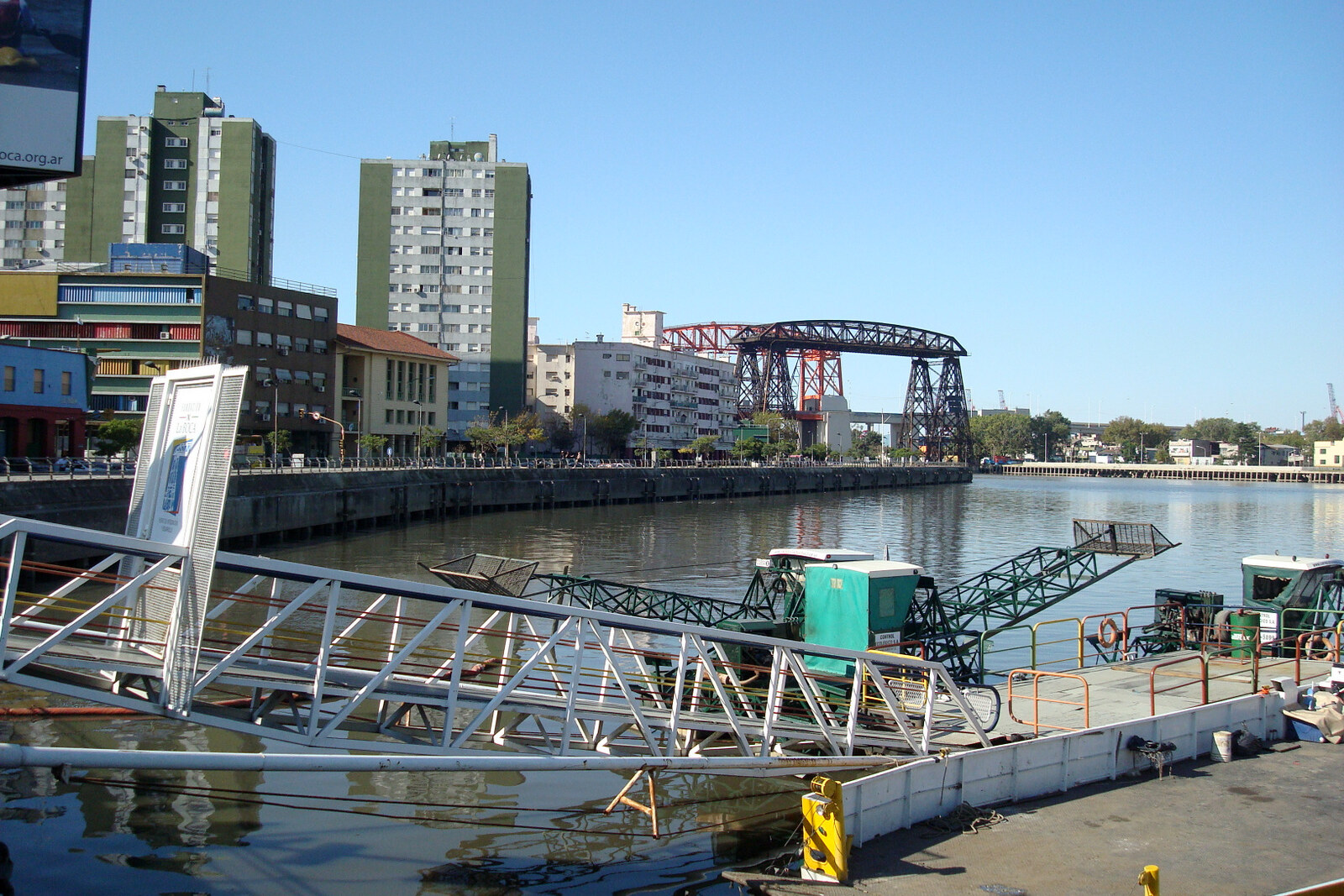
Look around first
What to notice
- Mast
- Naval gun
- Bust of Guillermo Brown
- Old transporter bridge
The story of the place
The sheltered bend of the Riachuelo gave vessels a natural harbor, and on this shore the river route and the work of port workshops came together. Vuelta de Rocha took its name from the merchant and landowner Antonio Rocha, who bought these lands in the seventeenth century. Shipwrights repaired wooden vessels here, while caulkers sealed the seams in their planking. A memorial plaza resembling a deck now stands on the site of that work, with a mast, a gun, and a bust by the water.
The mast, naval gun, and bust of Guillermo Brown appeared on this shore long after the events for which they were placed here. Nothing remains of the workshops where the ships of his squadron were prepared.
Vuelta means bend. Rocha is the surname of the merchant and landowner Antonio Rocha, who acquired these lands in sixteen thirty-five. The sheltered bend of the Riachuelo served as a natural harbor; shipwrights and craftsmen who sealed the seams of wooden hulls worked on the shore.
They were exactly what Guillermo Brown needed in early eighteen fourteen. The Spanish royalists held Montevideo, their ships controlled the waters of the Río de la Plata and supplied the garrison besieged from land. The government in Buenos Aires bought several merchant vessels and tasked Brown with turning them into a combat squadron.
Brown was an Irish captain, earned his living through maritime trade, and sailed here on his own frigate. Now he needed to block the same waterway he had previously used as a merchant. At Vuelta de Rocha, he set up a maestranza—shore-side repair and supply workshops—and called it Arsenal del Riachuelo. Local shipwrights and caulkers repaired the vessels, installed armaments, and prepared them for the campaign.
The first battle off Martín García Island ended unsuccessfully for Brown on March eleventh. Four days later, he returned, landed men on the island, and forced the enemy to retreat upriver. Brown then obtained permission to attack Montevideo. On May seventeenth, his squadron defeated the royalist ships, and on June twenty-third, the city, deprived of supplies by sea, surrendered. The purchased merchant vessels became a fleet only after the work on this shore.
The present memorial plaza was laid out in the middle of the twentieth century in the shape of a ship’s deck. The gun belonged to a frigate Brown commanded in a later war with the Empire of Brazil; it is a commemorative object, not a weapon from the eighteen fourteen campaign.
The plaza has another name as well: Plazoleta de los Suspiros. Local tradition connects it with Genoese settlers: they supposedly came to the shore to wait for letters delivered from across the ocean, while sailors gathered here awaiting news of those who had gone to sea. There are no documents about individual meetings or letters received, so this is indeed a tradition.
The plaza itself appeared in nineteen forty-five, when the former port no longer existed in the form familiar to the settlers. The name “Plazoleta de los Suspiros” was officially established only in two thousand. Of the waiting for letters, neither a pier nor benches have remained here—only an entry on the city map.
Useful on site
Open waterfront; for the route, use the busy side near Caminito and Pedro de Mendoza.
Checked: June 28, 2026. Check the official source before visiting.All the main landmarks are outdoors. It can be noisy and windy by the water, so choose a place where you do not block the way and can clearly see the bend.