 Guide On Map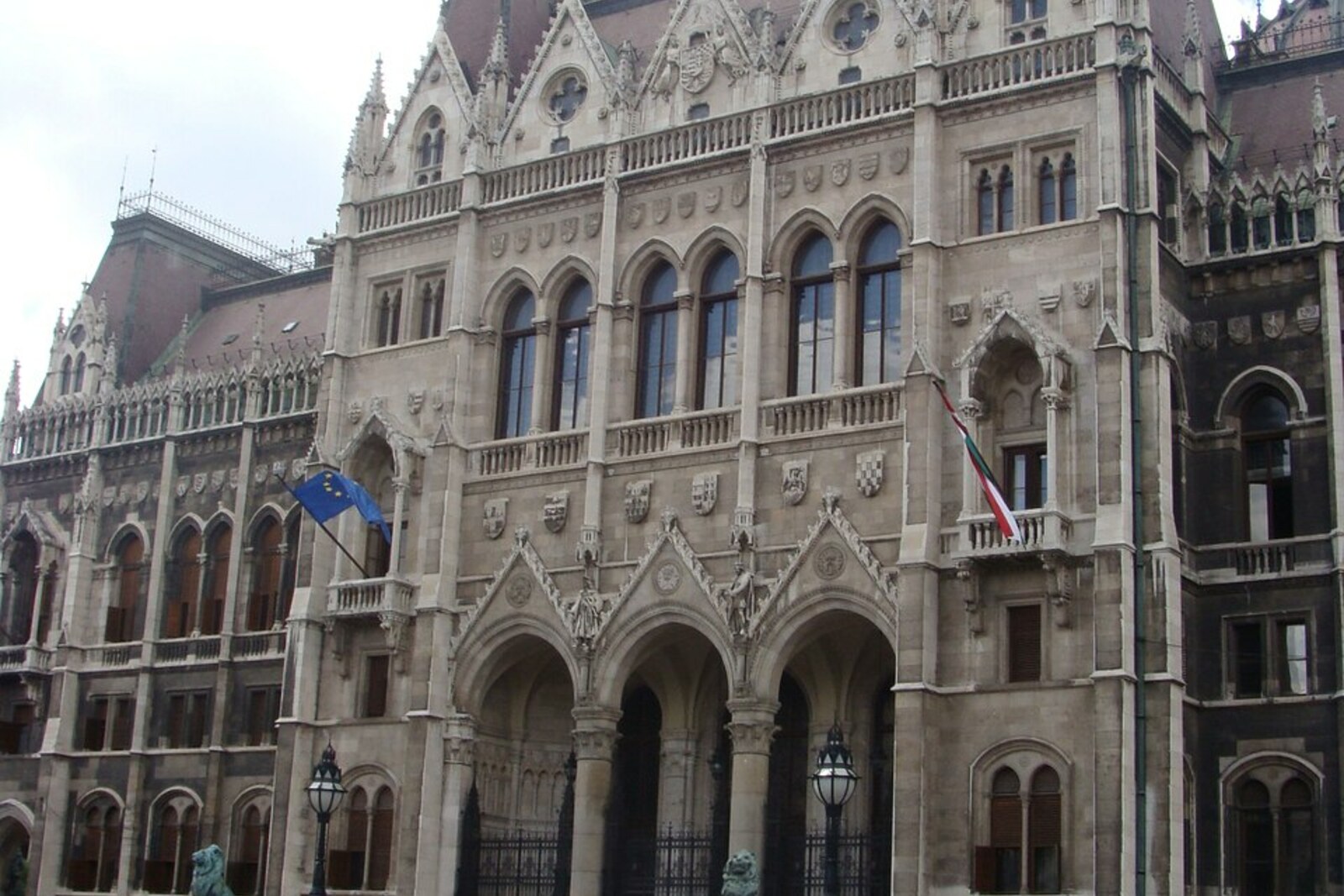
Look around first
What to notice
- The Parliament façade
- The Lajos Kossuth Monument
- Entrance to the underground memorial
- Stone slabs with names
The story of the place
Behind the ornate façade, deputies of the National Assembly of Hungary continue to meet, which is why this square has long served as the city’s political threshold. Above it stands the Lajos Kossuth Monument, honoring the opposition deputy and journalist who demanded a Hungarian government accountable to an elected parliament; the square received his name only after the deputies had settled here. Beneath the southern part of the square, the building’s original ventilation tunnel has been turned into an underground memorial with stone slabs engraved with the names that have been established.
On the morning of October twenty-fifth, nineteen fifty-six, an unarmed column was making its way to Parliament. Two days earlier, a student demonstration had turned into an uprising against the old order. Now people wanted to deliver their demands to Imre Nagy, the reformist prime minister who was seeking a ceasefire and political concessions.
Workers from the outskirts joined the students; they had failed to reach their shifts because transport had stopped. Townspeople walking to work also joined them. Near the Astoria Hotel, demonstrators began talking to the crews of Soviet tanks. Several crews agreed to drive to Parliament alongside the column. Hungarian flags were fastened to the turrets, and people climbed onto the armored vehicles. Word spread through the crowd that the soldiers would no longer shoot.
Thousands of people were already waiting in the square. They chose a delegation that was to enter the building. Many hoped that Imre Nagy would come out to them, although at that time he was at the party headquarters on neighboring Akadémia Street. Parliament’s guards did not let the delegates through, but the demonstrators kept talking to the tank crews and slipped leaflets into their hatches.
Then gunfire began. The precise source of the first shots remained disputed for decades. According to the reconstruction considered most convincing today, the order was given by Zoltán Szalai, a lieutenant colonel in the Hungarian state security service who commanded the border guards sent to protect the government district. His group took up position beside the Hungarian Ministry of Agriculture, opposite the Hungarian Parliament Building, and fired a machine gun at the tanks carrying demonstrators.
The tank crews returned fire at the buildings. Other armored vehicles entering the square from side streets also began shooting. People lay down on the lawn near the Rákóczi Monument and at the tram stop. Fire came from different directions, so survivors’ accounts contradicted one another for a long time.
Sixteen-year-old high school student Tibor Galántai stopped by for a classmate that morning and invited him to the demonstration at Parliament. His classmate’s parents would not let him go, so Tibor went alone. He died here. Researchers have now confirmed the names of ninety-two people killed; the final number remains unknown. About three hundred people were wounded.
News of the shooting spread quickly through Budapest and intensified armed resistance. Zoltán Szalai’s career took a different course: he was rewarded for his service in nineteen fifty-six and later headed the Hungarian prison administration.
People came here precisely because the National Assembly of Hungary met, and still meets, in this building. Until nineteen twenty-seven, the square was called Parliament Square. Then the Lajos Kossuth Monument was erected here, and the city council gave Lajos Kossuth’s name to the entire space.
Kossuth was an opposition deputy and journalist who demanded a Hungarian government accountable to an elected parliament. During the revolution of eighteen forty-eight, he became minister of finance and then led Hungary in its war of independence against the Habsburgs. Kossuth never sat in the present building: he died eight years before the deputies moved here.
The original ventilation tunnel of the Hungarian Parliament Building has survived beneath the southern part of the square. It now contains a memorial to the shooting: three hundred symbolic stone slabs, some engraved with the names that have been established. Nothing on the surface marks the tanks themselves, the firing positions, or the crowd that took cover on the lawn.
Useful on site
The square can be viewed from outside; entry to Parliament is by schedule only, with security screening and possible protocol-related closures.
Checked: June 25, 2026. Check the official source before visiting.The façade and square are accessible for viewing from outside; plan a visit inside separately, taking security screening and possible restrictions into account.