 Guide On Map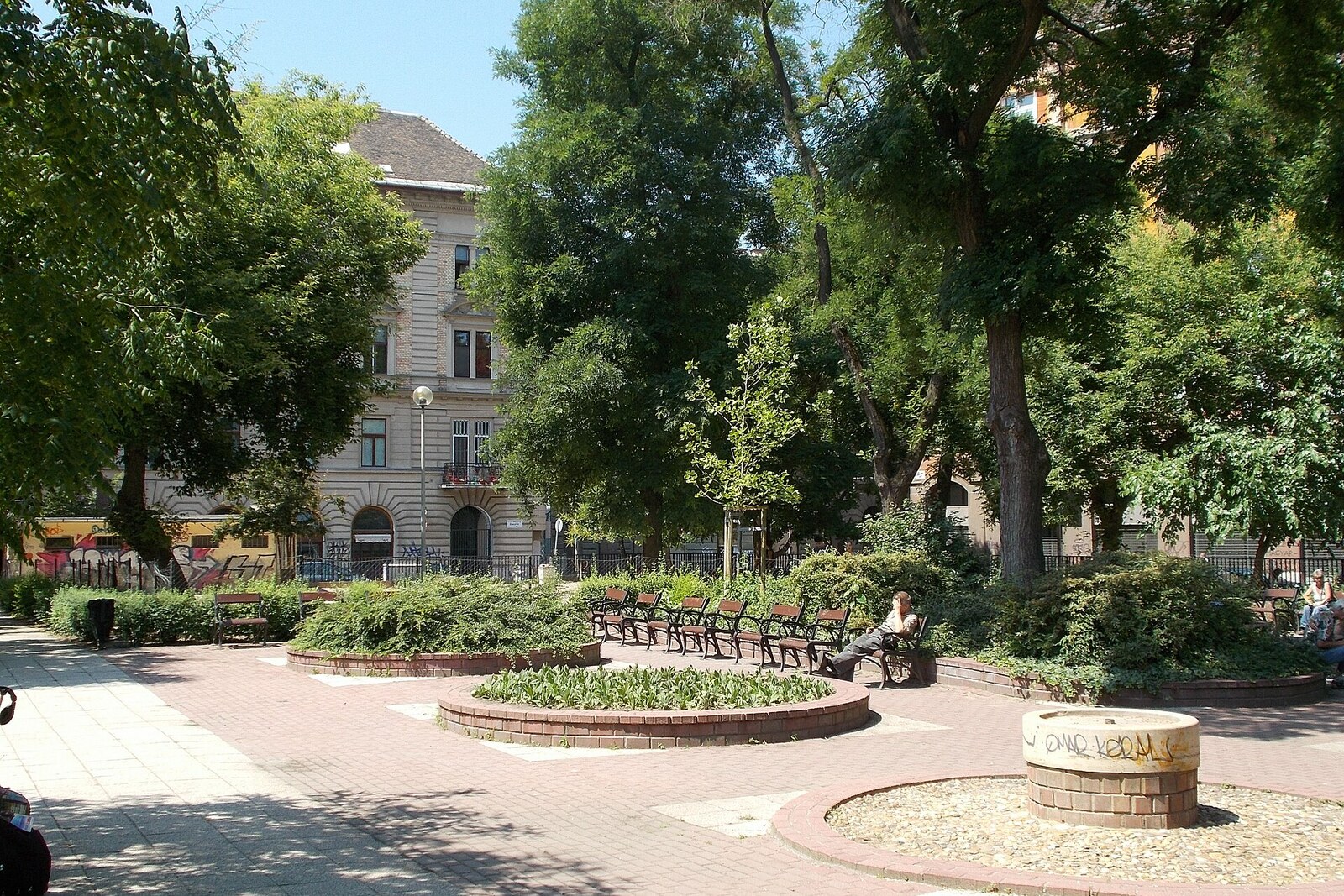
Look around first
What to notice
- Circular memorial disk
- Small bronze plates
- Memorial markers in the pavements of neighboring streets
The story of the place
David Gutman, one of the Budapest Jews who were driven into the closed-off Budapest Ghetto in the winter of nineteen forty-four, arrived at Klauzál Square under guard. New arrivals were brought here before being assigned to houses. At the corner of Nagy Diófa Street, employees of the Jewish Council assigned people to apartments, while fighters from the Hungarian fascist Arrow Cross Party selected valuables.
According to Gutman’s recollection, frozen bodies already lay on the ground. One of the guards told him that the dead had tried to hide their belongings and threatened the same fate to anyone who followed their example. This was how the square acquired its first purpose within the Budapest Ghetto: here, a person was stripped of their remaining possessions and assigned a place in an overcrowded house.
On November twenty-ninth, Interior Minister Gábor Vajna ordered the remaining Jews in Budapest to be gathered in an area of about three tenths of a square kilometer. On December tenth, the passages were blocked off with wooden palisades. More than seventy thousand people were inside. If the entire enclosed area, including streets and courtyards, is divided among them, each person had about four square meters.
At first, the dead were still taken to the cemetery. During the street fighting, that route was closed. Residents piled the bodies in a large concrete reservoir intended for fighting fires and in empty premises around the square. On January eighteenth, nineteen forty-five, about three thousand unburied bodies were found in the Budapest Ghetto—on the streets and here, at Klauzál Square. After Soviet units arrived, some of the dead were temporarily buried in three small mass graves in the square. Later, the remains were exhumed and moved to the Jewish cemetery on Salgótarjáni Street.
The square’s name belongs to another era. In nineteen oh seven, the former István Square was named after Gábor Klauzál, minister of agriculture, industry, and trade in the first Hungarian government accountable to parliament, created during the Revolution of eighteen forty-eight.
In October two thousand twenty-four, the architects Levente Szabó and Balázs Biri installed a circular memorial disk in the center of the square. Its surface covers exactly four square meters and contains three thousand small bronze plates. Another thirty-two markers lie in the pavements of sixteen streets—where the Budapest Ghetto fence once crossed them. The remains from the square were moved to the cemetery; the disk marks the square’s former center, while the strips in the neighboring streets mark the boundaries across which David Gutman was brought here under guard.
Useful on site
Open city square; the memorial elements are accessible from outside, while the market and events operate separately.
Checked: June 28, 2026. Check the official source before visiting.Do not look for a separate monumental sculpture here: the memorial deliberately blends into the everyday square. Look at the markers without obstructing pedestrians or local residents.