 Guide On Map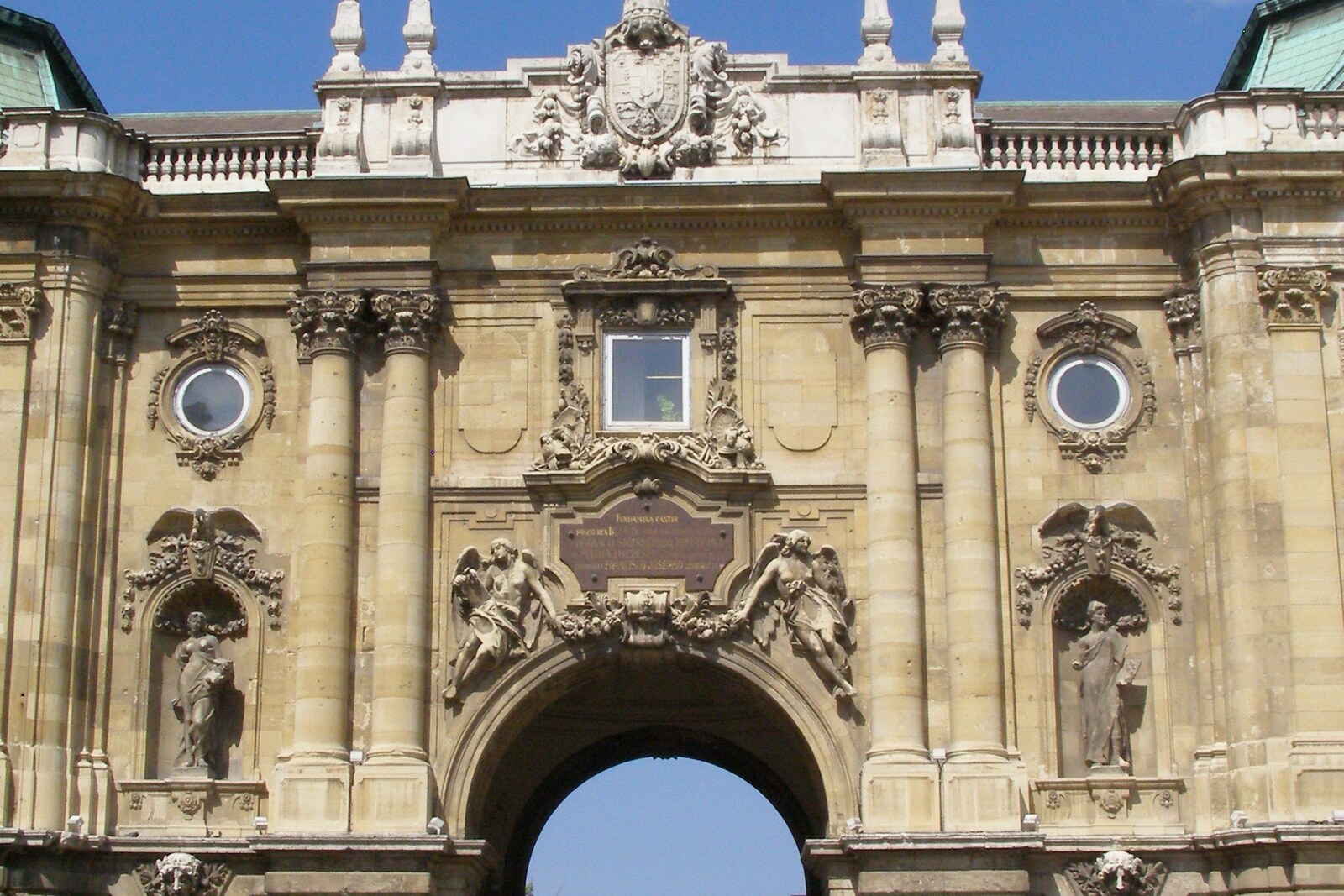
Look around first
What to notice
- The outer pair of lions with raised heads
- The inner pair of lions with open mouths
- The arch of the northern gate
- The enclosed courtyard
The story of the place
The courtyard beyond the northern arch took shape at the end of the nineteenth century, when the old Baroque palace was expanded with a western wing. Four stone lions gave it its name: on the outside, they greet those entering with raised heads, while from the inside they face the courtyard with open mouths. Museums and the National Széchényi Library now operate in the former palace buildings, while the lions by the arch remain in their places.
On the morning of October sixteenth, nineteen forty-four, Miklós Horthy left the palace for the Lion Gate and got into a waiting car. He had lived here for almost a quarter of a century. Hungary formally remained a kingdom without a king, while Regent Horthy performed the duties of head of state; the palace's western wing served as his home and working residence.
Hungary entered the war as an ally of Nazi Germany. In March nineteen forty-four, German troops occupied the country but left Horthy in his post. By autumn, the Red Army had crossed the Hungarian border, and the regent tried to conclude an armistice with the Soviet Union. On October fifteenth, he announced this on the radio and ordered the army to cease hostilities.
The German command had prepared in advance. Even before Horthy's address, Otto Skorzeny's men kidnapped his only surviving son, Miklós Horthy Jr. His son was taken out of Budapest and held hostage. Horthy himself first ordered Károly Lázár, commander of the palace guard, to defend the residence. Carts loaded with bricks were placed in front of the Lion Gate: this arch was the main entrance to the inner courtyard, and blocking it meant cutting off the way to the regent's quarters.
Horthy then rescinded the order to shoot. The German diplomat Edmund Veesenmayer came to the palace and warned that the attack would begin within minutes. The regent agreed to leave with him. The guard officers preparing to defend their chief here saw his car pass through the barricade and disappear beyond the gate.
Skorzeny's column then approached the arch. A heavy tank crushed the carts loaded with bricks, and a second entered directly through the gate into the courtyard. Some defenders at other parts of the palace did not have time to receive the order to cease resistance, but no fighting took place here. The guard was disarmed, and the palace was occupied.
Horthy was forced to abandon the armistice, resign his powers, and appoint Ferenc Szálasi, leader of the fascist Arrow Cross Party, as head of government. After that, the regent and his family were sent under arrest to Germany. His son survived captivity. Horthy himself never returned to this residence, and Hungary continued the war on Germany's side.
The enclosed courtyard appeared at the end of the nineteenth century, when a western residential wing was added to the old Baroque palace. The sculptor János Fadrusz created four stone lions for the northern gate: the outer pair greet those entering with their heads raised, while the inner pair open their mouths toward the courtyard. The courtyard received its name from these figures.
The carts loaded with bricks are long gone. Museums and the National Széchényi Library now occupy the former palace buildings, while the restored lions still sit by the arch. Between them, Horthy left his home for the last time, and a few minutes later a tank passed through the same place, occupying the now-vacant courtyard.
Useful on site
The outer courtyard can be understood as an open space in the palace district; the museums in the buildings keep their own schedules, which must be checked separately.
Checked: June 28, 2026. Check the official source before visiting.View the courtyard from several sides: the differences between the lions and the paving pattern are easier to make out up close. There is no need to enter the museum or library rooms for this stop.