 Guide On Map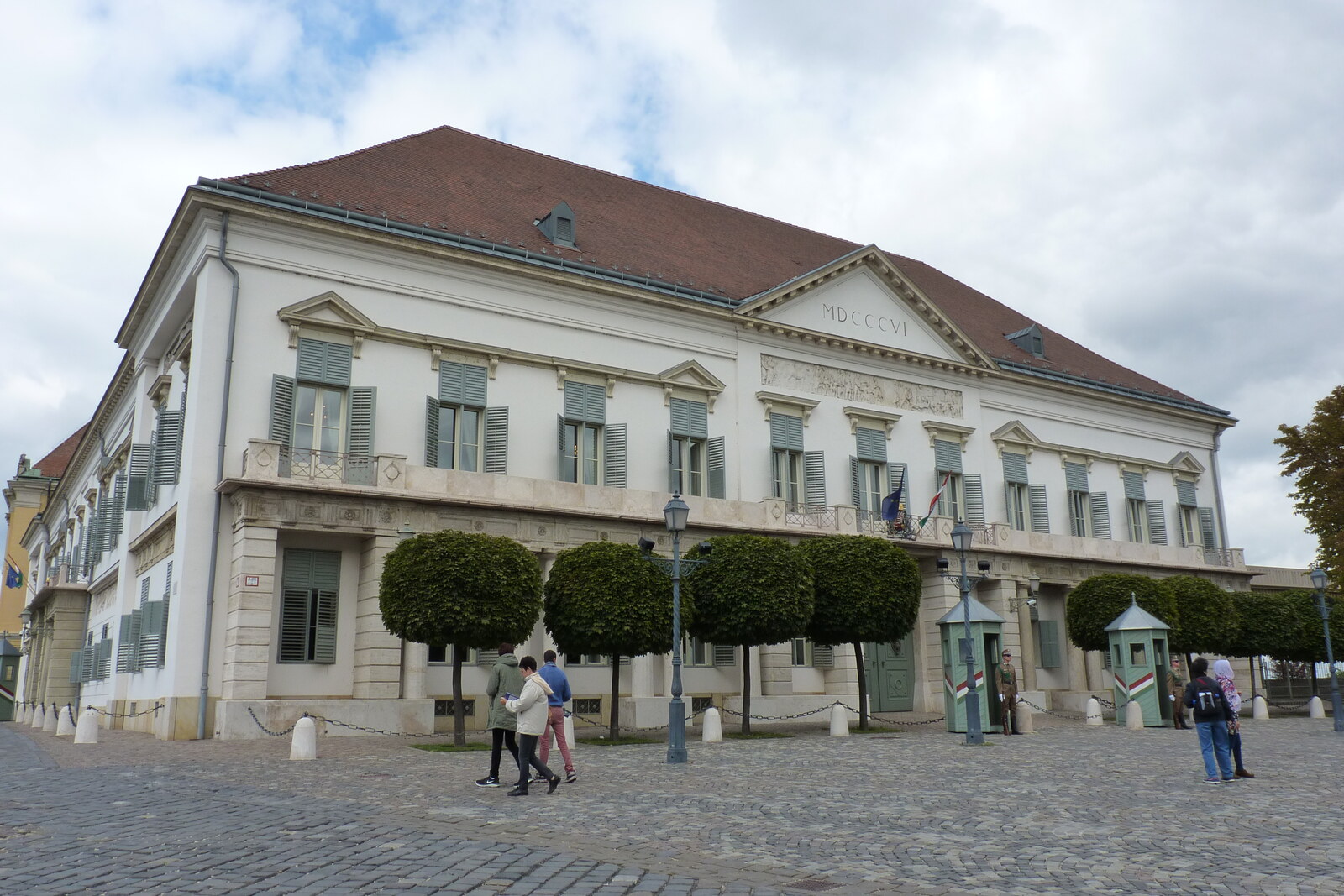
Look around first
What to notice
- The gates of Sándor Palace
- The façade of Sándor Palace
- The open surface of the square
The story of the place
The open space by the gates of Sándor Palace serves as the ceremonial entrance to the presidential office; official delegations are led through it into the palace. There was no such open expanse here in the Middle Ages: two narrow, densely built-up streets ran between the houses. The name came from another part of the fortress, where a chapel and market dedicated to St. George stood. Historians later mistakenly transferred the market's name here, so the chapel that gave the square its name stood somewhere entirely different.
On May twenty-first, eighteen forty-nine, General Heinrich Hentzi took command here of four companies from the imperial garrison. Hungarian soldiers had already climbed Buda's walls and were fighting their way toward the royal palace. Hentzi wanted to drive them back from the square and hold Buda Castle for the Habsburgs.
The sixty-three-year-old general was born in Debrecen, but from the age of twenty he lived for military service. He was a military engineer and knew how to prepare fortifications for defense. The Hungarian government suspected him of treason and kept him under house arrest. When imperial troops occupied Pest, Hentzi himself asked to return to service and was assigned Buda Castle.
At the beginning of the siege, Artúr Görgei, commander of the Hungarian army, asked him to surrender. Görgei promised not to attack from the Pest side and demanded that the city and the not-yet-opened Széchenyi Chain Bridge be spared. Hentzi refused. He expected the bombardment of Pest to force the enemy to lift the siege. Cannonballs and incendiary shells destroyed the row of palaces along the Danube; residents of the central districts fled to nearby villages and set up a temporary camp in the city park.
On the decisive morning, Hentzi came out to the soldiers in St. George's Square and led them toward the advancing Hungarians. A bullet struck him in the stomach. Participants' recollections contradict one another, so the shooter's identity cannot be established. The general was carried to the nearest house, where he died later that same day. By seven in the morning, the fortress's remaining defenders had laid down their weapons.
Three years later, Franz Joseph I erected a sixty-six-foot iron column at the place where Hentzi was mortally wounded. The emperor paid for it himself, awarded the general honors posthumously, and Hentzi's son received a baronial title. A German inscription on the pedestal declared Hentzi and another four hundred eighteen fallen defenders to be martyrs for the emperor and the fatherland. For a time, the square was even called Hentzi Square.
For many Budapest residents, the column glorified a man who had ordered their city to be shelled. It was nicknamed the pillar of shame. In eighteen ninety-five, the journalist Adorján Széles tried to blow up the monument, but the charge did not destroy it.
City councilors succeeded in removing the column. After the murder of Empress Elisabeth in eighteen ninety-eight, they proposed erecting a monument to her here, specifically at this spot. Franz Joseph I accepted the proposal and permitted the Hentzi column to be moved to the enclosed garden of a military academy. It was taken away in eighteen ninety-nine. The Elisabeth monument never appeared on the vacated site. The Hentzi column was later dismantled; its three side figures survive in museum collections.
Today, official guests and delegations are received through the gates of Sándor Palace from this square: the palace houses the office of the president of Hungary. Nothing of the Hentzi monument remains above ground.
St. George, too, acquired this address after a relocation. In the second half of the fourteenth century, King Louis the Great ordered a chapel built in honor of George, an early Christian warrior and martyr; the victory over the dragon belongs to a later legend. The chapel stood farther north, on the site of today's Dís Square, and gave its name to the market around it.
The present square did not yet exist in the Middle Ages: two densely built-up streets ran here. In the eighteenth century, compilers of a historical topography mistakenly transferred the former market's name here. St. George's Chapel stood in Dís Square, while here only someone else's name remained from it.
Useful on site
Open square; access routes and distances to buildings may change because of security, official events, archaeology, and work in the palace district.
Checked: June 28, 2026. Check the official source before visiting.Treat Sándor Palace as an active state residence: keep your distance from security personnel and do not expect unrestricted entry. The entire account works from the square.