 Guide On Map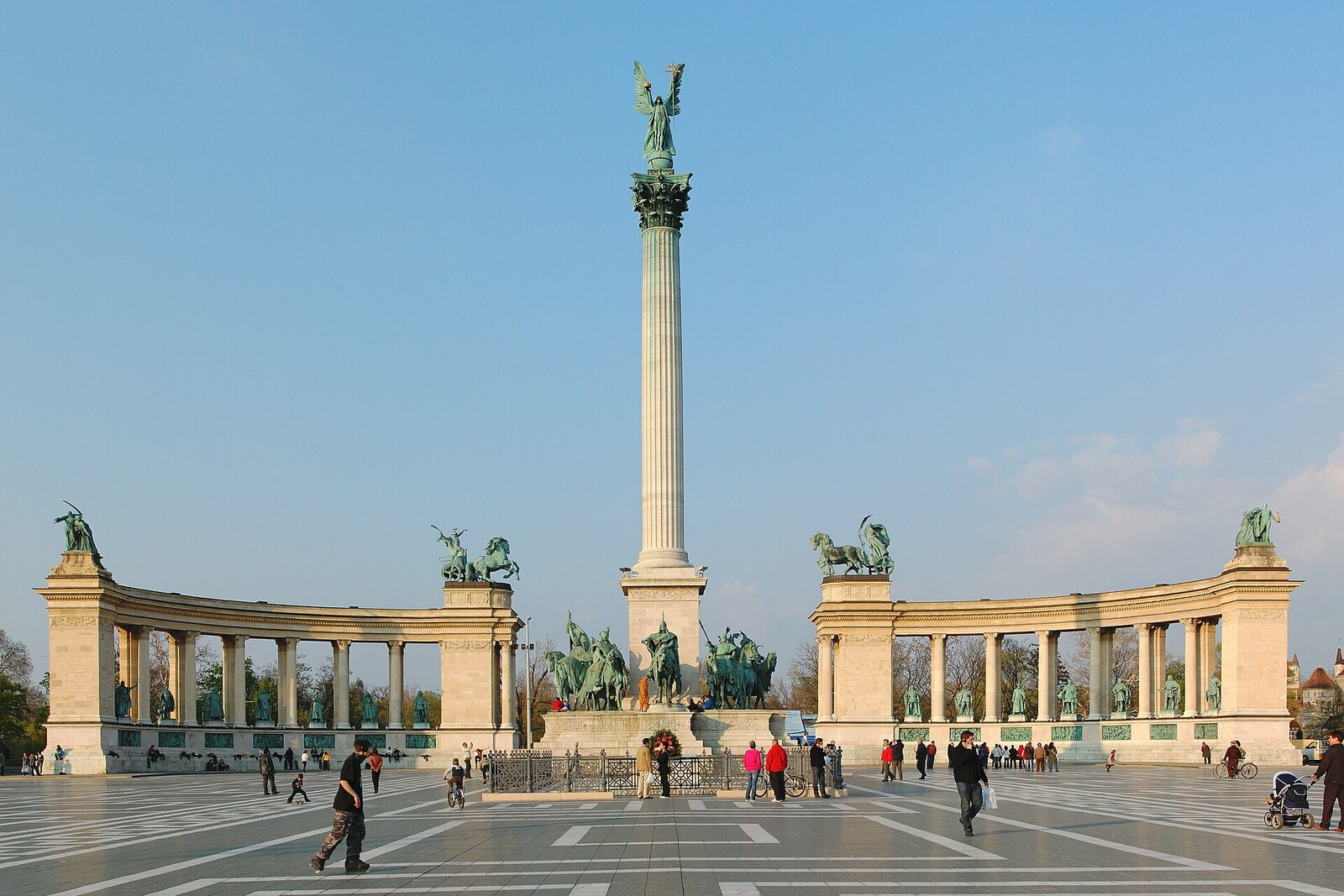
Look around first
What to notice
- Central column
- Bronze figures of rulers
- Stone slab in front of the column
- Kunsthalle Budapest
The story of the place
The central column and the semicircle of bronze rulers gather an enormous stone expanse beside Kunsthalle Budapest. The figures around the column recall the Magyar tribes who arrived in the Carpathian Basin. The square's present name is connected with the symbolic grave of soldiers, although there have never been remains beneath the stone. The lawns in front of the colonnade were removed and the entire space paved so that it could hold citywide ceremonies.
On June sixteenth, nineteen eighty-nine, six coffins stood at the steps of Kunsthalle Budapest. Five held the remains of Imre Nagy and four of his associates. The sixth was left empty—for those executed after the Hungarian Revolution of nineteen fifty-six, whose bodies could not be found and identified. The guard of honor was carried out by relatives of the dead and former political prisoners. About a quarter of a million people filled the square.
Imre Nagy was head of the Hungarian government during the revolution and sought neutrality for the country. When the situation changed, he declared Hungary's withdrawal from the Warsaw Pact and appealed for international protection. The uprising was crushed. Nagy was arrested, secretly tried, and executed on June sixteenth, nineteen fifty-eight.
His family learned of the execution through a newspaper, but they were not shown the grave. The body was first buried in the prison yard, then, two and a half years later, moved at night to the remote Plot 301 of Rákoskeresztúr Cemetery. Nagy was laid face down and entered in the cemetery register under another name.
Thirty years later, former prisoners and the families of those executed formed the Historical Justice Committee. They demanded that the remains be found, that the dead be buried under their real names, and that the sentences passed on them be overturned. In the spring of nineteen eighty-nine, the country's leadership permitted the exhumation and a public funeral. The organizers chose Heroes' Square: the square already served as the main venue for state ceremonies, and the low stone in front of the central column was dedicated to fallen heroes. The space could accommodate an enormous crowd—back in nineteen thirty-eight, the lawns here had been removed and the entire square paved for mass celebrations.
After the ceremony, the five coffins were taken back to Plot 301 and lowered into graves bearing names. Twenty days later, the Supreme Court of Hungary declared the nineteen fifty-eight verdict unlawful and overturned it.
The bronze rulers in the semicircular colonnade belong to the Millennium Monument commemorating the arrival of the Magyar tribes in the Carpathian Basin. The square's name arose for a different reason. In nineteen twenty-nine, a symbolic grave for Hungarian soldiers who had died in the First World War was installed in front of the column. There were no remains beneath the stone. Three years later, the city named the space in front of it Heroes' Square. The war-damaged stone was later removed; the present slab was laid in the spring of nineteen fifty-six and dedicated to all who gave their lives for the freedom of the people and the independence of the country.
The five coffins stood here for one day and then went to the cemetery. The sixth was empty. The memorial stone that gave the square its name also remains empty: no one is buried beneath it.
Useful on site
An open city square at the entrance to City Park; ceremonies, rallies, and festivals may change traffic and viewing points.
Checked: June 28, 2026. Check the official source before visiting.The square is open and has almost no shade; keep away from the roadway and allow time to walk around the monument in full.