 Guide On Map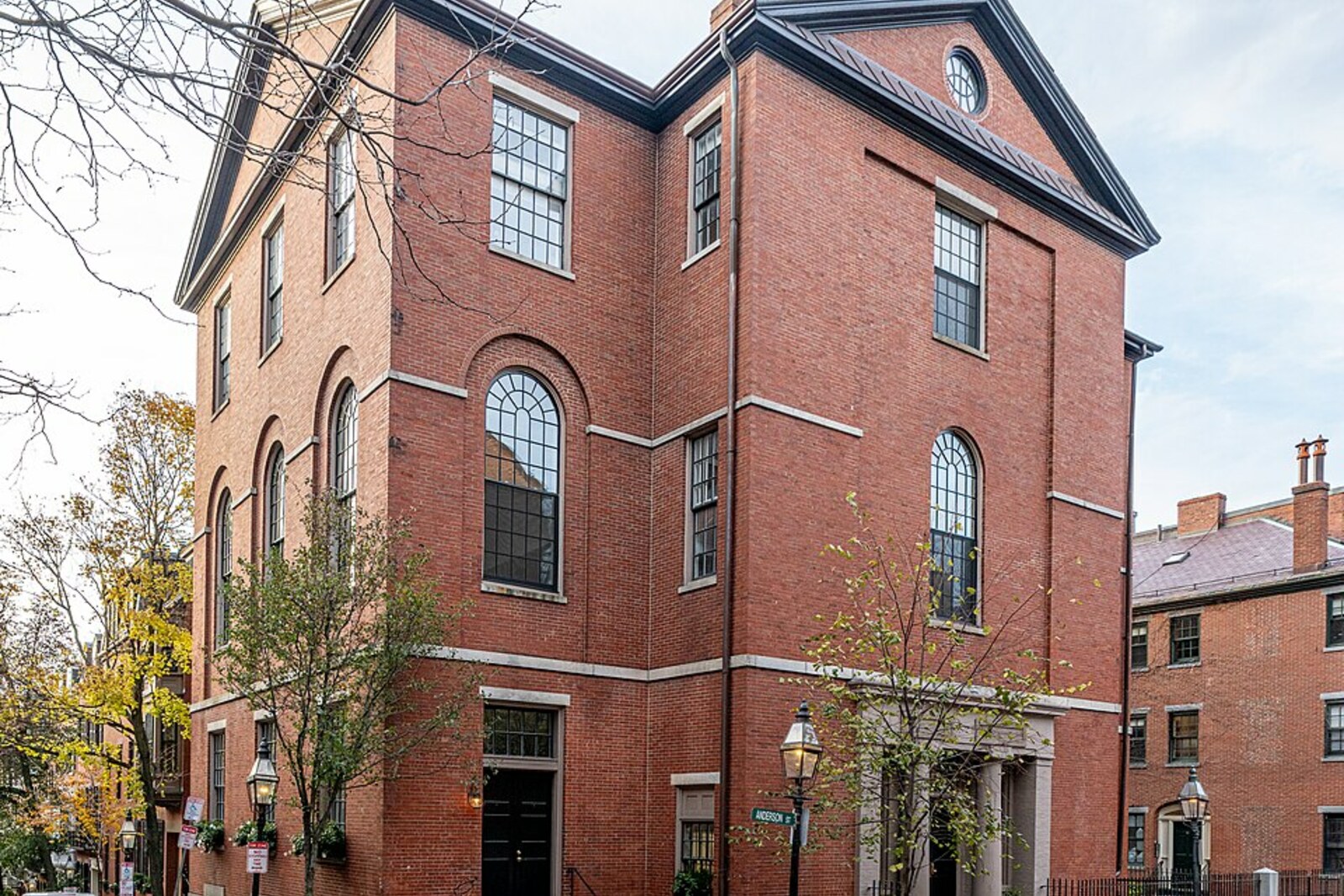
Look around first
What to notice
- Brick facade
- Corner of Pinckney Street and Anderson Street
- Windows of the former classrooms
The story of the place
The brick walls at the corner of Pinckney Street and Anderson Street have survived several school uses. They were erected in eighteen twenty-four for Boston’s English High School, and about two decades later the rooms were transferred to lower grades and named for John Phillips, the city’s first mayor. The windows of the former classrooms now belong to private apartments, so the residents do not allow visitors inside.
On the first school day after school segregation was abolished, fifteen Black children entered this building. Neighbors filled the windows of the houses on Anderson Street, expecting a confrontation. One or two white pupils began to mock the newcomers. Mr. Howie, the school principal, who was to lead the first integrated school day, stopped them with a single question: “Is that how you welcome strangers?” The mockery stopped. All fifteen children were accepted, and the day passed without disorder.
Before that, Phillips School had taught only white children. Black children were sent to the separate Abiel Smith School—overcrowded and noticeably less well resourced. The printer Benjamin Roberts wanted his five-year-old daughter Sarah to study near home. On her way to the school designated for her, the girl had to pass five schools for white children. Roberts asked four times for his daughter to be admitted nearby, and after the refusals, he brought her into the nearest classroom himself. The teacher put Sarah out the door.
Roberts filed a lawsuit on his daughter’s behalf. In eighteen fifty, the court ruled that separation was permissible. The defeat meant that Sarah still did not get a place at the neighborhood school. The Black abolitionist William Cooper Nell, who was advocating integrated education, continued the boycotts and petition drives. Five years later, supporters of equal educational rights secured through the Massachusetts General Court a ban on separating pupils by race. That was when the fifteen children came here, under the eyes watching from the windows.
The name came before this story. The building was erected in eighteen twenty-four for English High School, and twenty years later it was transferred to a grammar school and named for John Phillips, Boston’s first mayor. His son was the abolitionist Wendell Phillips, but the school received the son’s name later, only after moving from here in eighteen sixty-three.
The former classrooms have now been converted into private apartments, and visitors are not allowed inside. At the corner of Pinckney Street and Anderson Street stands that very school building into which fifteen new pupils were admitted in eighteen fifty-five.
Useful on site
Private residence and a site on the Black Heritage Trail; the National Park Service states that the building is not open to the public.
Checked: July 1, 2026. Check the official source before visiting.View the former school from the sidewalk: the historical account does not include access to the modern building.