 Guide On Map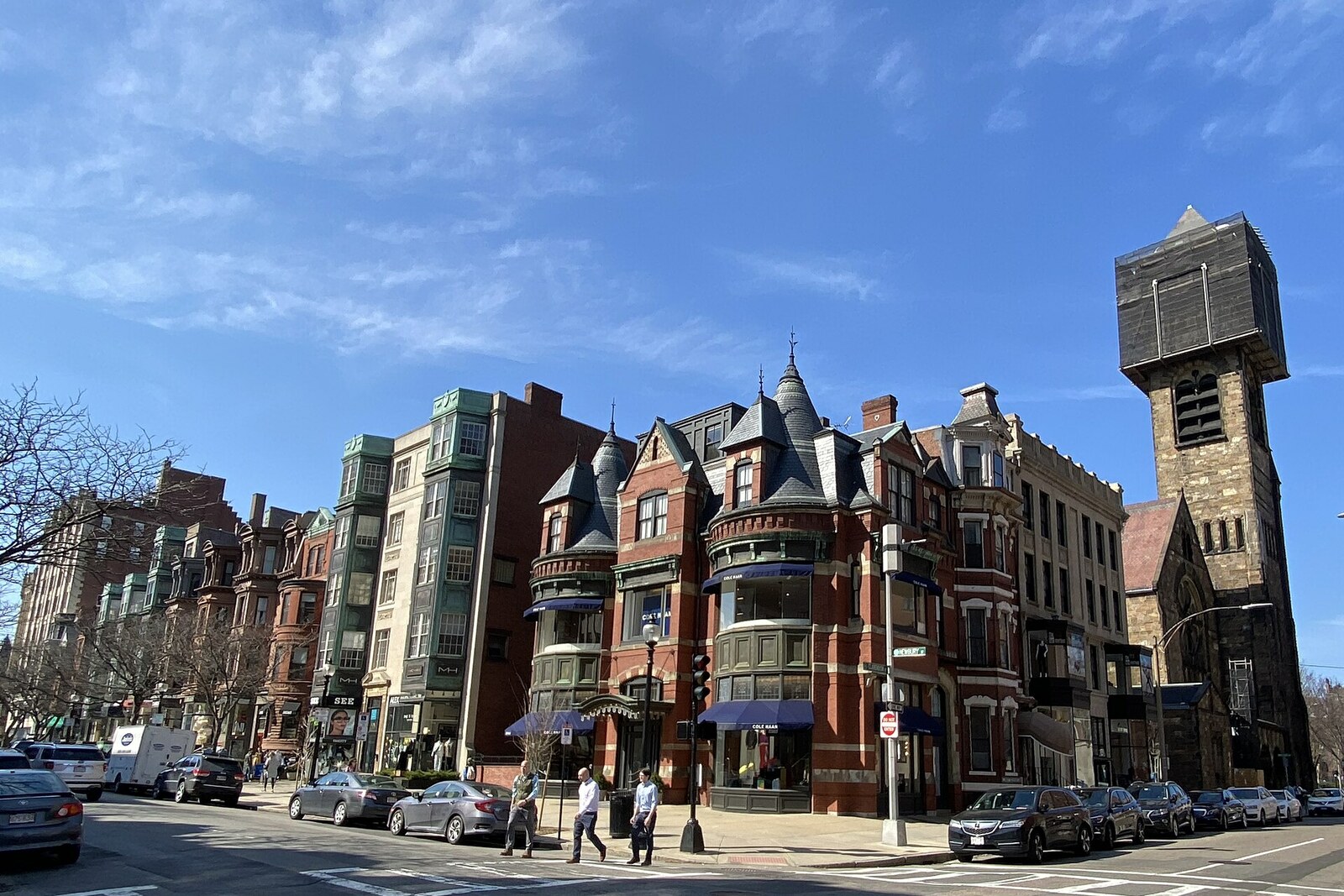
Look around first
What to notice
- Fifteen-story mass
- Main entrance from Newbury Street
- Row of retail facades
The story of the place
Above a row of retail facades rises the fifteen-story hotel that now occupies the first address on Newbury Street. Its structure was fitted with rooms and multi-room apartments, and kitchens were placed on every floor to serve guests upstairs. After a major renovation, guests began entering from Newbury Street, although the entrance had previously faced Arlington Street.
The name Newbury came here from old Boston. In sixteen forty-three, near the English town of Newbury, the Parliamentary army under the command of Robert Devereux, 3rd Earl of Essex, broke through the troops of King Charles I and returned to London. Boston's Puritans remembered this outcome as a victory over the Crown and named a street in the center of their city in its honor. That street later became part of Washington Street, and the old name was transferred to the new Back Bay.
Newbury was developed with residential houses. At its corner with Arlington Street stood five townhouses, until a developer, Edward N. Wyner, bought them in nineteen twenty-five. He intended to build the Mayflower Hotel here and secured an exemption from the height restrictions: the city commission allowed the building to rise to about sixty-one meters.
That permission changed the whole project. The Ritz-Carlton had been considering Boston since nineteen fourteen, but had backed away because of local height rules. When Wyner had already erected a fifteen-story steel frame, the brand's owners agreed to a long-term lease. The project was redesigned to meet their requirements; the added facilities included kitchens on every floor to serve rooms and multi-room apartments.
The hotel opened in nineteen twenty-seven. Wyner tied his whole life to it: he moved inside with his wife and children, managed the staff himself, and walked the floors to check that the established rules were being followed. He did not accept tour groups or conventions, prohibited reservations by telephone, and screened guests in advance. Thus, on the first stretch of Newbury, formerly residential, a hotel appeared that people came to specifically for its carefully guarded respectability. Its opening marked the beginning of the lower blocks' transformation into a district of expensive shops.
Wyner ran the hotel until his death in nineteen sixty-one; three years later, the family sold it. The name The Ritz-Carlton eventually left this place, but the building remained a hotel. After the last major renovation, the main entrance was moved from Arlington Street to Newbury Street. In twenty twenty-one, the hotel opened under the name The Newbury Boston and received the first number on the street whose history it had once changed.
Useful on site
Open street; establishment hours vary.
Checked: June 28, 2026. Check the official source before visiting.The uses of the spaces and the signs change, so do not look for a preserved gallery behind every historic door. It is more convenient to listen where you do not block shop windows and entrances.