 Guide On Map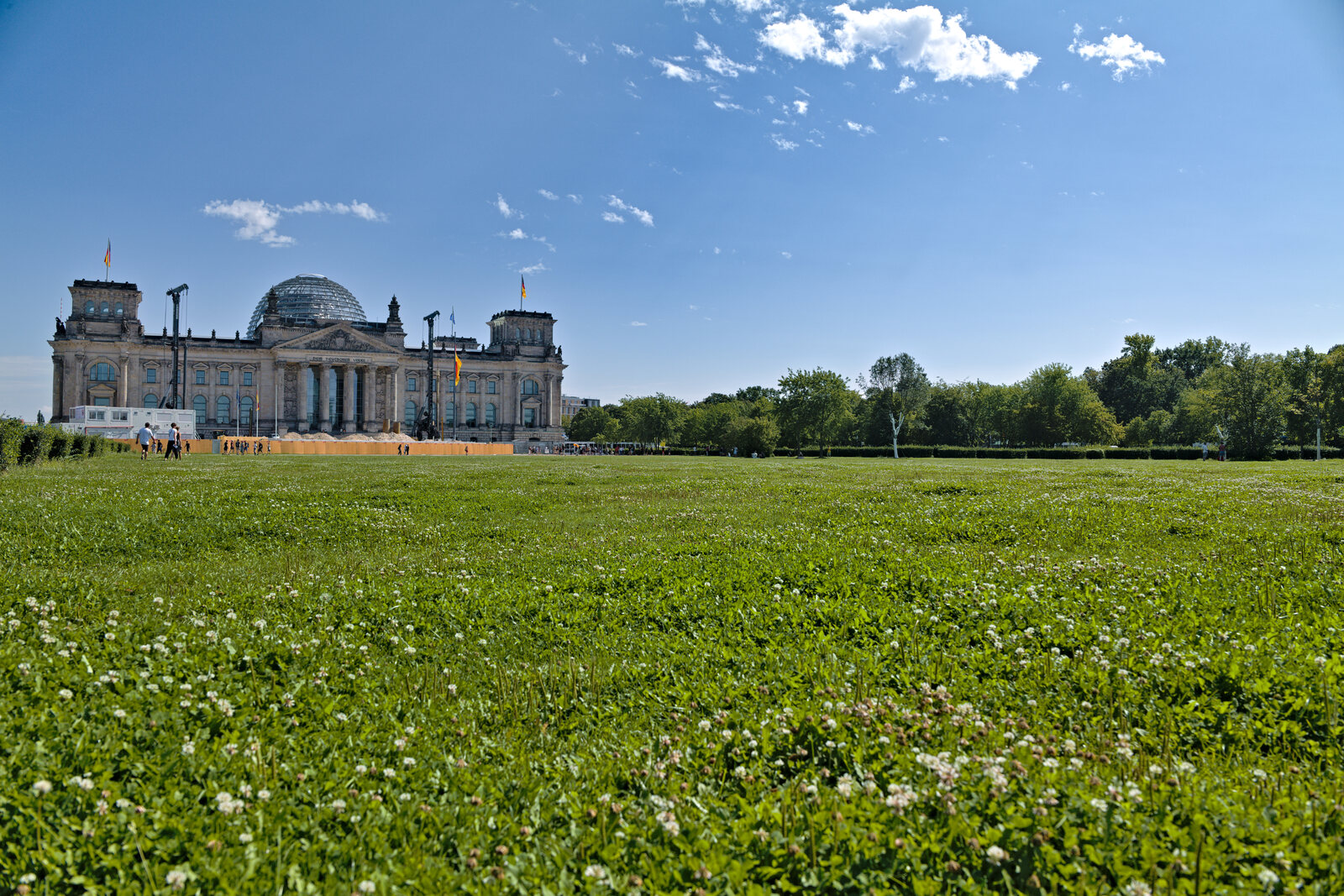
Look around first
What to notice
- The Reichstag's glass dome
- The western facade with its central portico
- The windows above the square
- The “Republic Square” sign
The story of the place
The glass dome rises above the Bundestag's plenary chamber, and the Reichstag's western facade faces the square through its central portico. The first dome was part of the project from the end of the nineteenth century: it was considered an engineering innovation and was intended to bring light into the rooms. After the war, the damaged structure was demolished, and the present one was built during the reconstruction of the building for the parliament that had returned to Berlin. The square in front of the building changed its name several times; district deputies restored its present name only in nineteen forty-eight.
On November ninth, nineteen eighteen, Philipp Scheidemann left lunch in the Reichstag cafeteria and hurried to a window on the western facade. This is how he later described what happened in his memoirs; the details of the lunch and the conversation that followed are known only from his recollections. One thing is certain: at around two in the afternoon, he delivered a speech from here to the people filling the square.
Before entering politics, Scheidemann earned his living as a typesetter and editor for Social Democratic newspapers. By that day, he had already sat in the Reichstag for fifteen years, led the Social Democratic parliamentary group, and had been a state secretary for only a month—one of the first Social Democrats admitted to the imperial government. Now he was about to act without permission from his own party leadership.
Germany was losing the First World War. Food was scarce in the cities, the naval sailors' revolt had spread from Kiel across the country, and a general strike had begun in Berlin. Soldiers were joining the demonstrators. They moved between the Imperial Palace, government offices, and the Reichstag—the parliament of the German Empire.
Emperor Wilhelm II was at military headquarters and would not agree to abdicate. Reich Chancellor Max von Baden, trying to stop the state from falling apart, announced the monarch's abdication himself and handed the chancellorship to Friedrich Ebert. Ebert, chairman of the Social Democrats, wanted to preserve an administratively functioning government and convene an elected Constituent Assembly. The deputies were to decide whether Germany would remain a monarchy or become a republic.
Scheidemann learned that Karl Liebknecht, leader of the revolutionary Spartacus League, intended to proclaim a socialist republic of councils. Liebknecht sought to transfer government to workers' and soldiers' councils, following the model of the Russian Revolution. Scheidemann wanted to get ahead of him and establish a different course—a parliamentary republic with universal elections.
Before the Reichstag, on the square then called Königsplatz, workers and soldiers stood with red banners. Scheidemann stepped up to the window and ended his short improvised speech with the words: “Long live the German Republic!”
The exact text of the speech cannot be established: the surviving versions contradict one another, and Scheidemann made the well-known audio recording several years later. His words themselves had no force of law. But they publicly closed off the choice that Ebert intended to leave to the future assembly. Ebert was furious: a fellow party member had proclaimed a republic without consultation and confronted him with a fait accompli.
Two hours later, Liebknecht nevertheless proclaimed a free socialist republic at the Imperial Palace. The next day, Ebert and Scheidemann joined the provisional government—the Council of the People's Deputies. In December, the congress of representatives of workers' and soldiers' councils supported elections to the Constituent Assembly by an overwhelming majority. The proposal by Liebknecht's supporters for a republic of councils did not receive a majority.
Nationwide elections took place in January nineteen nineteen, with women participating for the first time. The Constituent Assembly met in Weimar because armed clashes continued in Berlin. Ebert became the first president of the republic, and Scheidemann led its first government, which rested on the election results.
In nineteen twenty-six, Berlin's city parliament changed the name “Königsplatz” to “Republic Square.” The National Socialists restored the former name in nineteen thirty-three, and district deputies restored Republic Square in nineteen forty-eight.
Today, the Bundestag meets inside the Reichstag Building, the building's address is Republic Square, number one, and Scheidemannstraße runs along the southern facade. Official memory links Scheidemann's speech to the second window north of the central portico. There is no authentic photograph of the speech, so the window marks the place to which the surviving account was later attached.
Useful on site
The square is accessible from outside; the Reichstag dome and terrace require advance registration and depend on current closures or access granted by the Bundestag.
Checked: June 28, 2026. Check the official source before visiting.The account is designed for viewing from the square. Visiting the building and dome requires separate preparation and is not part of the mandatory stop.