 Guide On Map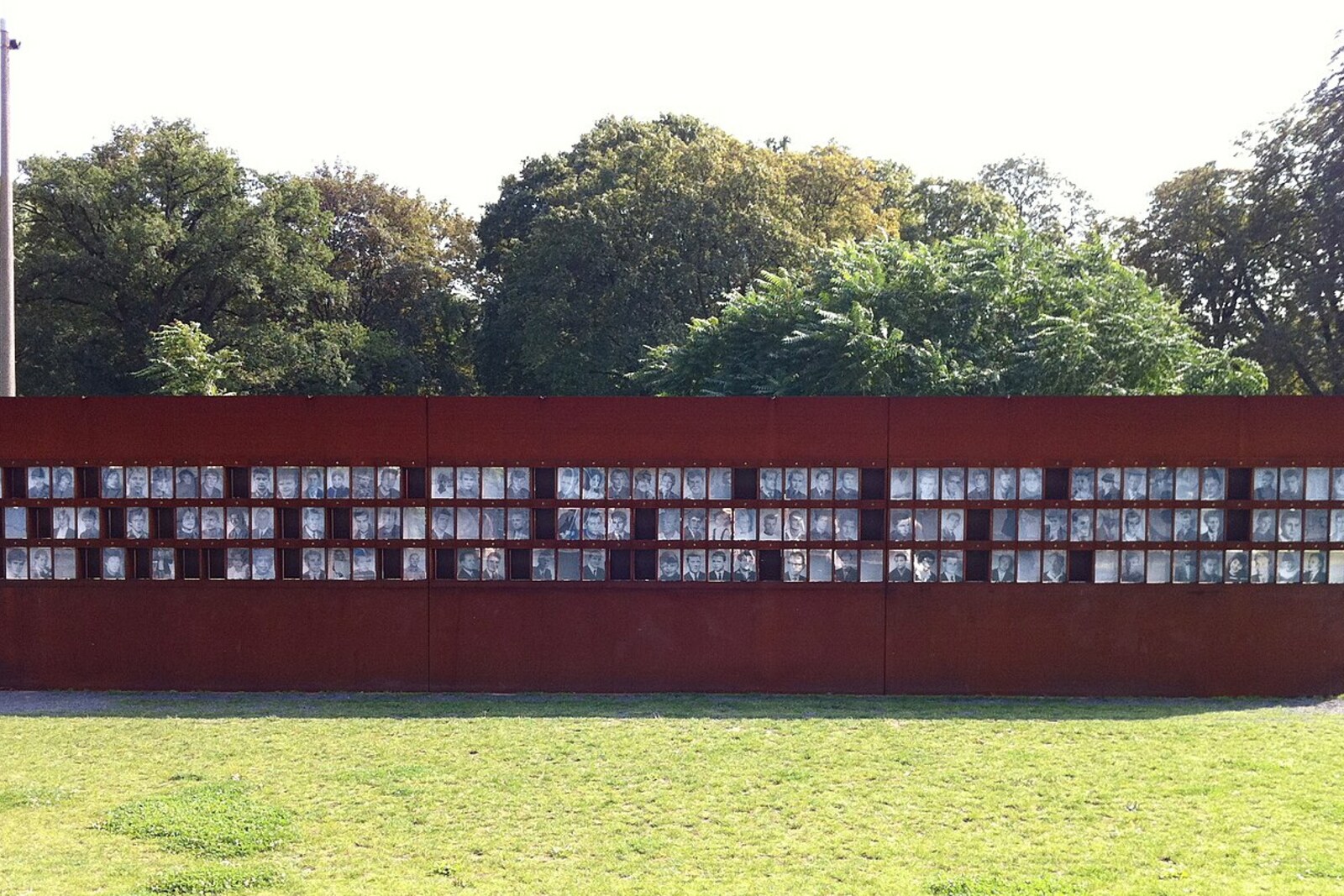
Look around first
What to notice
- Rammed-earth wall
- Carved altarpiece
- Slab of reddish sandstone
- Wooden bell tower with three bells
The story of the place
The layout of the former church can still be read: the chapel stands where its altar choir once was, and the lines of the vanished hall are marked outside. In the small room, designed for about one hundred people, an inner wall of rammed earth was built. The carved altarpiece was returned to its former place, an old reddish slab lies beneath the earth altar, and the three bells were moved to a wooden bell tower. On weekdays, biographies of people killed at the Berlin Wall are read here.
The word “Reconciliation” appeared at this site long before the Berlin Wall. When the former church was consecrated in eighteen ninety-four, the German empress Augusta Victoria chose for it a line from the Second Epistle to the Corinthians: “God in Christ reconciled the world to himself.” From this verse, the congregation received the name that later passed to the chapel.
After the Berlin Wall was built, the parishioners lost access to their church, and in nineteen eighty-five it was blown up. When the site was returned to the congregation ten years later, the documents stipulated that the land must once again serve worship.
Pastor Manfred Fischer worked to bring the parish back to this very site. He had served the congregation since the mid-nineteen seventies and wanted to restore church life where the lost church had stood, without replacing what was lost with a newly made replica. The parishioners commissioned architects to design a small chapel, but they rejected the first proposal, made of concrete and glass. After lengthy discussions, they chose wood and rammed earth—materials that could incorporate the remains of the destroyed church.
In the summer of nineteen ninety-nine, the Austrian master of rammed-earth construction Martin Rauch began building the inner wall. Volunteers from countries in Eastern and Western Europe helped him. They worked in teams of eight: laying the wet mixture into formwork in twelve-inch layers and compacting each layer to about three inches. Crushed bricks excavated from beneath the foundation of the former church were added to the mixture. For the participants, it was hard manual labor, on which depended whether the twenty-three-foot load-bearing wall could support its own weight.
By the fourth Sunday of Advent, the congregation had already begun holding services in the still unfinished chapel. On November ninth, two thousand, the anniversary of the opening of the border, it was consecrated. The parishioners returned to their former place of worship, and Manfred Fischer received the church he had fought for: a small one, designed for about one hundred people, within the outline of the vanished church.
The chapel occupies the site of its former altar choir; the outline of the rest of the building is marked outside. The surviving carved altarpiece hangs in the same place where it stood before the demolition. An old slab of reddish sandstone was set into the floor beneath the new earth altar, and three bells from eighteen ninety-four stand in a separate wooden bell tower.
Since nineteen oh five, at noon on weekdays from Tuesday through Friday, a biography is read here of one person killed at the Berlin Wall. The book containing these life stories is kept in the altar. The reader speaks the name before the old altarpiece, inside the wall into which parishioners and volunteers rammed the bricks of the blown-up church.
Useful on site
The chapel interior and memorial prayers depend on the current schedule; the outdoor part of the memorial is accessible 08:00-22:00.
Checked: June 28, 2026. Check the official source before visiting.This is an active and intimate place, so speak quietly inside and be mindful of possible services. When the doors are closed, the main traces of its history remain visible outside.