 Guide On Map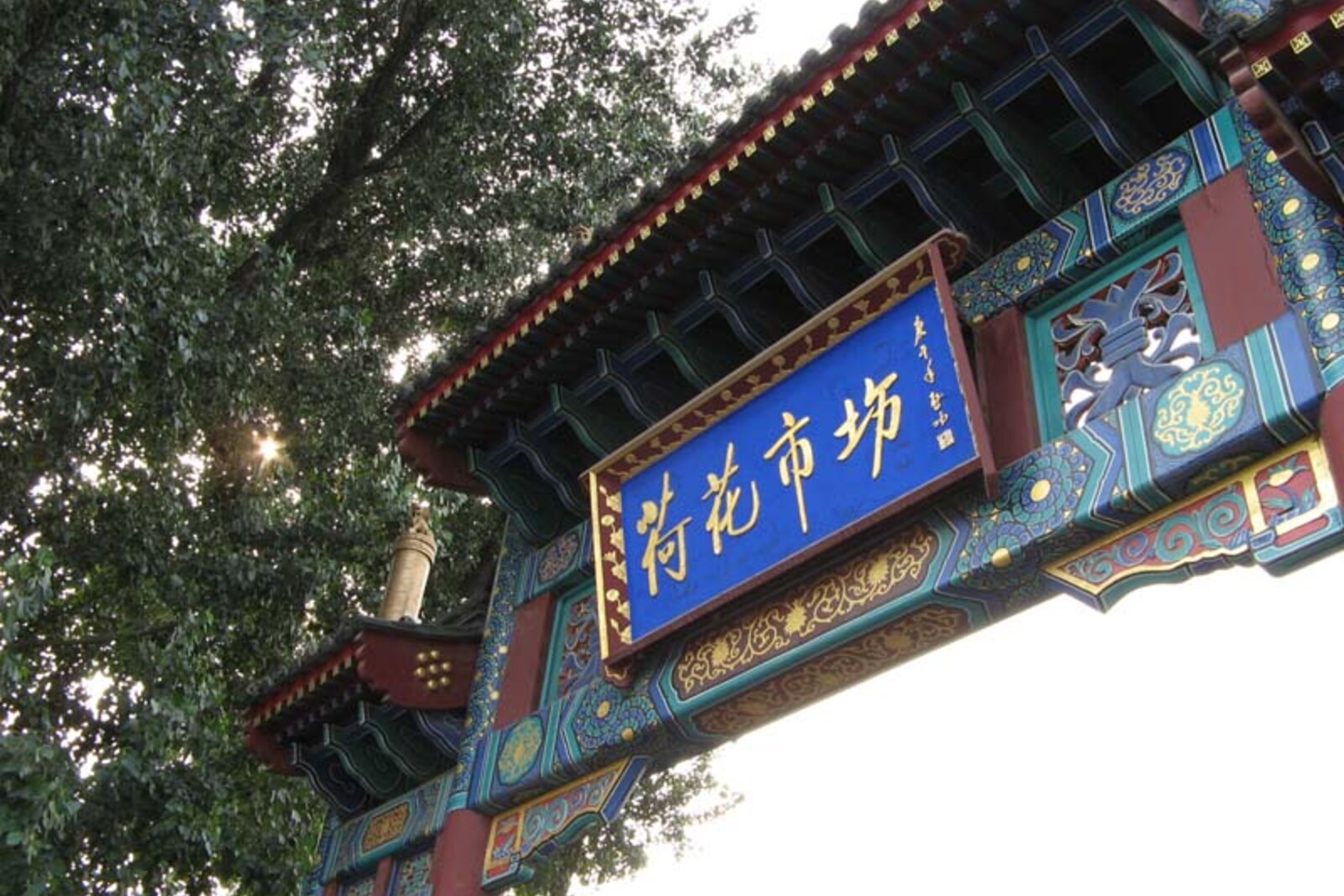
Look around first
What to notice
- Entrance arch
- Shopping rows
- Waterfront restaurants
- Boat piers
The story of the place
A table by the water cost more than a place on shore. Piles driven into the lakebed along the edges of the causeway on the western side of Front Lake supported a boardwalk, while a passage remained down the middle. Food was sold on the southern side, while teahouses operated in the north, and storytellers, acrobats, and magicians performed there. Restaurants and shops now occupy the shore, with boat piers operating nearby, and all that remains of the old market is its name.
In eighteen seventy-four, traders at Shichahai lost their summer income because of the death of the Tongzhi Emperor. Officials of the Imperial Gardens Administration were responsible for this body of water and enforced court mourning. They prohibited the setting up of shelters on the shore and the sale of tea. The traders were removed, and the summer outing declined.
By then, there was already something here to prohibit. Under the Tongzhi Emperor, more and more city residents came to Front Lake to look at the lotuses. Traders set up tea tables for them, then invited storytellers and performers. These people earned money only when visitors lingered by the water, so the tea spot gradually acquired food, performances, and small-scale trade.
They managed to return more than forty years later. In nineteen sixteen, local merchants and influential residents asked the city administration to legalize the spontaneous summer market. Officials assigned the market a long causeway in the western part of Front Lake and set its season from the first day of the fifth lunar month to the fifteenth day of the seventh. The traders received permanent rules and could once again count on revenue for several summer months.
The causeway explained how the market was arranged. A passage was left down the middle, while on either side piles were driven into the water, linked with crossbeams, and covered with boards. Most of the tea shelters stood over the lake. Such places were called “water seats” and cost more. Food sellers occupied the southern half of the causeway, while teahouses, storytellers, acrobats, and magicians occupied the northern half. No admission was charged: one trader brought customers to another.
The season coincided with the blooming of lotuses, hence the name. It also referred to the goods. Traders' families sold fresh lotus rhizomes, seedpods, water chestnuts, and peeled seeds of the euryale water plant, gathered at Shichahai or brought from Beijing's western outskirts. The products were kept in wooden tubs of water and served separately or added to cold bowls and rice porridge. City residents came to see the flowers, while the sellers turned what was grown in the lake into their brief seasonal income.
The old market ended in nineteen fifty-one. In nineteen ninety, park managers reopened Lotus Market as a permanent shopping street, and the calligrapher Qi Gong wrote its name for the entrance arch. Shops and restaurants now line the western shore, and boat piers operate nearby. The shelters on piles, the summer division of the causeway, and the sellers of the lake's harvest are no longer here; above the permanent street remains the name of the market that was once dismantled by the fifteenth day of the seventh month.
Useful on site
The waterfront is open for passage, with free entry; the hours of cafes, shops, and boat piers change seasonally.
Checked: June 28, 2026. Check the official source before visiting.Do not expect to see the historic seasonal market in its former form: today, the shore itself and the surviving habit of relaxing by the water matter more. For a break, choose a spot outside the main pedestrian flow.