 Guide On Map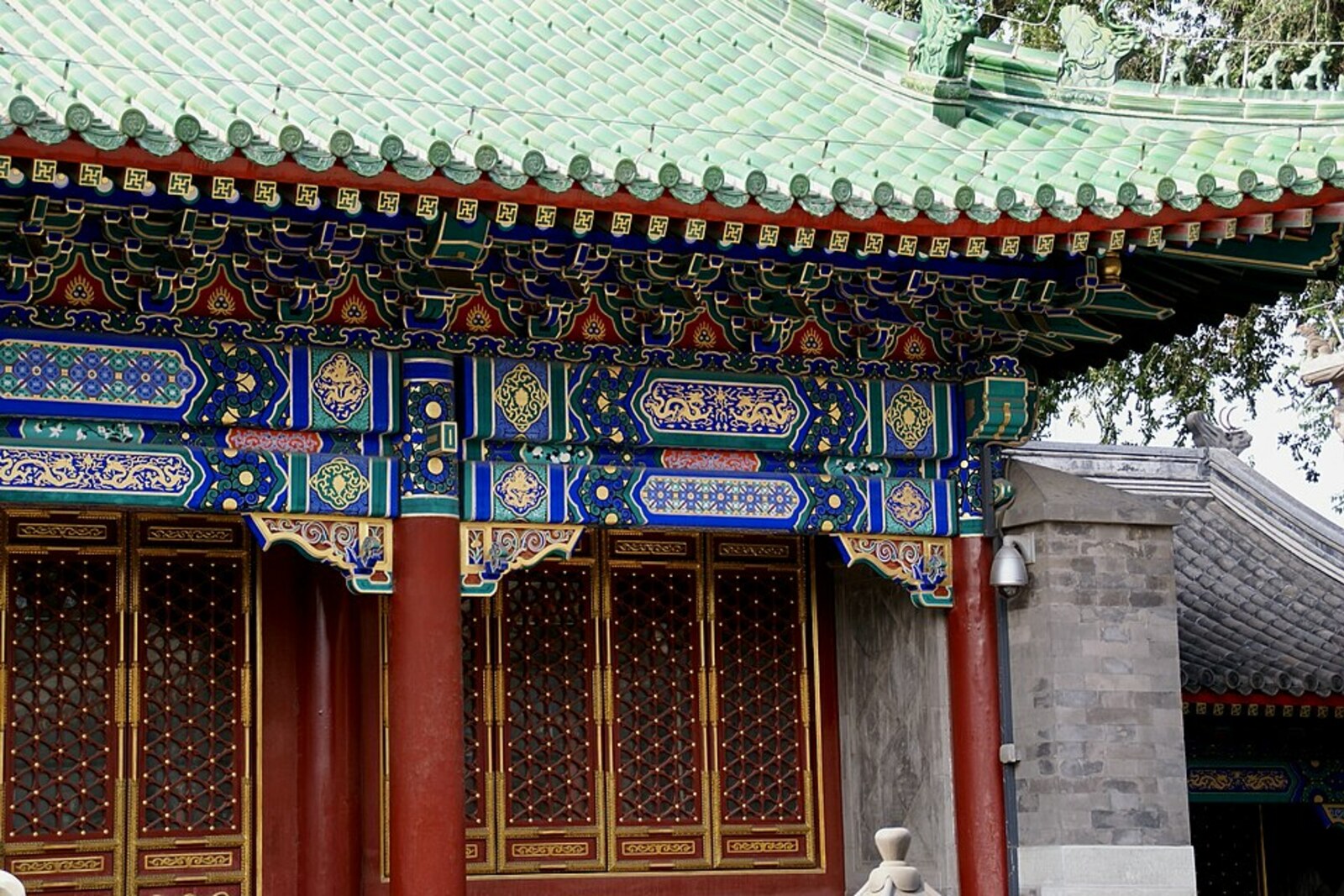
Look around first
What to notice
- Xijinzhai Hall
- Nanmu decoration
- The hall doors
- The inscription above the entrance gate
The story of the place
Beyond the entrance gates lies an urban estate that was once confiscated and then prepared for an emperor's daughter and her husband. Later, an emperor's younger brother moved here; his princely title remained in the house's name. For almost three decades, the empire's most important foreign and military affairs were directed from here. When the owner was removed from service, the estate became the place of his ten years of enforced seclusion.
In the western part of the estate stands Xijinzhai, a hall decorated with nanmu, an expensive southern timber. It was designed after the Palace of Tranquil Longevity, the Qianlong Emperor's palace complex in the Forbidden City. In Qing Beijing, the size of halls, the shape of doors, roof tiles, and patterns on beams depended on the owner's rank. An official was not permitted to reproduce imperial quarters. In seventeen ninety-nine, this interior was included in the list of crimes of the man who had commissioned it.
The official's name was Heshen. He owed his career to the Qianlong Emperor's personal favor: he oversaw the treasury, tax collection, and appointments, holding several top posts at once. Along with a salary, these offices brought opportunities to take bribes and amass private wealth.
In seventeen eighty, the Qianlong Emperor betrothed his favorite six-year-old daughter, Princess Hexiao, to Heshen's son Fengshen Yinde. A month later, the emperor gave Heshen a confiscated urban estate and ordered him to prepare a home here for the future married couple. Construction took at least four years. Heshen added a nanmu hall, doors in a form forbidden to officials, bronze lanterns, and other details reserved for people of higher rank.
Fifteen-year-old Princess Hexiao moved here after her wedding in January seventeen ninety. Six days later, the Qianlong Emperor came to visit his daughter. This visit showed what the whole family's position rested on: Heshen served the emperor he favored, his son had become the emperor's son-in-law, and the estate was officially considered the princess's home.
In seventeen ninety-six, the Qianlong Emperor handed the throne to his son, the Jiaqing Emperor, but continued to handle state affairs himself. Heshen kept his posts. Everything changed after the Qianlong Emperor's death in February seventeen ninety-nine. The Jiaqing Emperor began to rule independently and, a few days later, had his father's favorite imprisoned.
The emperor listed twenty accusations against Heshen. The thirteenth item was the excessive luxury of the nanmu hall, which replicated imperial premises. Heshen's property was inventoried and confiscated, and the official himself was forced to commit suicide. Princess Hexiao was ordered to leave the estate. Her husband lost his lucrative posts and was instructed to remain at home.
The present name appeared half a century later. The Xianfeng Emperor gave the estate to his younger brother, Prince Gong (Yixin), the sixth son of the previous Daoguang Emperor. “Gong” was his princely title, not his personal name. In eighteen fifty-two, Prince Gong (Yixin) moved here, and the house came to be called Prince Gong's Mansion.
For almost three decades, Prince Gong (Yixin) directed the empire's most important foreign and military affairs. In eighteen eighty-four, Empress Dowager Cixi removed him from all his posts, stopped paying his double princely allowance, and ordered him to “receive treatment at home.” This estate was his home: Prince Gong (Yixin) spent ten years here in enforced seclusion. In eighteen ninety-four, he was returned to service during the war with Japan; four years later, he died.
The name above the gate remains from Prince Gong (Yixin). In the western part of the museum, Xijinzhai still stands—the hall that was once listed as a separate item among the accusations against Heshen.
Useful on site
Open 08:30–17:00, last entry at 16:10; closed on Mondays, except public holidays.
Checked: June 28, 2026. Check the official source before visiting.This is a large site in its own right, so arrange access and entry separately, and do not leave your visit until the final minutes of the day. If you cannot get inside, finish the story at the outer perimeter rather than trying to view the garden through closed sections.