 Guide On Map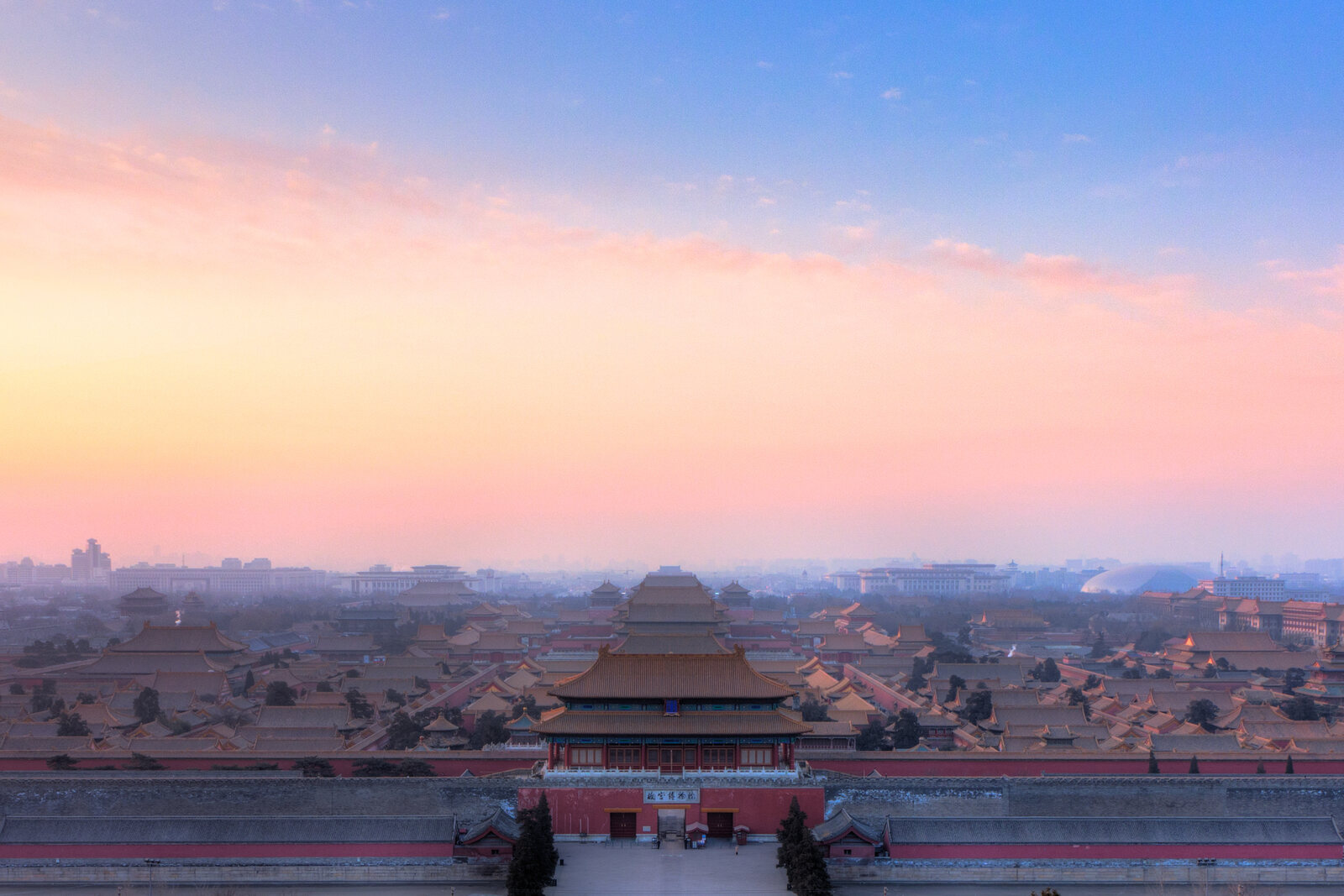
Look around first
What to notice
- Gate of Divine Prowess opposite the park’s southern gates
- Eastern slope of the hill
- Chinese scholartree
- Commemorative stele
The story of the place
Above the northern part of the former palace rises an artificial hill, heaped in the early fifteenth century from soil excavated while laying out the moats and waterways of the palace complex. In the enclosed Imperial Garden, it was the last elevation beyond the residential quarters. Now, from the southern gates, the Gate of Divine Prowess—the northern palace gate—is visible across the road: the street appeared later, when the garden became a city park. On the eastern slope stand a Chinese scholartree and a commemorative stele, although the former tree died long ago and the present one was planted much later.
At dawn on April twenty-fifth, sixteen forty-four, Chongzhen, the last Ming emperor, left the Forbidden City through its northern gate. His personal name was Zhu Youjian. Li Zicheng’s army was already entering Beijing. Li Zicheng led a peasant uprising, had declared his own Shun dynasty, and was seeking the imperial throne. Before leaving, Chongzhen struck the palace gong used to summon officials. No one came.
Wang Chengen remained beside him—an eunuch, that is, a castrated servant of the inner quarters who received a stipend for palace service. He accompanied the emperor to a hill then called Wansui Hill—the Hill of Longevity—and, in everyday speech, Meishan (Coal Hill).
The hill stood inside the enclosed Imperial Garden. In the early fifteenth century, builders heaped it from earth excavated while laying out the palace moat and canals. Chongzhen came directly here through the northern gate: beyond the residential quarters, it was the last elevated part of the palace grounds.
On the eastern slope, the emperor hanged himself from a tree. Wang Chengen took his own life nearby. A later compiled official history reports that Chongzhen removed his imperial cap, covered his face with his loosened hair, and left on his white robe a request not to harm the city’s inhabitants. He permitted his body to be cut into pieces.
Chongzhen’s death ended Ming rule in Beijing. Li Zicheng occupied the palace but held the capital for less than six weeks: combined forces of a Ming commander and a Manchu army forced him to leave. Li died the following year.
At the southeastern slope stand a Chinese scholartree and a commemorative stele. Tradition links this very place with Chongzhen’s death. Under the Qing dynasty, the tree was named the Guilty Chinese Scholartree and, according to legend, bound with an iron chain. Documents confirm the emperor’s suicide on a tree of Coal Hill, but do not make it possible to identify the specific trunk. The old Chinese scholartree died; the present tree was transplanted here much later.
In nineteen twenty-eight, the former Imperial Garden was opened to townspeople, and a new street separated it from the Forbidden City. That is why the park’s southern gates now stand opposite the Gate of Divine Prowess, the palace’s northern gates. A road runs between them; on the morning of Chongzhen’s death, the entire route to the eastern slope remained inside the imperial enclosure.
Useful on site
Jingshan Park: 06:00–21:00 from 1 April to 31 October, last entry 20:30; 06:30–20:00 from 1 November to 31 March, last entry 19:30. The official guide advises foreign visitors to book entry by phone at least a day in advance.
Checked: June 28, 2026. Check the official source before visiting.The park requires separate admission. The climb is short but uphill; at the viewing platform, wait for an open spot by the railing, and in haze look for the line of the axis through the nearest roofs.