 Guide On Map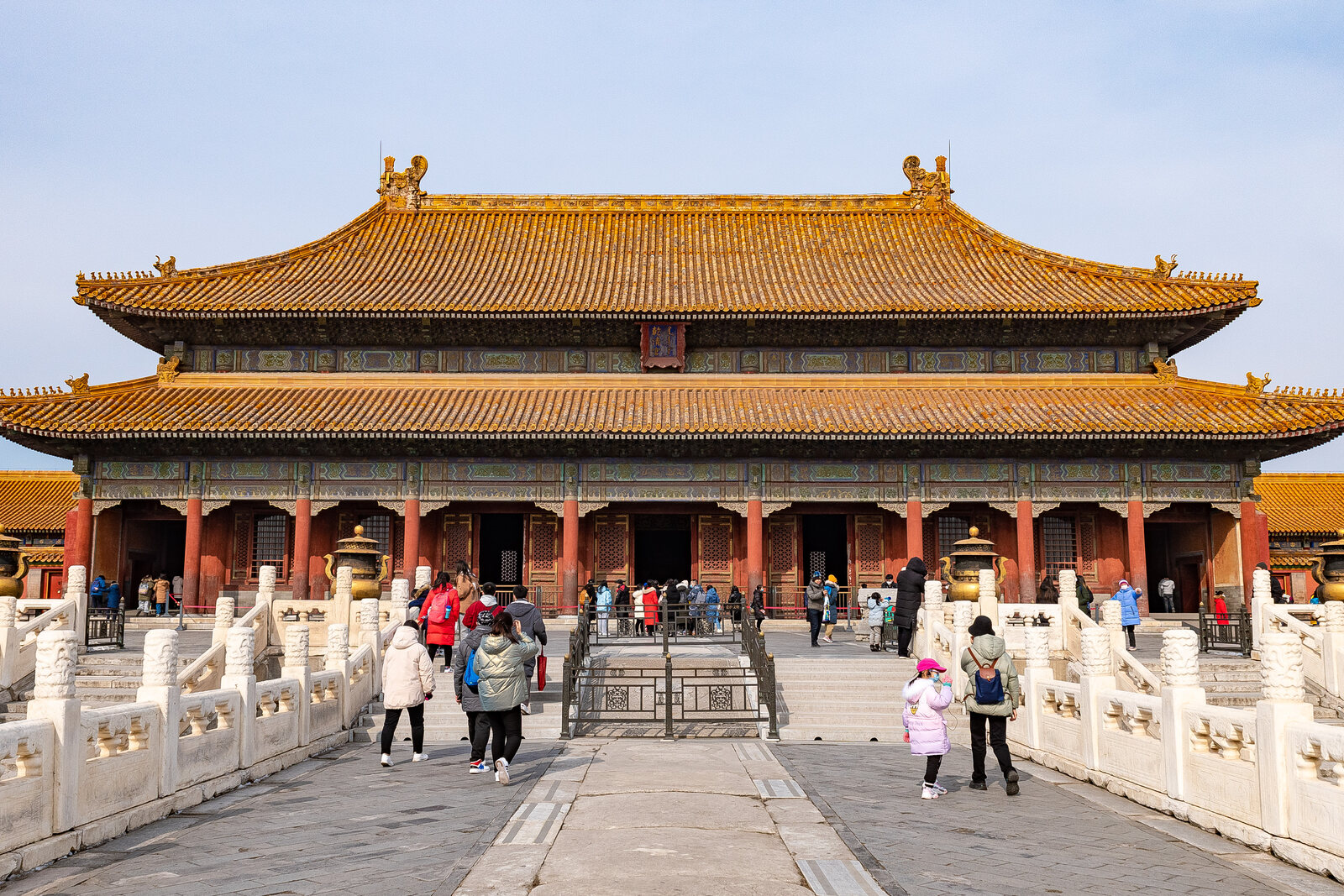
Look around first
What to notice
- Hall of the Palace of Heavenly Purity
- Throne
- Plaque reading “Zhengda Guangming”
- Trees of the Imperial Garden
The story of the place
In August seventeen twenty-three, Yongzheng, the new emperor of the Qing dynasty, gathered princes and senior officials in the western chamber of the Palace of Heavenly Purity. He wanted to appoint a successor without telling the court whom he had chosen. His sons were still young, but Yongzheng considered it dangerous to delay the decision until his own illness or death.
His father Kangxi had announced one of his sons as heir too early. Over the long years, rival court groups formed around the imperial sons. Kangxi twice stripped his chosen son of the title, and died without ever publicly naming a new successor. Yongzheng, formerly one of the rival princes, received the throne. Legends that the will had been altered sprang up around his accession at once; there is no reliable evidence of an alteration, but the story itself shows how little the court trusted the procedure.
Yongzheng now proposed a different arrangement. He personally wrote down the name of the chosen son, sealed the sheet in a casket, and ordered the officials to hide it in the highest place in the central part of the hall—behind the plaque above the throne. Its inscription meant “Zhengda Guangming.” The emperor dismissed most of those present; several close associates remained and saw where the casket was placed. Yongzheng kept a second sealed copy with him at all times. After his death, both texts were to be opened and compared.
Twelve years later, princes of the imperial family and senior officials did this. Both copies bore the name Hongli—the fourth son of Yongzheng, who until that moment had had no publicly guaranteed right to the throne. Hongli became the Qianlong Emperor. Later, three more Qing rulers were chosen by the same method.
The place for the casket was chosen by a man who knew the layout of the palace well. Under earlier emperors, the Palace of Heavenly Purity served at once as a bedroom and a working hall. Yongzheng moved his living quarters to another palace, but continued to receive officials and hold ceremonies here. Behind the hall stretched the quarters of the imperial family, ending in a garden. Under the Ming dynasty it was directly called the Garden Behind the Palace; under the Qing dynasty, the name Imperial Garden became established. Here the emperor, empress, and concubines walked and rested, read, kept books, and performed rites.
The building in which Yongzheng hid the first casket has not survived: the present Palace of Heavenly Purity was built after a fire in seventeen ninety-eight. The same inscription still hangs above the throne, and beyond several courtyards lies a garden whose layout dates back to fourteen twenty. In seventeen thirty-five, the master of both the hall and the garden was named by a sheet taken from behind the four characters.
Useful on site
According to the Palace Museum schedule: high season 08:30–17:00, last entry 16:00; low season 08:30–16:30, last entry 15:30; separate areas within the complex may operate on a rotating schedule.
Checked: June 28, 2026. Check the official source before visiting.View the interiors only from the accessible points, and do not hold up the line at the doors. In the garden, the flow of visitors thickens before the northern exit, so choose a quiet place away from the passage for the narration.