 Guide On Map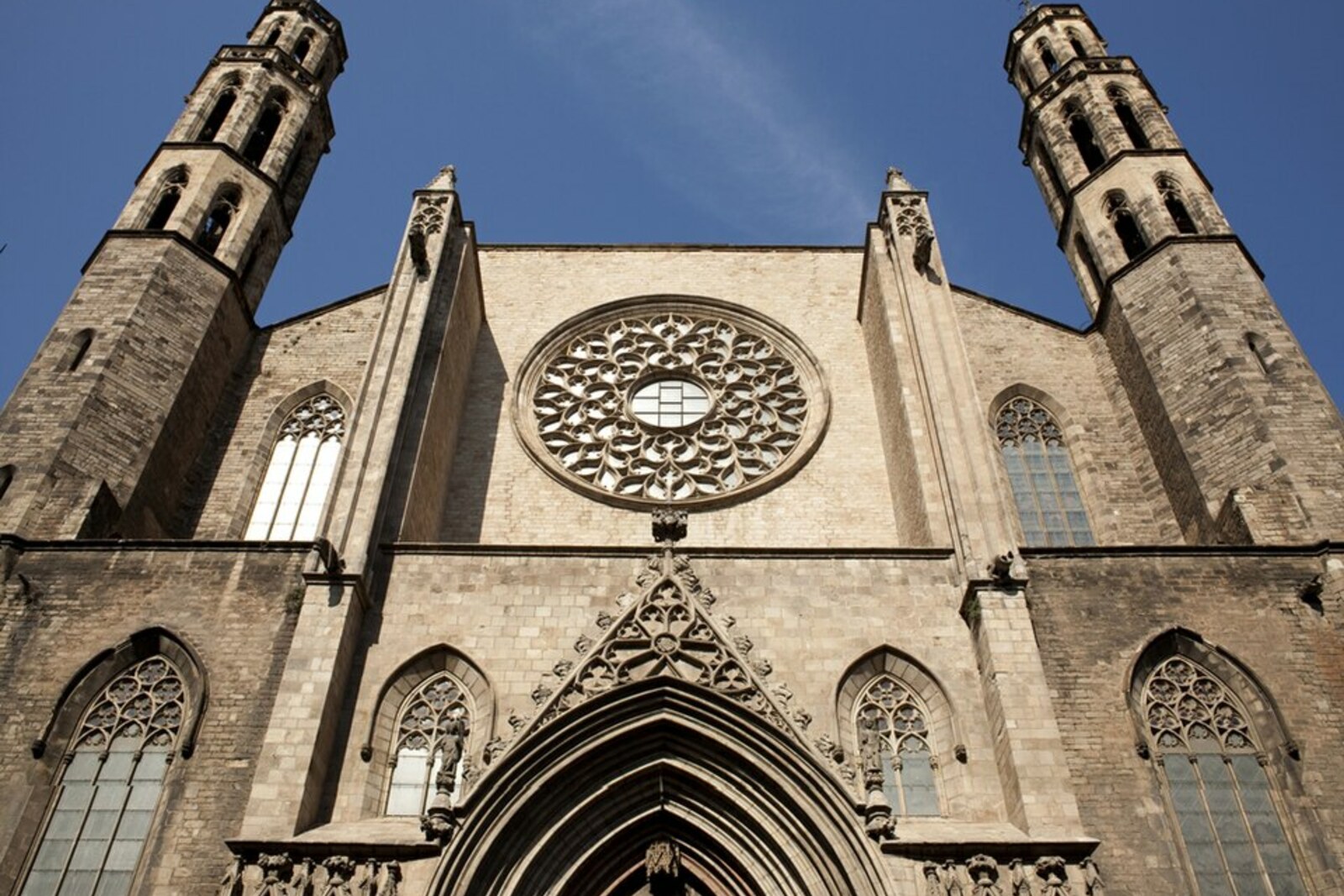
Look around first
What to notice
- Main portal
- Stone figures of the bastaixos
- Bronze fittings with porters
- Chapel of the bastaixos
The story of the place
On the main portal of Santa Maria del Mar, among stone carvings and bronze fittings, are men bent beneath heavy loads. They are bastaixos, the porters of old La Ribera. They were placed at the entrance not as anonymous builders: here they were given a place and a history of their own.
La Ribera means “the shore.” In the fourteenth century, the sea lay much closer, and large ships could not come directly to land. The bastaixos carried goods from the beach and the quays to the royal scales, the customs house, and merchants’ warehouses. They were paid for this; lost or damaged cargo became their responsibility. These men lived by what they could carry on their shoulders, sometimes placing a cloth rolled into a ring beneath the load.
La Ribera grew quickly through maritime trade. Sailors, craftsmen, and merchants moved here, and warehouses and workshops opened. The old parish church of Santa Maria de les Arenes could no longer hold the parishioners and the new altars founded by families and professional associations. In thirteen twenty-nine, construction began around it on the present church of Saint Mary by the Sea.
The parishioners, wealthy donors, and the king paid for the construction; most craft associations contributed less than was later claimed. Even against this background, the contribution of the bastaixos stood out: they brought stone from Montjuïc. Church tradition says that the porters carried all the stone needed for the church free of charge. Documents cannot confirm the word “all,” and historians note that this is the traditional version. The bastaixos’ participation itself is beyond doubt. For the church, they gave the same labor that usually fed their families.
Fifty-four years later, the stone vaults were completed. The porters received their own chapel in the church and special privileges, and in fourteen eighteen, their service during the construction helped them secure the right to establish a brotherhood—an official association that represented the trade and cared for its members.
Today, the water is several city blocks away. The former port by the church is gone, but the old shoreline is still called La Ribera, the church is still called Saint Mary by the Sea, and on its door the bastaixos still carry their loads.
Useful on site
Cultural visit: Mon–Sat 10:00–18:00, Sun 13:00–18:00, last entry 17:30; outside these hours, entry to the basilica is free; the current price of the cultural visit is 8 €.
Checked: June 28, 2026. Check the official source before visiting.Inside, follow the rules of an active church; tourist visits may take place separately from visits for prayer. The doors and memorial space can be viewed from outside.