 Guide On Map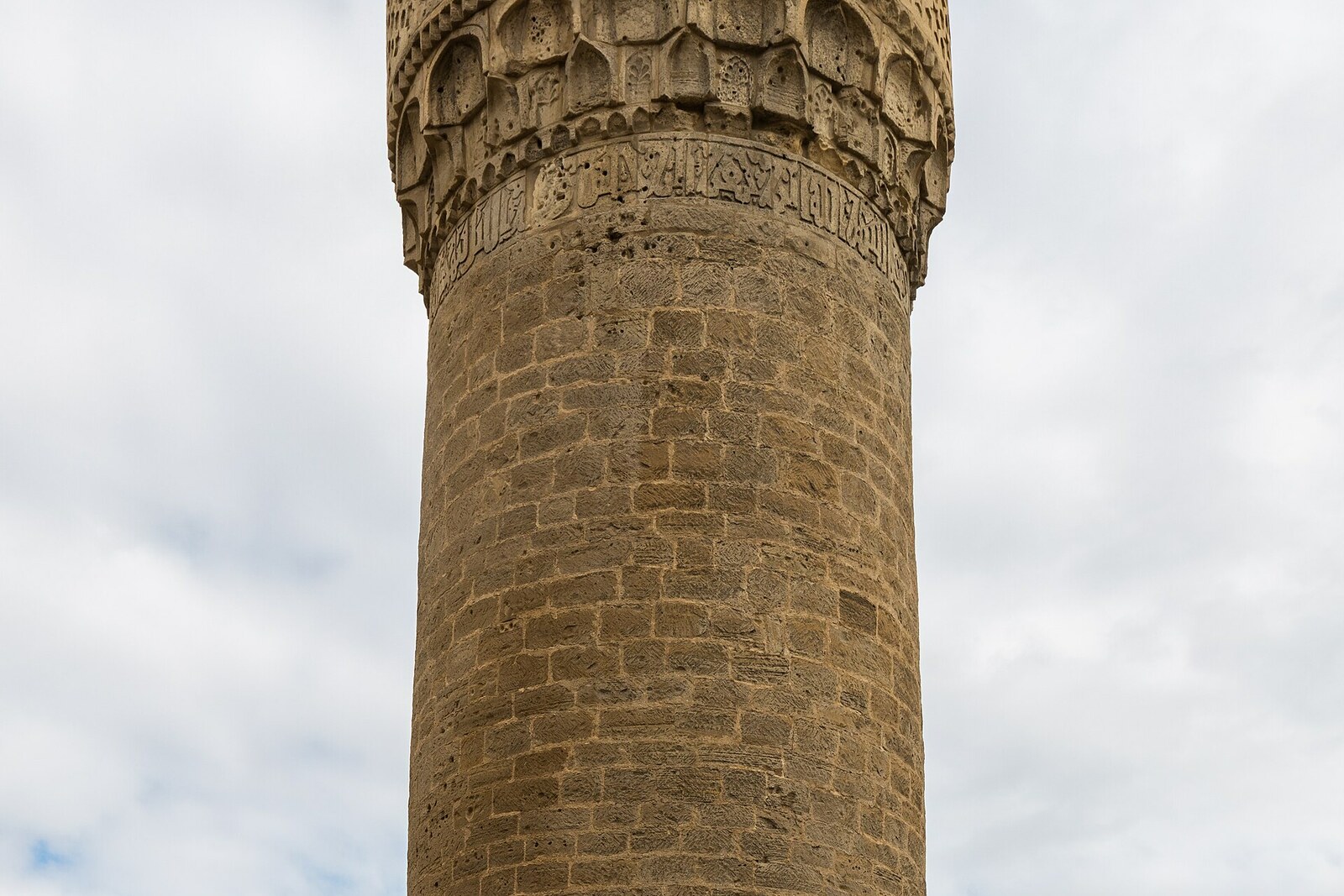
Look around first
What to notice
- Northern entrance
- Slab to the left of the entrance
- Old masonry of the minaret
- Restored top of the minaret
The story of the place
On the left side of the northern door, the name of this mosque's patron is carved in stone. Muhammad, son of Abu Bakr, held the office of rais at the end of the eleventh century and oversaw the city's taxes, market, and commercial affairs. Having ordered a place of communal prayer to be established here, he left his name on the facade; because of this record, the mosque is considered Baku's earliest Islamic building with a known time of construction and patron. Old masonry is visible in the lower part of the minaret, with its later-restored top above it.
In the summer of seventeen twenty-three, General Mikhail Matyushkin led troops to Baku after Peter I ordered them to occupy the port on the Caspian Sea. The emperor feared that the Ottomans would capture the city first. Matyushkin presented a letter from the Persian ambassador and declared that he had come to protect Baku from rebels.
Baku's sultan, Muhammad Husayn Beg—the title given to the ruler of the fortress—wanted to hold the city for the Safavid shah Tahmasp II. He refused to open the gates: the ambassador had written his letter while already in Russia, and there was no order from the shah himself. Matyushkin responded by landing four battalions and shelling the city from land and sea.
Seven vessels formed a semicircle before the seaward wall. On the first day, the artillerymen fired ninety-four bombs at Baku. The bombardment continued for several more days. One shell struck the upper part of the minaret of Muhammad Mosque—the tower from which the muezzin called the townspeople to prayer—and split it.
On the night before the scheduled assault, a strong wind drove the vessels away from the shore. The defenders used the respite to patch the breached sections of the fortress wall. In city legend, this episode became immediate retribution: as soon as the shell struck the minaret, a storm carried the attackers out to sea. An account by a participant in the campaign gives a less fortunate ending. In the morning, Matyushkin sent a new ultimatum. He knew that the mortar in the hastily filled breaches had not yet dried, and he threatened to spare no one after the assault. Less than an hour later, white flags appeared on the seaward towers.
On July twenty-sixth, Baku surrendered. Matyushkin's soldiers took over the gates and guard posts, while the former garrison entered Russian service. The general himself received a new rank for taking the city. Muhammad Husayn Beg was later accused of secret correspondence with opponents of the new garrison, arrested, and sent to Astrakhan along with his three brothers and his property.
The townspeople called the damaged minaret Siniggala—“the broken tower”—and the name passed to the entire mosque. Its upper part was not restored until the middle of the nineteenth century. The minaret's present top is already a repair, but its name remains from the strike of seventeen twenty-three.
Another name for the building is preserved by a slab to the left of the northern entrance. The inscription says that in ten seventy-eight or ten seventy-nine, al-ustad ar-ra’is Muhammad, son of Abu Bakr, ordered the mosque to be built. Muhammad here is the patron, not the prophet. The rais was the city head, responsible for taxes, markets, and commercial transactions. He established a place of prayer in the city he governed and had his name carved on the facade. The inscription survives, so the mosque is considered Baku's earliest Islamic building with a precisely known date and the name of its patron.
Useful on site
Accessible outside at all times; no regular tourist visiting hours for the interior have been published.
Checked: date not specified. Check the official source before visiting.Regular tourist access inside is not guaranteed, so plan this stop around viewing the exterior. Respect the building's religious function and do not block the narrow passage.