 Guide On Map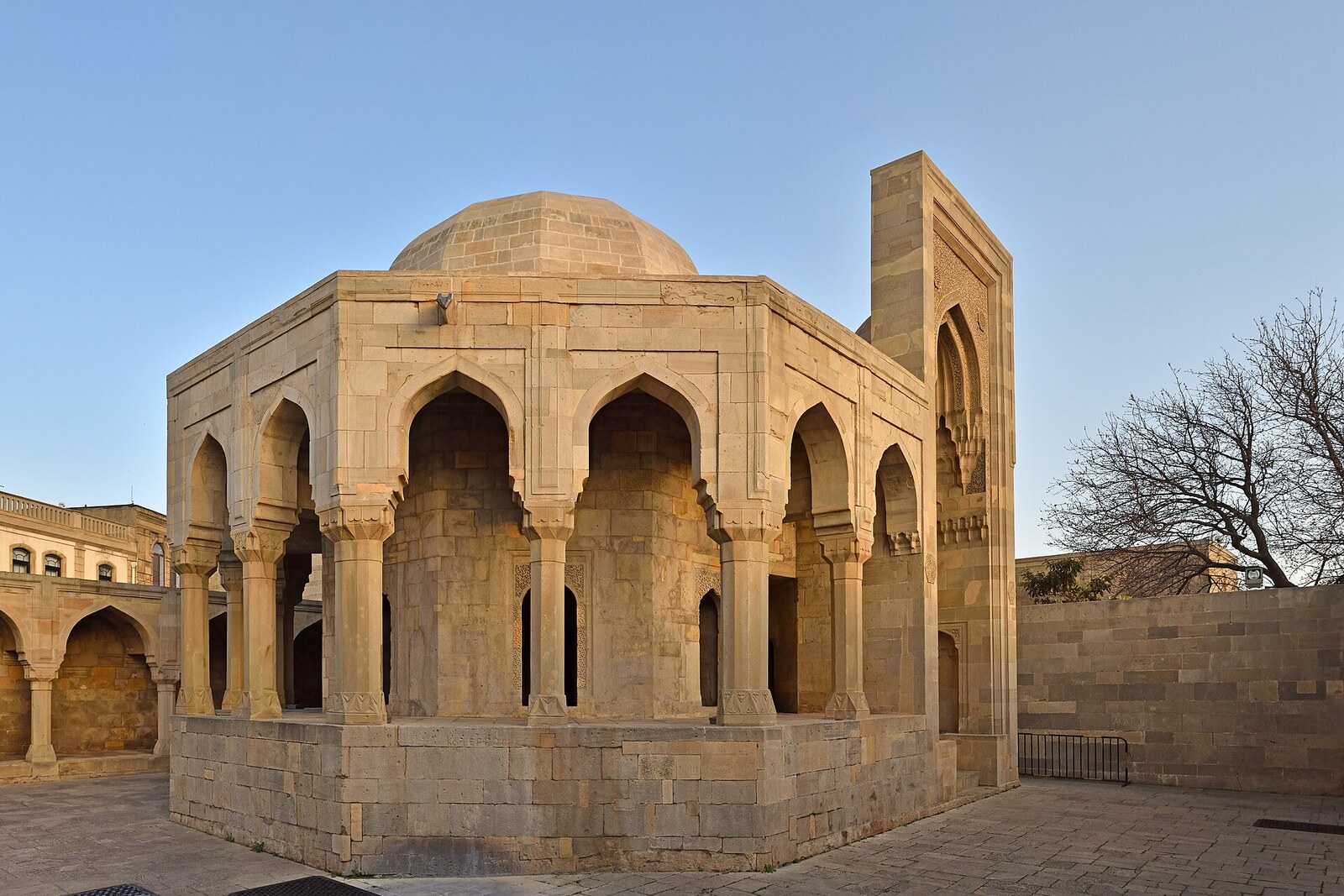
Look around first
What to notice
- Octagonal hall
- High stone pedestal
- Finished carved portal
- Empty frames without ornament
The story of the place
Divankhana means “house of council.” The name has led to the suggestion that in this courtyard the Shirvanshah received ambassadors, judged his subjects, or conferred with his entourage. However, the purpose of the pavilion remains disputed. Beneath the octagonal hall are two chambers resembling a crypt, and above the entrance are carved verses from the Quran about the reward of paradise and eternal dwelling. For this reason, many researchers consider the Divankhana an unfinished mausoleum.
Farrukh Yasar prepared it for himself. He was the ruler of Shirvan and had occupied the throne for more than thirty years. He chose the upper courtyard beside the residential building and raised the future tomb on a high stone pedestal. Carvers covered the main portal with fig and grape leaves and filled medallions with inscriptions. On the other openings, they managed to outline the frames but did not have time to add the ornament.
The cause of the work's interruption began twelve years before Farrukh Yasar's death. In fourteen eighty-eight, Sheikh Haydar, leader of the militant religious order of the Safavids, was passing through Shirvan on a campaign to the North Caucasus. Farrukh Yasar summoned allies; their combined forces surrounded Haydar's detachment and killed the sheikh himself. His son Ismail was not yet a year old.
Ismail grew up, led his father's supporters, and brought them into Shirvan to avenge his father and grandfather, who had been killed. At the end of fifteen hundred, the thirteen-year-old leader met Farrukh Yasar's army in the Battle of Jabani. The Shirvanshah was defeated and killed. A Safavid chronicle reports that the warriors did not recognize him at first: they brought back the severed head as a trophy and learned only from prisoners whom they had caught. The soldiers then returned for the body and burned the remains.
The following year, Farrukh Yasar's opponents occupied Baku and plundered the palace. The carvers did not return to the Divankhana. Here, a finished portal stands beside empty frames in which the pattern never appeared. Beneath the octagonal hall, the chamber prepared for Farrukh Yasar has survived, but the Shirvanshah himself was never buried there.
Useful on site
As part of the Palace of the Shirvanshahs, daily 10:00–19:00.
Checked: date not specified. Check the official source before visiting.Approach the portal closely, but do not touch the carving. The small details are difficult to make out in harsh light, so it is useful to look at them from different angles.