 Guide On Map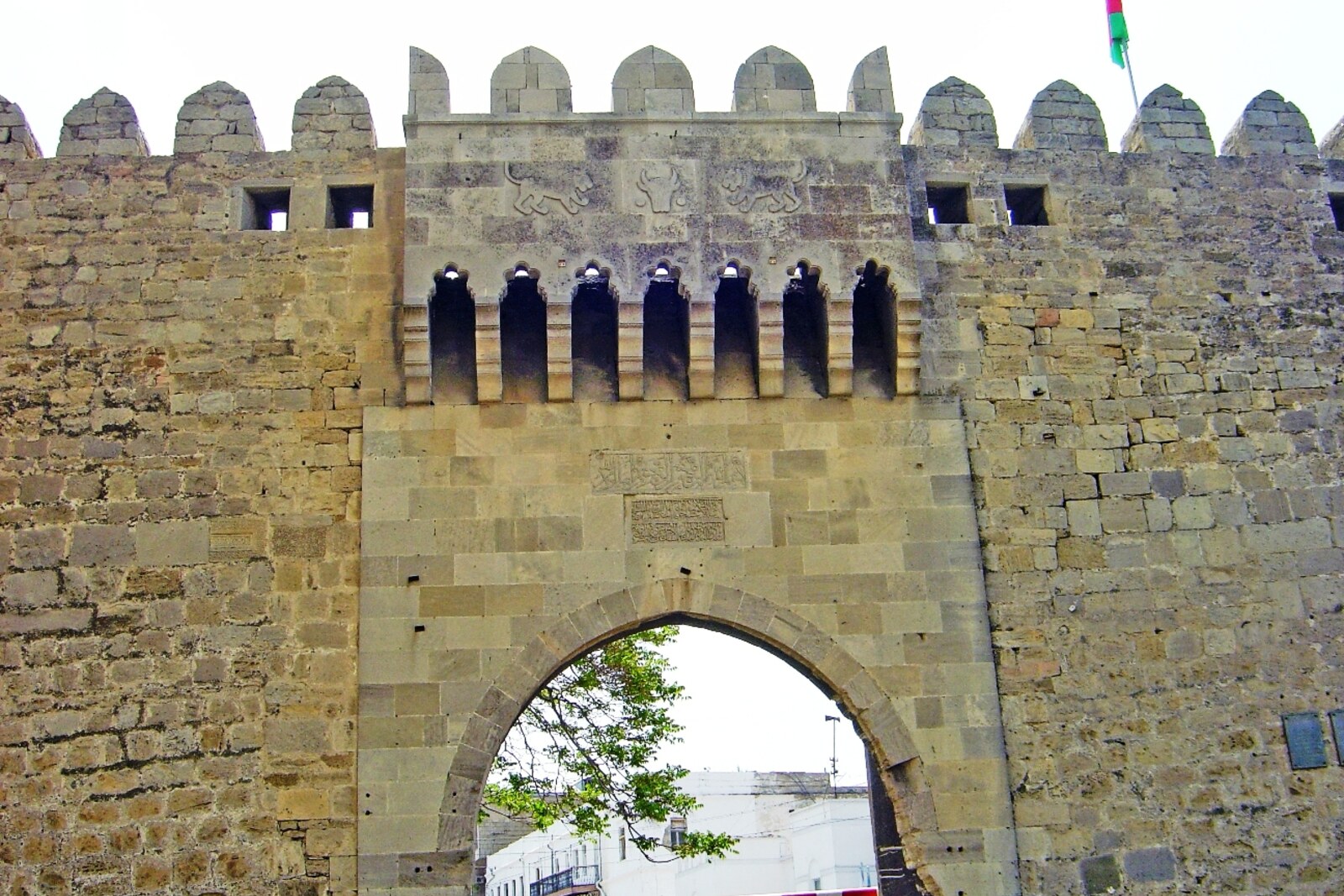
Look around first
What to notice
- Two neighboring stone arches
- The light-colored masonry of one arch
- The uncovered rooms of the bathhouse below street level
- The stone bases of the dismantled domes
The story of the place
Beyond Baku’s main land gates, caravans once faced a mandatory stop: goods were inspected, while merchants and travelers were sent to wash. The hooves of pack animals were coated with a resinous compound in the hope of protecting the city from infection, and the bathhouse’s sunken rooms maintained an even warmth. Its rooms now lie below the street, among the stone bases of dismantled domes. The two neighboring arches once stood on different belts of fortifications, and the light-colored masonry of one preserves the mark of their later joining.
About a hundred steps from these gates, on the morning of February eighth, eighteen oh six, the keys to Baku were supposed to be handed over. Pavel Tsitsianov, the Russian commander-in-chief in the Caucasus, demanded that his troops be admitted into the fortress. Husayn Qoli Khan, the khan of Baku, was defending the city and agreed to capitulate only after negotiations over his own fate.
First, the city elders came out to Tsitsianov with bread, salt, and the keys. The general accepted the offering but returned the keys: the khan himself was to hand them over. The main detachment stayed by a well half a verst from the walls, while Tsitsianov rode closer with several companions. For him, this was a ceremony of the city’s submission. For Husayn Qoli Khan, the handover meant the end of an independent khanate.
The khan appeared with his retinue and held out the keys. At that moment, people standing beside him opened fire on Tsitsianov and the lieutenant colonel accompanying him, Elizbar Eristov. Both were killed. Sources name the shooters differently and disagree over how much the khan himself took part in the plan. The consequence is beyond doubt: the Russian detachment retreated from Baku, and Tsitsianov’s body was buried near the gates.
The delay lasted several months. In autumn, General Sergei Bulgakov brought new troops to Baku. Husayn Qoli Khan left the city and went to Qajar Iran. Baku surrendered without a fight, the khanate was abolished, and administration was entrusted to a commandant. Bulgakov ordered Tsitsianov’s remains moved to an Armenian church inside the fortress; later, they were sent to Tiflis. The grave by the gates is gone.
That was also when the fate of the bathhouse, now uncovered beside the passage, changed. Military administrators took over the site for the commandant’s administration. The bathhouse was closed, its domes dismantled, its rooms filled with rubbish and buried up to ground level. They remained beneath that layer until archaeological work in twenty sixteen.
Before it was closed, the bathhouse served the city border itself. Customs officers inspected arriving caravans, after which merchants and travelers were sent to wash. The hooves of pack animals were treated with a resinous compound that was considered a means of disinfection. Only then were people and goods allowed farther in. That is why the bathhouse was set up immediately behind the main land entrance, and part of its rooms were originally sunk into the ground: it was easier to maintain an even temperature inside.
The Ottoman traveler Evliya Çelebi visited here in sixteen forty-seven and recorded the local name: Mirza Khan Bathhouse. His account confirms that by the middle of the seventeenth century, it was already receiving visitors. It became fully underground only later, through the dismantled domes, rubbish, and two centuries of neglect.
The two neighboring arches also looked different at that time. The Shamakhi Gates stood in the inner wall and led onto the road to Shamakhi. Ten to twelve meters in front of them ran a second belt of fortifications, built in the early seventeenth century by the Baku ruler Zulfiqar Khan under Shah Abbas I. Its gates were called the Gates of Zulfiqar Khan or the Shah Abbas Gates. People passed through these two entrances in sequence.
At the end of the nineteenth century, the Baku City Duma ordered the outer wall demolished because it hindered Baku’s expansion. In eighteen eighty-six, members of the Duma decided to preserve its gates and place them beside the Shamakhi Gates. That is how two former lines of defense became paired arches. The stone of one of them is noticeably lighter: it bears the mark of the city craftsmen who assembled the present pair after the second ring of walls disappeared.
Useful on site
The gates are accessible at all times; the Underground Bathhouse is open daily 10:00–18:00.
Checked: date not specified. Check the official source before visiting.First compare the gates from outside and inside the wall. The bathhouse is visited separately; if it is inaccessible, its sunken position can still be seen from the street.