 Guide On Map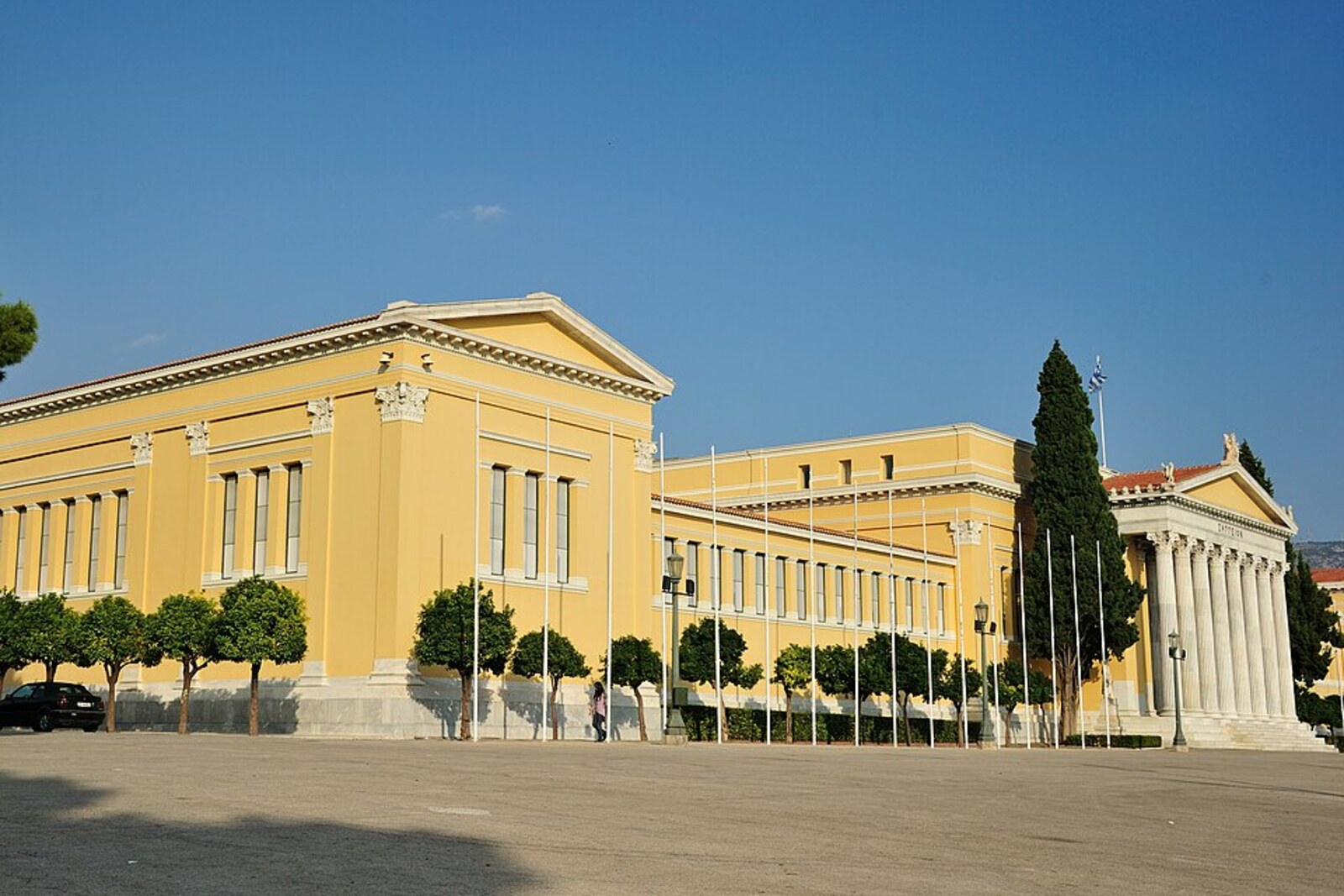
Look around first
What to notice
- Semicircular colonnade
- Circular inner courtyard
- Slab bearing the name of Evangelis Zappas
The story of the place
The man whose surname the Zappeion bears never visited Athens during his lifetime. He arrived in the city after his death—and only his head did.
Evangelis Zappas took part in the Greek War of Independence, then moved to Wallachia, in what is now Romania. There he grew wealthy through land, agriculture, and trading ventures. In the middle of the nineteenth century, Zappas learned of the idea of reviving the Olympic Games and, in eighteen fifty-six, wrote to King Otto: he would cover the costs, winners would receive cash prizes, and the competitions would become regular.
The king passed the proposal to Foreign Minister Alexandros Rizos Rangavis. The minister was seeking an entirely different celebration. Athletic games seemed to him a relic of antiquity; in his view, modern Greece needed an exhibition of agricultural products, industrial goods, and technical achievements. Zappas insisted on competitions but accepted the exhibition. This is how the Zappas Olympics emerged—national celebrations in which running and wrestling stood alongside competitions for machines, textiles, wines, and grain. This combination required two spaces: a stadium for the athletes and a large exhibition hall beside it.
The first Zappas Olympics were held in eighteen fifty-nine, when neither the stadium nor the exhibition hall was yet ready. Zappas followed the matter from Romania and immediately sent two thousand Austrian florins for organizational expenses. He had no children, and he secured the continuation of the games through his will. Almost all his estate was intended for the Zappas Olympics, and his cousin Konstantinos Zappas became the executor. Evangelis separately ordered the construction near the stadium of a “spacious establishment” for exhibitions. He even stipulated that any Greek could compel the executors through the courts to comply with these terms.
The will also included instructions concerning his own body. Zappas was first to be buried in Romania. Four years later, his remains were to be exhumed: the bones below the neck sent to his native Labovë, and his head to the new Olympic building in Athens. He probably expected that four years would be enough for construction.
Zappas died in eighteen sixty-five. People had to wait another twenty-three years. Konstantinos spent the funds left behind, argued with contractors, and brought the work to its opening in eighteen eighty-eight. At the same time, Evangelis's head was brought from Romania and walled into the inner circular courtyard. The inscription on the slab reads: “Here lies the head of Evangelis Zappas.”
An industrial and art exhibition was held at the opening ceremony. The committee canceled the announced athletic competitions. But that was not the building's only purpose. In eighteen ninety-six, during the first international Olympic Games, a fencing tournament was held in the halls of the Zappeion. The idea of a man who had been dead for thirty-one years was finally carried out here: the exhibition palace received the athletes, and the neighboring stadium hosted the other competitions.
The name is formed from the surname Zappas. Behind it stand two cousins: Evangelis left the money and detailed instructions, while Konstantinos turned them into a building. That is why the Zappeion stands on the route from the National Garden of Athens to the stadium. Today, conferences, book fairs, art exhibitions, and trade exhibitions take place behind its colonnade—the part of the Zappas Olympics that Minister Rangavis once added to the athletic plan. And in the inner courtyard remains the head of the man who bequeathed that this building be erected here.
Useful on site
Exterior viewing is unrestricted; interior access depends on the events schedule.
Checked: June 28, 2026. Check the official source before visiting.The building may be occupied by an event, but the main architecture and the monument can be viewed from outside; do not count on free entry.