 Guide On Map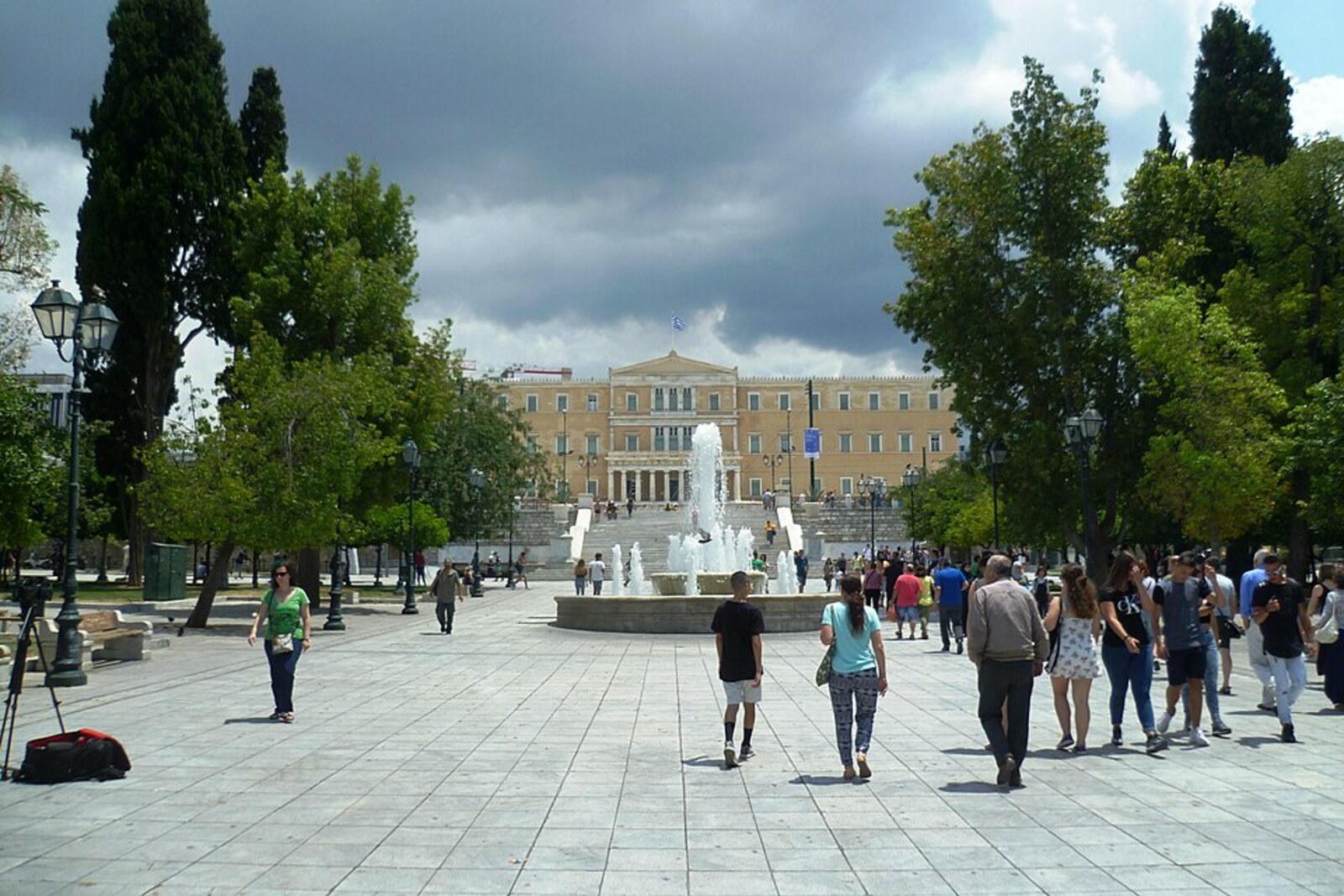
Look around first
What to notice
- Fountain
- Former palace building
- Metro entrances
The story of the place
Athenians often call Syntagma simply the center. Major streets and public-transport routes converge here, people arrange to meet at the fountain, and cross the square on their way to Ermou Street. But its official name means “Constitution” and comes from a demand once made of a man at the window above the square.
The first king of independent Greece, Otto, was chosen in eighteen thirty-two by Great Britain, France, and Russia. The seventeen-year-old Bavarian prince arrived in a country where they had not yet agreed on how the state should be organized. The constitutions adopted during the Greek War of Independence were no longer in force. When Otto came of age, he continued to rule alone and rejected new demands for a constitution.
In the summer of eighteen forty-three, the king and Queen Amalia moved into the new palace. The square in front of it was then simply called Palace Square. The move took place on July twenty-fifth. Just over five weeks later, armed soldiers were already standing beneath the windows.
By then, the state had fallen into a severe debt crisis: the government raised taxes, cut spending, and declared insolvency in eighteen forty-three. Ioannis Makriyannis, a veteran of the war of independence, was gathering military officers and politicians who were demanding a constitution. The conspirators planned to act later, but they kept their secret poorly. On the evening of September second, gendarmes surrounded Makriyannis's house.
Colonel Dimitrios Kallergis then decided not to wait for his arrest. He commanded the Athens cavalry and received a salary for serving the king; if he failed, he would lose both his rank and his freedom. Kallergis raised the garrison and led the soldiers from Monastiraki to the palace. Some of his units freed political prisoners, others occupied the Mint and the Bank of Greece, and still others detained ministers. A separate unit broke through the cordon around Makriyannis's house and brought his supporters here, to Palace Square.
Otto sent the minister of war to the soldiers, but the rebels arrested him as well. The king had to come to the window. Below, on horseback, stood Kallergis. He demanded that a national assembly be convened to prepare a constitution, that the ministers be dismissed, and that elections be held. Otto tried to invite to the palace the ambassadors of the three powers that had once placed him on the Greek throne. Kallergis did not let them through: the king himself had to give the answer.
There was no bloodshed. Otto signed decrees convening the assembly and appointing an interim government. Only after this was announced did the soldiers and townspeople disperse. Greek men over twenty-five voted in the elections, and in the spring of eighteen forty-four the assembly adopted the constitution of the kingdom. It kept Otto on the throne: he still appointed ministers and took part in passing laws, but an elected chamber and a senate now appeared alongside him.
Kallergis received a medal, became the military commander of Athens, and entered the constitutional assembly. Two years later, he left the army and departed Greece. Otto remained king for another nineteen years, until a new uprising forced him to leave the country.
The Old Royal Palace has survived; Hellenic Parliament now meets inside it. The square's Palace name disappeared. On street signs and at metro entrances, the word shouted by the soldiers beneath these windows remains: “Syntagma” — “Constitution.”
Useful on site
Open city square; demonstrations, closures, and events are possible.
Checked: June 28, 2026. Check the official source before visiting.During a demonstration, keep away from dense crowds and cordons; for the story, a safe spot with a view of Hellenic Parliament is enough.