 Guide On Map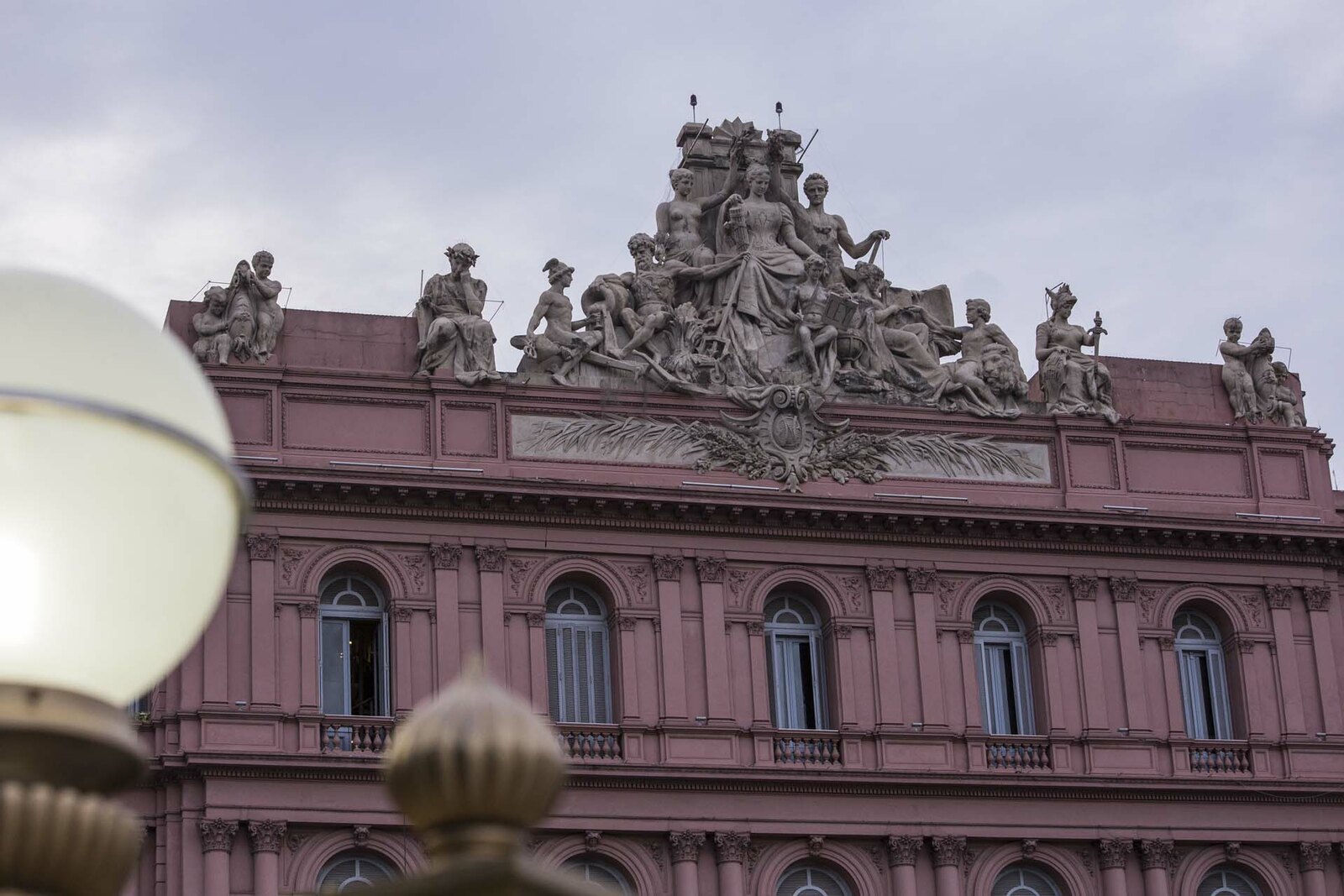
Look around first
What to notice
- Pink facade
- Service side of the building
- Memorial in the small park behind the palace
The story of the place
Casa Rosada, the Pink House, remains the working address of Argentine power: the president’s office is here, and the government meets here. The service side of the building faces the small park behind the palace, where the Memorial to the Victims of the Plaza de Mayo Bombing stands. The pink facade was later restored after the damage.
Twenty-nine bombs struck Casa Rosada in one day. Six of them did not explode. The building was bombed by aircraft of the Argentine Navy.
The name Casa Rosada translates as “Pink House.” The office of the president of Argentina is here, and government meetings are held here. That is why, on June sixteenth, nineteen fifty-five, the conspirators chose this building as their target.
One of the leaders of the conspiracy was Rear Admiral Samuel Toranzo Calderón, a career naval officer seeking to overthrow President Juan Domingo Perón. Military intelligence learned that the rebellion was being prepared, and Calderón faced arrest. He moved the uprising to an earlier date. The plan called for Perón and his ministers to be killed by bombs, and then for Marines to occupy Casa Rosada.
Perón was warned in the morning. The president left his office, crossed the street behind Casa Rosada, and took shelter in the basements of the Ministry of the Army—the military department at the time. Low cloud cover delayed the aircraft for several more hours. The attack began around half past twelve in the afternoon, when the president was already in another building.
Five minutes after the first explosions, Calderón ordered the Marines to occupy Casa Rosada. They headed for the service entrances on the river side, but the presidential guard and grenadiers stopped them. The aircraft continued dropping bombs and strafing the square. Twelve people were killed inside Casa Rosada, and another fifty-five were wounded. In all, more than three hundred people were killed and about one thousand two hundred wounded in the city center: most of the victims were outside the building, within whose walls the conspirators expected to find a single president.
The ground assault failed, the Marines surrendered, and the pilots flew their aircraft to Uruguay. Perón survived the assassination attempt. Calderón was tried for military rebellion: the code carried the death penalty, but the court imposed indefinite imprisonment and demotion.
The sentence stood for less than a month. Exactly three months after the bombing, another military rebellion overthrew Perón, and the president left the country. On September twenty-fourth, Calderón returned to Buenos Aires aboard a warship—once again in a Marine uniform.
The damaged facade of Casa Rosada was restored. In two thousand eight, the Memorial to the Victims of the Plaza de Mayo Bombing was installed in the small park behind the building, on the side from which the Marines had gone to occupy the presidential offices.
Useful on site
Facade from outside; Casa Rosada Museum: Wed–Sun 11:00–18:00, last entry 17:30, Mon–Tue closed; palace tours depend on the program.
Checked: June 28, 2026. Check the official source before visiting.The main architectural details are visible from the square. Check visits to the museum spaces and underground remains separately; do not treat an open view of the facade as a guarantee of entry into the government complex.