 Guide On Map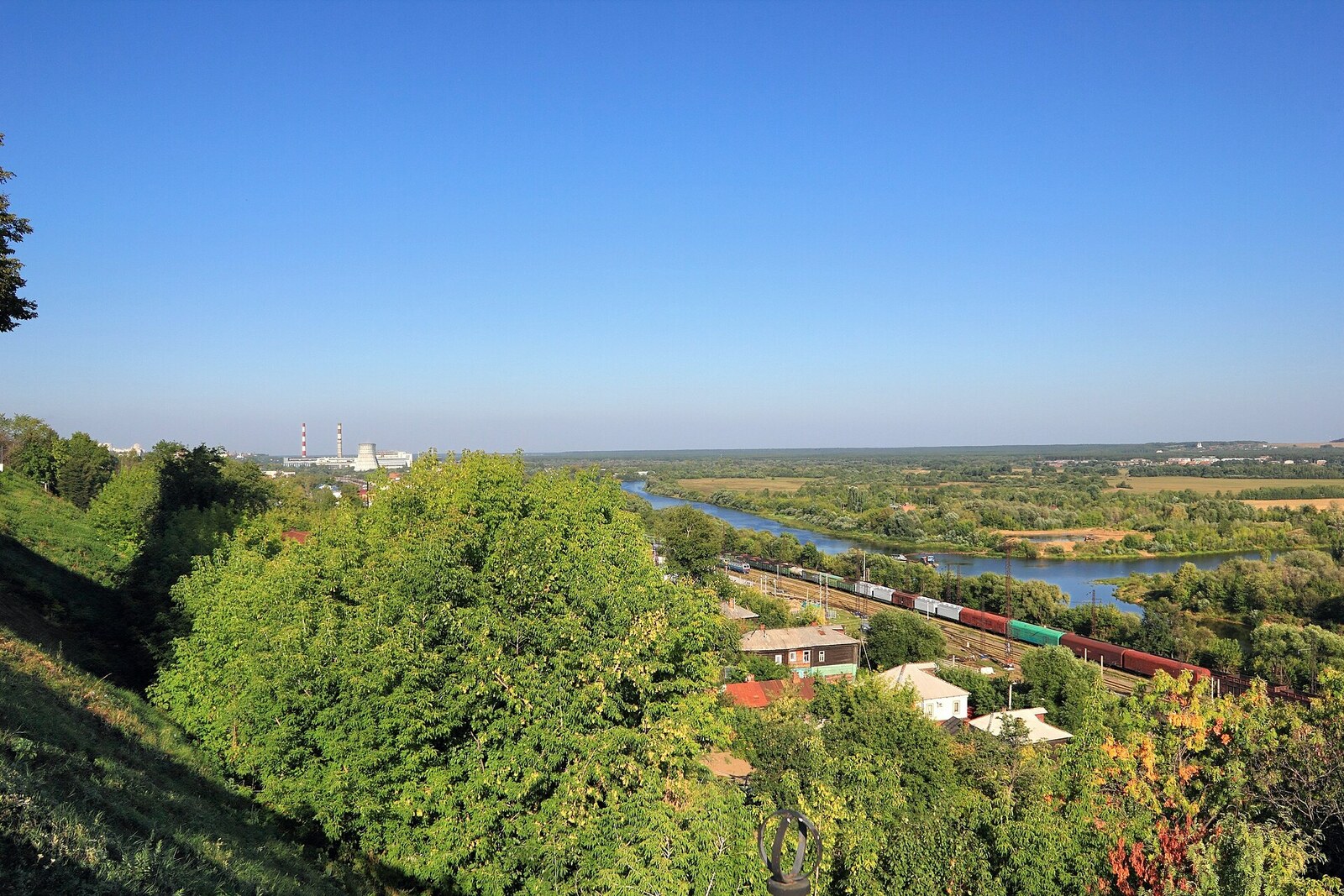
Look around first
What to notice
- Central alley
- Bronze figure of Pushkin
- Cloak, top hat, and cane
- Klyazma floodplain
The story of the place
The bronze Pushkin on the central alley walks toward the viewing platform. The poet passed through Vladimir only in transit, and the park was named after him for a different reason. The alley appeared almost a century before Pushkin was placed on his pedestal—after a decision that deprived the city of part of its ancient fortifications.
At the beginning of the nineteenth century, a twelfth-century earthen rampart still ran along the southern and western edge of this hill. It no longer had military significance. Vladimir Governor Ivan Dolgorukov, responsible for improving the provincial capital, wanted to create a place for strolling here, like the boulevards in the capital. For its sake, on the governor’s instructions, the rampart was leveled between eighteen oh two and eighteen oh four.
Dolgorukov did not conceal what he expected. In his diary, he admitted that the Vladimir boulevard was far from matching those in the capital in its finishing, but that its location was more beautiful. This location determined the layout of the walk: a broad alley ran from Bolshaya Moskovskaya Street to the cliff, and at its end the Klyazma floodplain opened up.
The next governor, Avdiy Suponyev, brought the idea to the point where townspeople spent their leisure time. In eighteen fifteen, at his initiative, alleys and flower beds were planted, and benches and gazebos were installed. A pavilion with a lit hall was built for well-to-do visitors; people danced there to the music of a military band. The very same prospect above the river, for which Dolgorukov had ordered the rampart removed, drew people here. The pavilion later burned down, but the direction of the walk remained.
The name appeared in eighteen ninety-nine, when the centenary of Aleksandr Pushkin’s birth was celebrated. Many residents of Vladimir asked for the poet to be commemorated. Their proposal was brought before the city duma by Andrei Shilov—a merchant of the second guild who for many years served as the elected city head and sought a new name for Bolshoy Boulevard. The duma voted unanimously. A bust paid for by the townspeople was installed on the central alley, and the boulevard became Pushkinsky Boulevard.
The first bust disappeared after the revolution. In nineteen fifty-one, the collective of the Vladimir School of Arts and Crafts made a four-meter figure of the poet for the park, but during the next reconstruction it was moved and never returned. In the nineteen nineties, Pushkin celebrations were again held in the park, now without a monument. The foundation stone for the future sculpture stood for thirteen years.
The present bronze Pushkin, by Igor Chernoglazov, was unveiled in twenty twenty-four. The sculptor gave him a cloak, a top hat, and a cane, and portrayed him walking: in Vladimir, the poet did not linger but continued on his way. His step is directed toward the Klyazma—to the place where, on Dolgorukov’s orders, the rampart was once leveled and the city alley ended in an open view.
Useful on site
The park is open as an urban public space; conditions in individual sections of the viewing platform may require barriers.
Checked: June 24, 2026. Check the official source before visiting.Do not go beyond the barriers or approach closed sections of the retaining wall. The view is also preserved from the upper alley.