 Guide On Map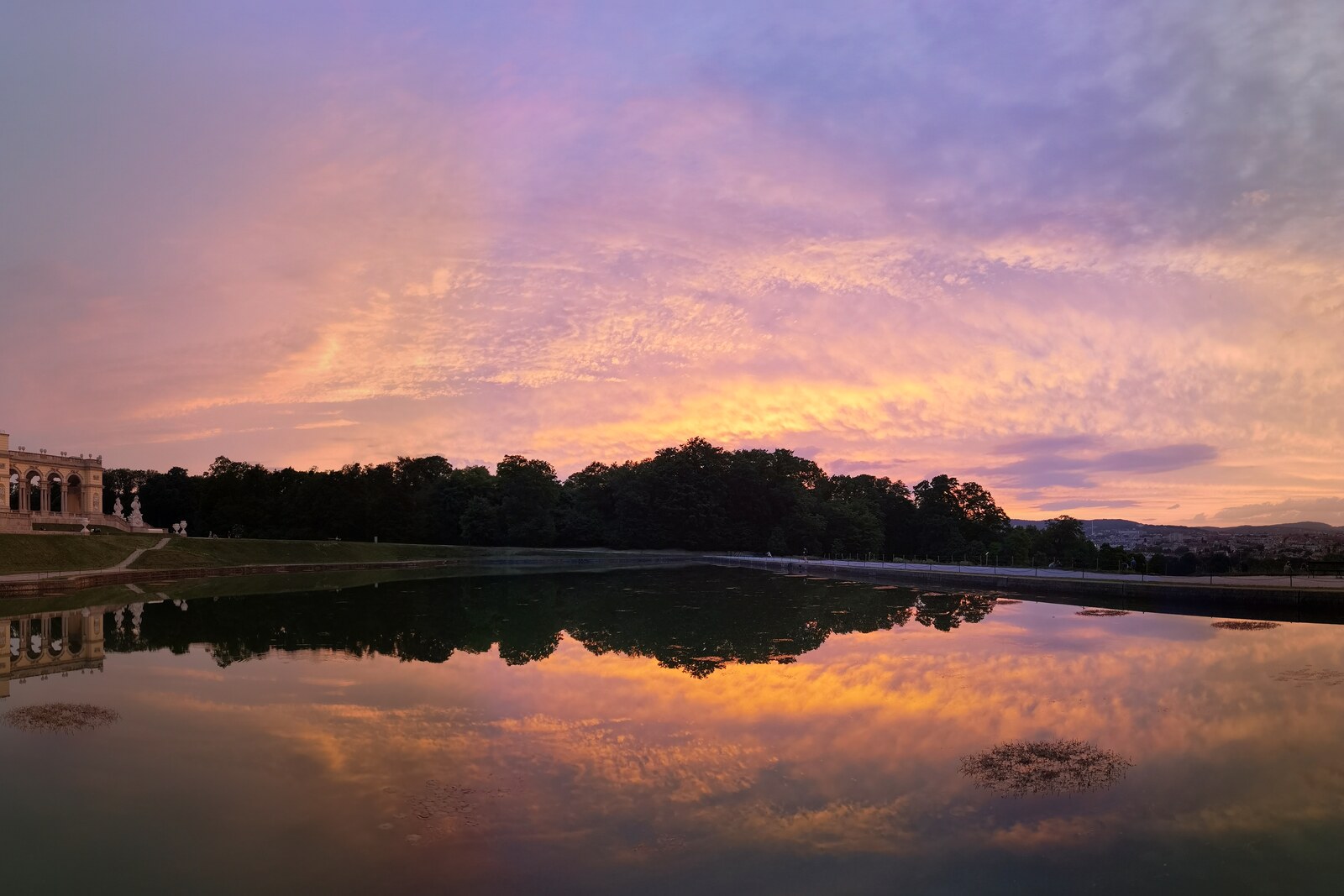
Look around first
What to notice
- The central arch with the Latin inscription
- Paired columns
- Stone helmets and shields
- Bull skulls on the interior frieze
The story of the place
Above the central arch, a Latin inscription is carved: the Gloriette was built under Joseph II and Maria Theresa in seventeen seventy-five. Their names stand side by side, although Maria Theresa was the patron—the ruler of the Habsburg lands—while Joseph, her son and co-ruler, sought the right to conduct his own policy.
Behind this juxtaposition lay a war. After the death of Maria Theresa's father, several European sovereigns refused to recognize her as his heir. Frederick II, King of Prussia, occupied wealthy Silesia. Maria Theresa retained most of her lands, but lost the province. She then launched the Seven Years' War, hoping to regain Silesia. The war ended in seventeen sixty-three with the same borders and enormous losses. Maria Theresa gave up Silesia, and Frederick undertook to support her son in the next election of an emperor.
Joseph received the imperial title, and after his father's death in seventeen sixty-five, Maria Theresa appointed him her co-ruler. In the Habsburg lands, he remained his mother's junior partner. They argued constantly; Joseph repeatedly asked to be released from their joint rule, but Maria Theresa did not agree. The inscription on the Gloriette presents them as equals—exactly as the dynasty wished to show the outcome of the wars it had endured.
The French word “gloriette” referred to a garden pavilion or portico on an elevation. Here, the court architect Johann Ferdinand Hetzendorf von Hohenberg gave it the form of a triumphal arch. Stone helmets, shields, and military banners are arranged by the stairways. This was how weapons laid aside after a war were depicted—a war the victors declared just and ended by peace. The loss of Silesia did not enter this official picture.
For the structure, Maria Theresa ordered the dismantling of the gallery of another palace—Neugebäude Palace, begun by Emperor Maximilian II as early as fifteen sixty-eight. The palace was never completed, and in seventeen seventy-four it was handed over to the army as a gunpowder store. Maria Theresa ordered valuable stone elements to be removed and transported to Schönbrunn. Most of the Gloriette's paired columns, capitals, arches, and cornices had previously stood at Neugebäude Palace. The bull skulls on the frieze inside the central hall were brought from there as well.
Maria Theresa died five years after the Gloriette appeared. Joseph, whose name remained above the arch, had little interest in Schönbrunn and ordered it preserved as he had received it. In time, the central hall was turned into a dining room, and a kitchen was built beside it. The kitchen has long been gone, but a café now operates behind the restored glazing. Above its tables, the cornices of the unfinished palace that Maria Theresa gave over as a gunpowder store still rest.
Useful on site
The hill and exterior are accessible during park hours. The viewing terrace is paid and seasonal: in 2026, hours from 9:30 are listed, with closing from 16:00 to 18:30 depending on the date; last entry is 30 minutes before closing.
Checked: June 29, 2026. Check the official source before visiting.Rest after the climb and compare two views: the Gloriette from the park side and the palace from its arcades. Check access to individual platforms in advance.