 Guide On Map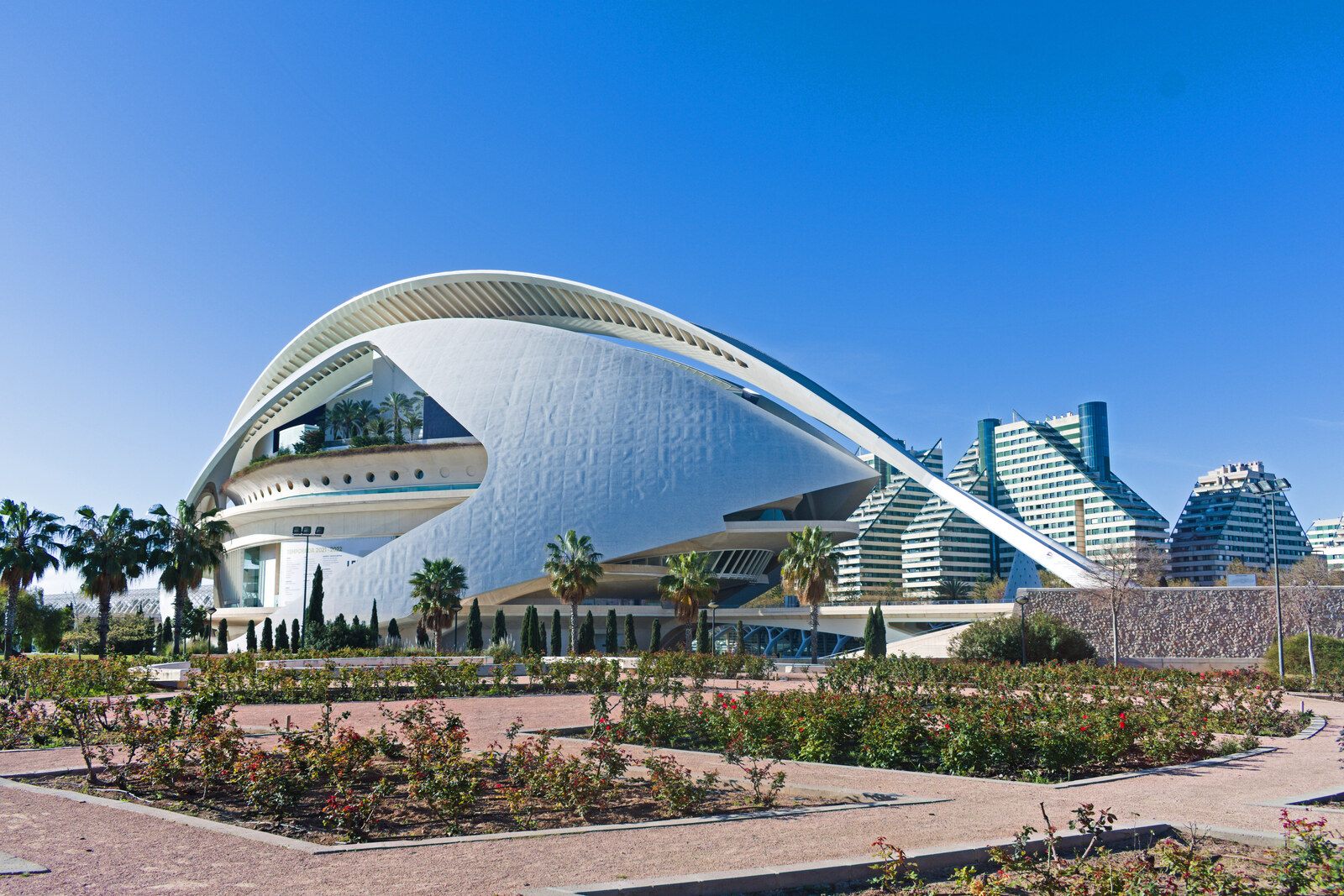
Look around first
What to notice
- White shell
- Main hall
- Orchestra pit
- Main stage
The story of the place
Palau de les Arts Reina Sofía is an opera house. Operas and ballets are staged here, symphonic concerts are given, and the choir and its own Orquestra de la Comunitat Valenciana rehearse. Its name belongs to Queen Sofía, then Queen of Spain. Francisco Camps, head of the regional government, announced the dedication while the building was still under construction, calling it a sign of respect. The Queen herself later attended both the building’s opening in October two thousand five and the first opera a year later.
The white shell conceals the machinery without which a major opera house could not exist. The designers provided three movable stage platforms in the main hall and a lower level for scenery. Technicians could lower one production beneath the stage and raise another: while the audience watched an opera, the next production was already waiting below.
The system failed five weeks after the start of the first real season. On December second, two thousand six, technicians were preparing the stage for Mozart’s Don Giovanni. One of the four motors on a lifting platform failed. The platform, with the scenery installed on it, sank at one corner and became stuck below the stage. No one was hurt, but moving the other platforms became impossible. A hole remained in the center of the main stage, with the scenery trapped at its bottom.
The final performance of La bohème was canceled. Philip Glass’s La Belle et la Bête was postponed until the following year. Don Giovanni was due to take place two weeks later, and its staged version was locked beneath the stage together with the platform.
Helga Schmidt, the theater’s first artistic director, was responsible for ensuring that the season, which had barely begun, did not fall apart. She persuaded British director Jonathan Miller, who had come to stage Don Giovanni, to abandon the prepared set design and assemble the production in the remaining space. Miller had to save not the concept, but the scheduled premiere date.
Part of the orchestra pit was covered with temporary decking. This created a strip only four or five meters deep; some musicians sat behind the supports for that decking. Black cloth with painted windows covered the hole and the trapped scenery. The singers kept their costumes and a little stage property. The theater’s music director, Lorin Maazel, led the orchestra through Mozart’s score, and the audience was offered ticket refunds in advance if such a substitution did not suit them.
On December sixteenth, the premiere took place. Critics saw an almost concert performance: a cramped playing area, a motionless black backdrop, and minimal action. But Miller, Maazel, the singers, and the technicians preserved the entire run of performances—at the cost of a production that had to be invented again from scratch in two weeks.
The temporary decking was dismantled long ago, and the black cloth and the hole are no longer there. Behind today’s façade remain the same main hall, orchestra pit, and stage where, in the first season, Don Giovanni was performed literally in front of a drawn curtain that concealed the production stuck below ground.
Useful on site
Freely accessible outside; inside with a ticket or tour. Official tours may change their route because of rehearsals, work, and events.
Checked: June 28, 2026. Check the official source before visiting.Viewing the exterior does not provide access to the stage or halls; a performance or tour must be arranged as a separate visit.