 Guide On Map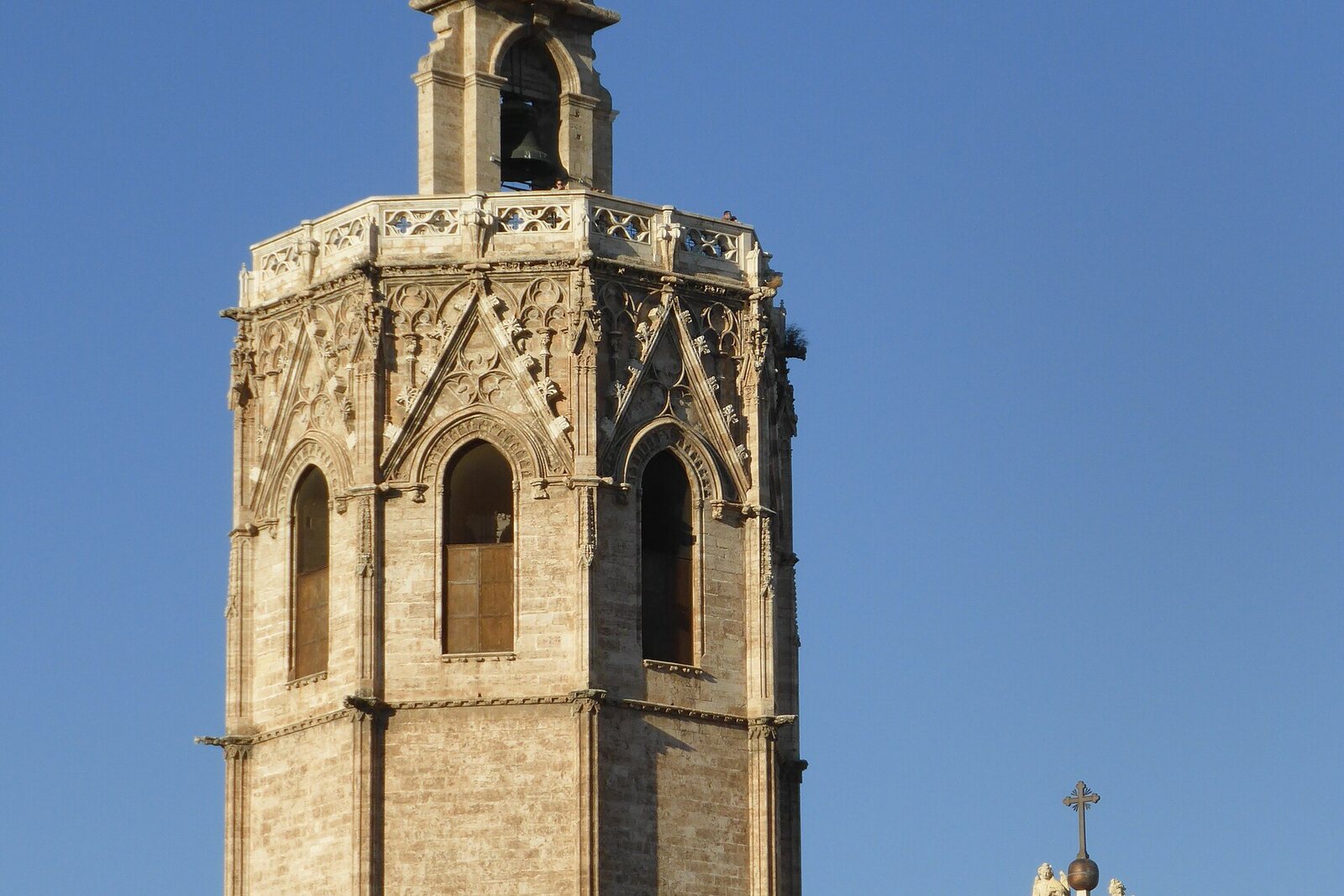
Look around first
What to notice
- The agate cup behind glass
- The cup's gold handles
- The octagonal Miguelete Tower
- The stone spiral staircase
The story of the place
The cathedral took shape from several structures that initially stood apart: the former cathedral chapter hall, where the chapter administered the affairs of the diocese's main church, and the tall octagonal bell tower. Later, an extended nave linked them to the church. The stone Miguelete Tower served both the clergy and the city: the canons controlled the church bells, while the city maintained the clock and hired the clockkeeper. Its chimes called people to prayer, but also announced the opening of the gates, a fire, or a general gathering of the townspeople.
On March eighteenth, fourteen thirty-seven, Juan of Aragon handed the royal relics to the canons of this cathedral. Juan was the brother of Alfonso the Fifth, King of Aragon and Valencia, and governed his Spanish possessions while the king fought in Italy. The transfer was collateral: Alfonso did not repay the debt.
The king was seeking the Neapolitan crown. Ships, mercenaries, and sieges required money, and in fourteen thirty-two the cathedral chapter lent him one hundred ten thousand sueldos. The chapter was the college of canons that administered the diocese's main church, its lands, property, and treasury. An earlier debt was added to the new loan. Alfonso promised to settle the debt within five years and secured that promise with his reliquary—a collection of holy objects that accompanied the royal court.
The stakes rose along with the costs. In fourteen thirty-five, Alfonso's fleet was defeated off the island of Ponza, and the king himself was taken prisoner. He was released and continued the war. When the payment came due, the Crown had no money. Juan then left the relics here, with his brother's creditors. Among them was a cup that Aragonese and Valencian Christian tradition links to the Last Supper.
Alfonso did conquer Naples in fourteen forty-two and ruled from there until his death. The canons received no money. The royal debt was not repaid by his heirs either; the relics served once more as security for new loans, and then remained in the cathedral. That is how Valencia acquired the object now called the Holy Grail.
Its oldest part is a small polished cup of dark agate. The gold handles, stem, gemstones, and lower cup were added in the Middle Ages. The age of the agate vessel allows for its having existed in Gospel times, but it is impossible to prove that Jesus used this very cup. The reliquary's reliable written history begins only in the late fourteenth century. Behind glass stands a historic cup with a documented royal provenance—and at the same time, a holy object whose authenticity remains a matter of faith.
Since nineteen sixteen, it has been kept in the former chapter hall, where the canons met to administer the cathedral. This hall and the octagonal Miguelete Tower originally stood apart from the church building. In the late fifteenth century, builders extended the nave and incorporated both structures into a single cathedral.
The tower, too, was used jointly by the canons and the city council. It stood on municipal land; the city maintained the clock and paid the clockkeeper, while the clergy controlled the bells for worship. Some chimes set the time for prayer; others announced the opening of the gates, a fire, or the need to gather the townspeople.
The largest clock bell was dedicated to Archangel Michael, whom people asked to protect Valencia from storms and misfortunes. In Valencian, his name sounded like Miquel, and the diminutive form was Micalet. Gradually, the bell's name passed to the whole tower and became Miguelete in Spanish. Today the whole tower bears the name of the clock bell, while Alfonso's collateral is kept behind glass in the former hall of the very canons to whom the king never repaid the money.
Useful on site
The exterior cathedral complex is open as urban space; tourist visits to the Cathedral and climbs up Miguelete Tower operate according to the official schedule, with separate tickets and final admission before closing.
Checked: June 27, 2026. Check the official source before visiting.Viewing the Holy Cup and climbing the tower require access inside; check them separately and take services into account. From outside, you can take your time looking at the tower and the cathedral's architectural layers.