 Guide On Map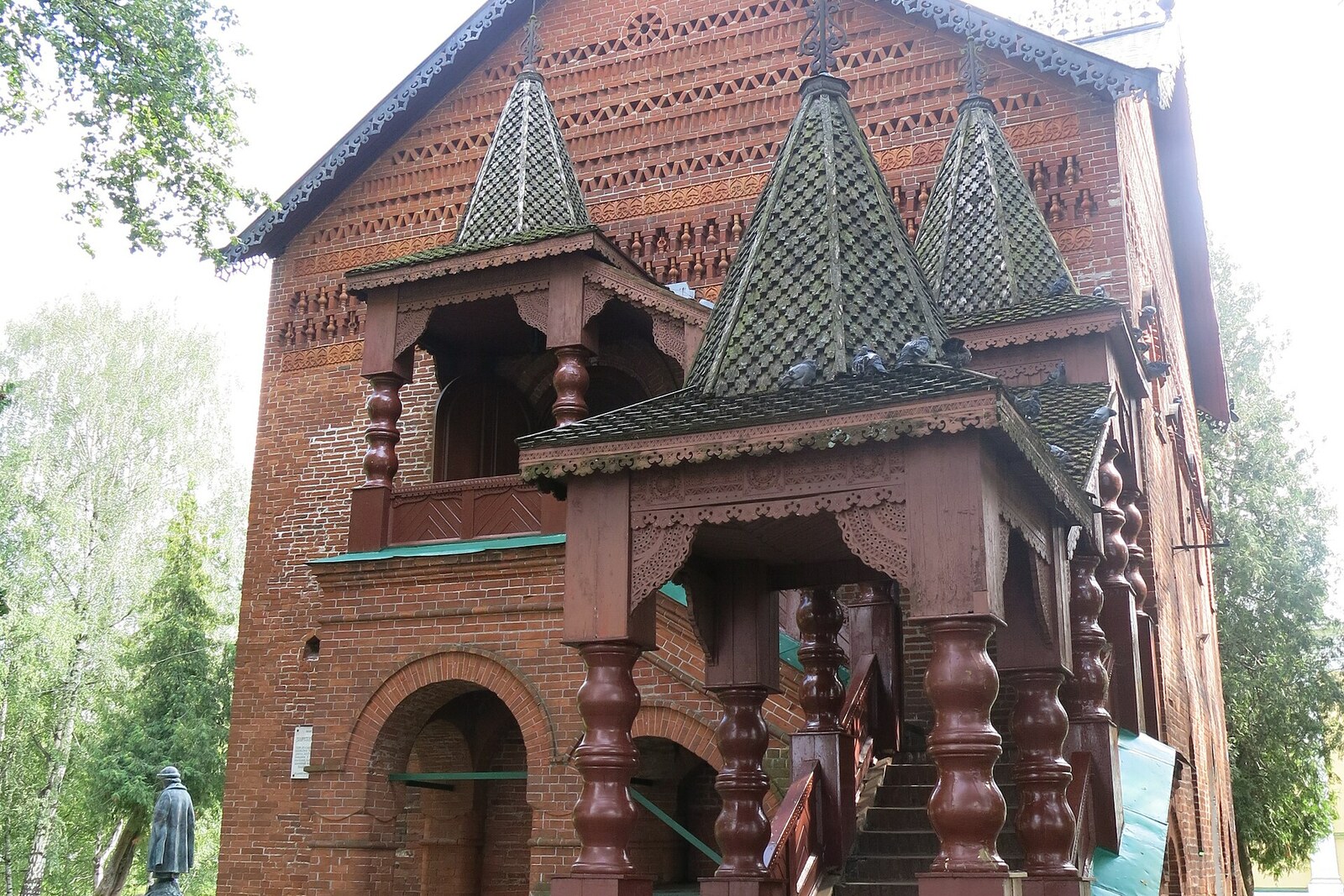
Look around first
What to notice
- Brick chamber
- Steep roof
- Porch
- Ceremonial hall
The story of the place
The steep porch leads into the solitary brick building that outlasted the large princely court in the Kremlin. Residential mansions once stretched beside the Volga, and covered passages linked them to the cathedral and the palace church. Upstairs was the hall where receptions, feasts, and consultations with the prince's closest associates were held. The later roof changed the building's silhouette, and its rooms are now occupied by a museum exhibition.
In fourteen sixty-two, fifteen-year-old Andrei Vasilyevich Bolshoy received Uglich, Zvenigorod, Bezhetsky Verkh, and several rural districts from his father. Such a hereditary holding was called an appanage. The prince collected its revenues, maintained his own boyars, scribes, servants, and army, but under the agreement he recognized the seniority of his brother—Ivan III, Grand Prince of Moscow—and had to take part in his campaigns.
Around fourteen eighty-two, Andrei ordered a large palace built in the Uglich Kremlin. Its residential wings stretched along the Volga, and covered passages linked them to the cathedral and the palace church. Of the entire complex, only one brick chamber survives. Its upper floor was occupied by the princely entrance hall, a ceremonial hall for receptions, feasts, and consultations with the prince's close associates. Opposite the entrance stood the Image of the Savior Not Made by Hands, with a place for the prince beneath it. Here Andrei heard the affairs of his appanage and received those who served him personally.
This arrangement rested on agreements between the brothers. Ivan III demanded loyalty and military assistance from Andrei; Andrei wanted to retain the lands he had inherited and his own court. In fourteen ninety-one, the Uglich prince did not send military commanders on a campaign to aid Moscow's ally. The official chronicle called this treason. Modern historians are more cautious: there is no evidence that Andrei was preparing an action against his brother, and his arrest may have been a preemptive reprisal against a possible rival.
Ivan III summoned his brother to Moscow and on September twentieth ordered him imprisoned at the Treasury Court. At the same time, Andrei's sons, Ivan and Dmitry—the heirs to the appanage—were seized in Uglich. Two years later, Andrei died in captivity. His sons were transferred to a monastic prison near Vologda. Ivan spent about thirty years there and died in chains; Dmitry was allowed to have his chains removed only in fifteen forty. Ivan III annexed Andrei's lands to his own possessions and began sending appointed governors to Uglich.
The wooden residential wings of the palace disappeared; after the Time of Troubles, only the ceremonial chamber survived. The present porch and steep roof appeared during the reconstruction of eighteen ninety to eighteen ninety-two. The Museum of Antiquities also opened here then; museum exhibitions still occupy the building today. Beyond the solitary brick building, there are no longer princely quarters, a palace church, or covered passages. What remains is the hall from which Andrei Bolshoy governed the appanage intended for his sons.
Useful on site
The museum site opens at 09:00; check the exact summer closing time on the day of your visit.
Checked: June 24, 2026. Check the official source before visiting.Inside, there are historic staircases and museum floors; assess in advance whether such a climb suits everyone in your group.