 Guide On Map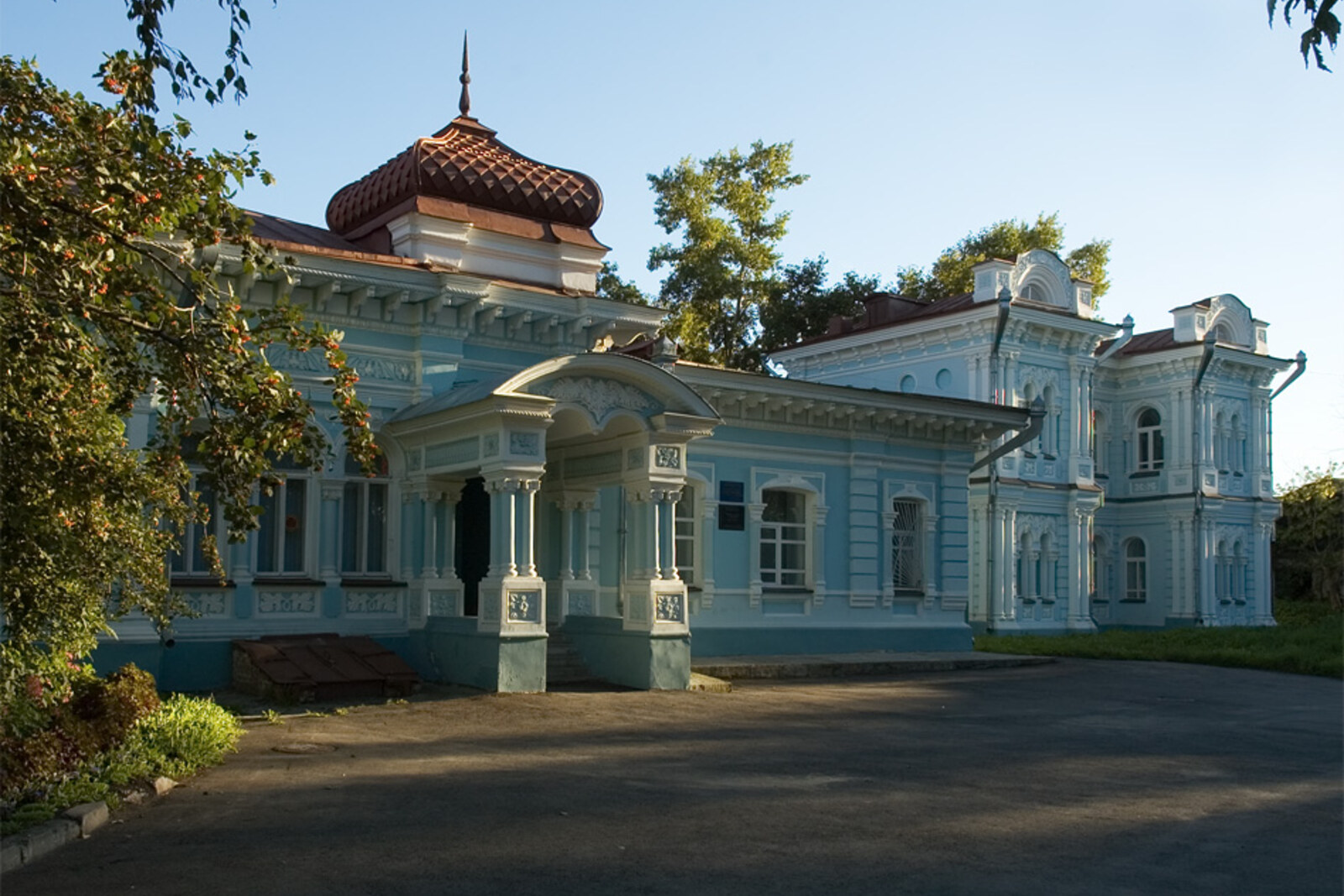
Look around first
What to notice
- Three-bay gates
- Two narrow pedestrian gates
- Broad central passage
- Tent-roofed bay window
The story of the place
The three gate openings divide the entrance into two narrow pedestrian gates and a broad passage for carriages. Behind the wooden house with large windows and a tent-roofed bay window was a yard where horses and carts were kept. Visitors spent the night in the house, and some of the premises were rented out. The house remains residential, while the wooden gate panels preserve the former scale of the entrance.
In eighteen ninety-three, the Tatar horse trader Akhmadulla Akhmetovich Moskov bought a large estate here together with a relative. A week and a half later, the relative ceded his share to him. Moskov needed a house, a working yard, and access to the road: a horse that was sold brought in money, while an unsold one had to be fed and kept somewhere.
Tatarskaya Street suited this kind of business. It led to Moskovsky Trakt, along which wagon trains entered Tomsk. In neighboring yards, people made horse collars and wheels, kept harnesses, and hired coachmen. Moskov gradually divided the land he had acquired between himself and his relatives, keeping for himself a plot that stretched from Tatarskaya Street to Istochnaya Street.
By nineteen oh two, a two-story wooden house had appeared on this plot. The trader commissioned large windows, a tent-roofed bay window above the porch, and carvings in which researchers find motifs of Eastern carpets. Behind the ornate façade was a household designed to generate income. Moskov rented out some of the premises, and an inn operated on the estate: visitors spent the night in the house, while horses and carriages were kept in the yard. In nineteen eleven, the owner requested permission to build additional two-story service buildings. Five years later, the city administration valued the estate, with its house, wing, shed, and yard buildings, at fourteen and a half thousand rubles.
After nineteen twenty, the estate was nationalized and divided into two parts. Moskov lost the trading yard, but he did not disappear from this address at once. In a document from nineteen twenty-three, he is still recorded at Tatarskaya, forty-four—the former number of what is now house forty-six. But his former merchant role no longer appears next to his name: Moskov is listed as an unemployed former employee of Sibugol.
The house remains residential today. From the layout of the merchant yard, the three-bay gates with their original wooden panels have survived: two narrow pedestrian gates and a broad central passage, through which horses were led and carriages rolled up to Moskov's house.
Useful on site
The façade can be viewed from the street; tours and entry to the center are by advance booking or as part of the event program.
Checked: June 24, 2026. Check the official source before visiting.View the estate from publicly accessible space; entry into the house and working yard is possible only with permission or during an open event.