 Guide On Map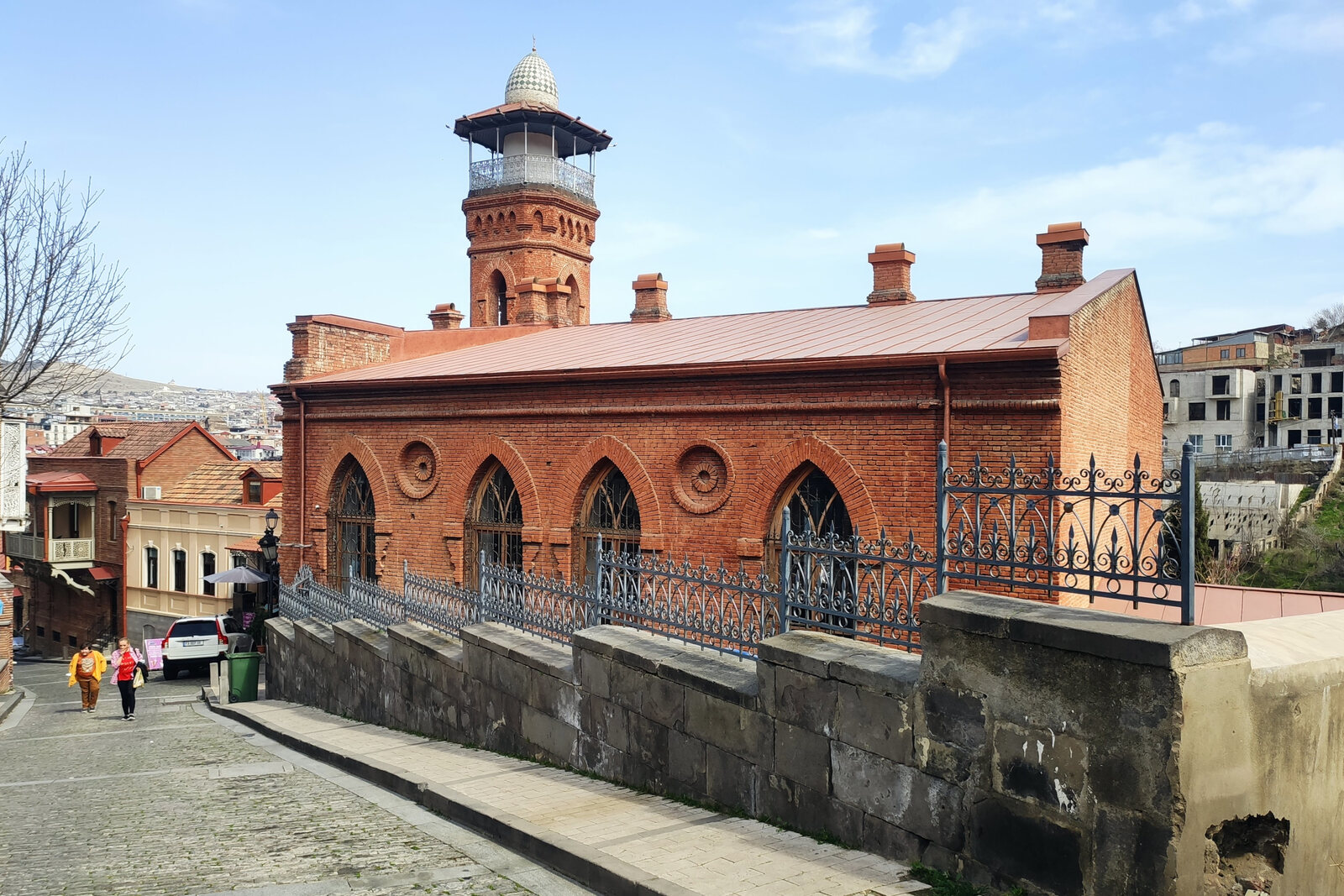
Look around first
What to notice
- Brick facade
- Two mihrabs
- Two minbars
- Dark carved minbar
The story of the place
The mosque is called Juma because Muslims gather here for communal prayer on Fridays. Its brick building took shape after nineteenth-century alterations. The Ottomans first built a Sunni place of worship on this site as early as the seventeen twenties. Such Friday prayer cannot be replaced by individual prayer at home.
In the early nineteen fifties, Tbilisi’s Shias carried a carved wooden minbar—a pulpit from which the imam delivers the Friday sermon—out of their doomed mosque. The old minbar was brought here. The people it had served followed.
Their mosque stood near Meidan Square, on the bank of the Kura. It was associated with Shah Ismail I, founder of the Iranian Safavid dynasty, and was called the Blue Mosque because of the blue tiles on its dome. During the construction of the new Metekhi Bridge, the old bridge and the mosque were dismantled. The tiles went to a museum, and the Shia community lost its only mosque of its own in the city.
At that time, a Sunni mosque was active on Botanikuri Street. The Ottomans built the first Sunni place of worship on this site in the seventeen twenties; the present brick building took shape after nineteenth-century rebuildings. Sunnis and Shias are the two main branches of Islam, divided over the successors to the Prophet Muhammad and retaining different ritual customs. Before the Blue Mosque was demolished, Tbilisi’s communities prayed separately.
The Sunni community opened its hall to the Shias. This solved a very practical problem for them: Friday communal prayer cannot be replaced by individual prayer at home. That is where the name “Juma” comes from—Friday, the day when Muslims gather for communal worship.
At first, no attempt was made to eliminate the differences. A black curtain was hung in the hall: Sunnis prayed on one side, Shias on the other. Under one roof, there remained two prayer sections, their own imams, and their own pulpits. This continued until nineteen ninety-six, when both communities gave up the partition and the curtain was removed.
Now shared Friday and holiday prayers are held in the open hall. The black curtain is gone, but the mosque’s arrangement has preserved the consequences of that history: there are two mihrabs—niches indicating the direction of Mecca—and two minbars. One of them, dark and carved, once stood in the Blue Mosque near Meidan Square.
Useful on site
An active mosque; exterior viewing is appropriate at any time, while entry inside depends on prayer, dress code, and permission on site.
Checked: June 27, 2026. Check the official source before visiting.Keep prayer times in mind, follow the accepted dress rules, and do not enter the hall without permission if access is restricted.