 Guide On Map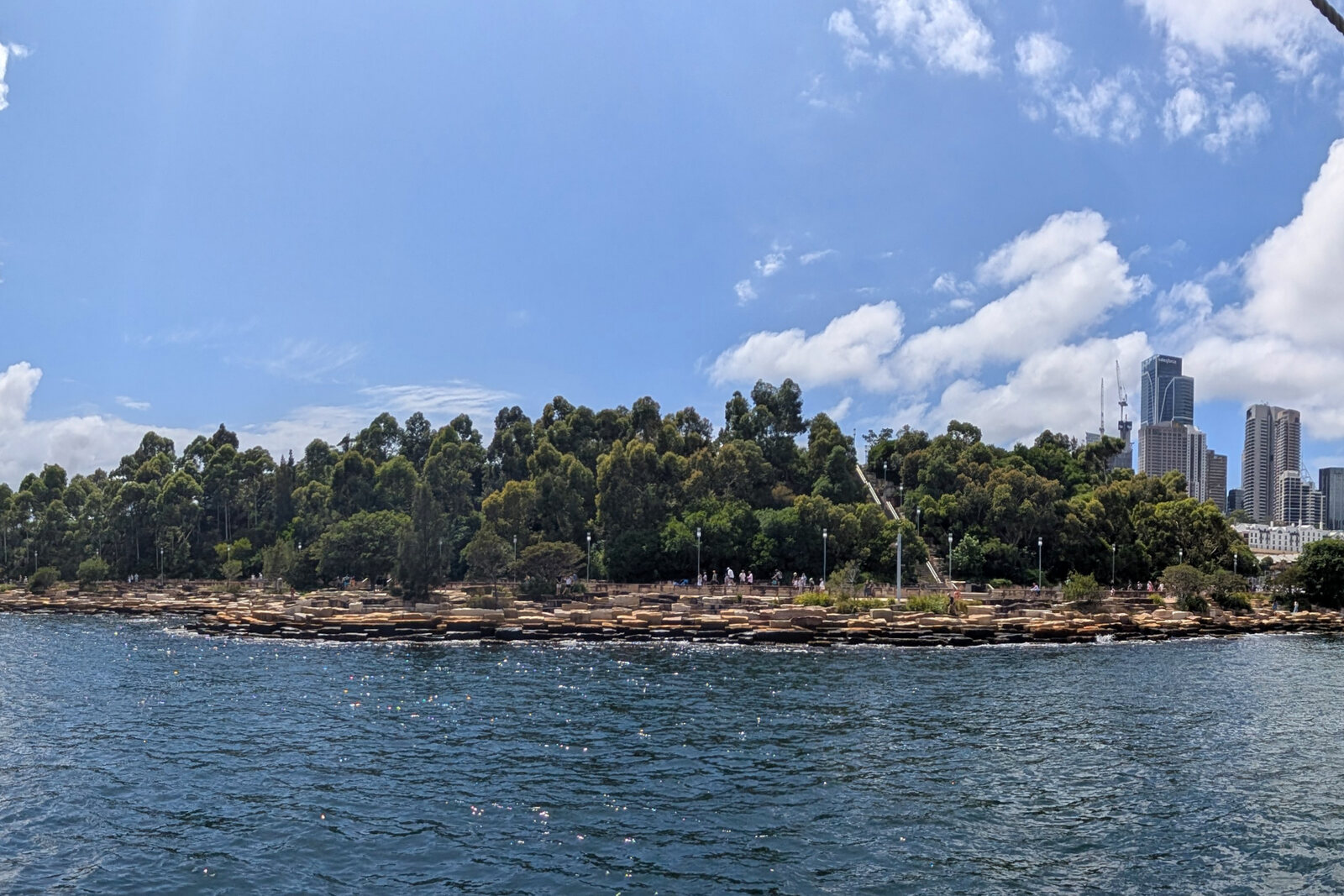
Look around first
What to notice
- Stone blocks along the shoreline
- The outline of the restored headland
- The Sydney Opera House on the opposite headland
The story of the place
The name “reserve” is conditional here: Barangaroo is an urban waterfront park. Its rocky headland looks ancient, although as recently as the beginning of this century, this site was occupied by a flat concrete freight-port yard. The former shoreline was destroyed piece by piece: bays were filled in during the nineteenth century, a road was later cut through, and a container terminal was built in the nineteen sixties. For the new park, designers restored the outline of the headland from maps and images from eighteen thirty-six. The shore was assembled from ten thousand blocks of Sydney sandstone, quarried mainly here as well, and the park opened in twenty fifteen.
The name of this restored headland is new, too. It was chosen in a citywide competition in two thousand six. Barangaroo was a woman of the Cammeraygal people, whose land lay on the northern side of Sydney Cove. This shore itself belongs to Gadigal land, so the name should not be taken as the ancient name of this particular headland.
By the time the British colony appeared, Barangaroo was about forty years old. She lived by fishing and provided food for her family: she went out into the harbour in a bark canoe and made fishing lines and shell hooks. This was her trade, her livelihood, and her standing among her people. During the smallpox epidemic of seventeen eighty-nine, Barangaroo outlived her first husband and two children. Her second husband was Bennelong, a young man of the Wangal Indigenous people. By order of Governor Arthur Phillip, soldiers abducted him to learn the local people's language and obtain an intermediary for negotiations. Bennelong escaped captivity, but later decided to meet with the colonists. They fed him, trimmed his beard, and invited him to the governor.
Barangaroo pressed him to keep away from the settlement. When the British put a European skirt on her and laughed, she took it off. She refused the wine offered to her. Barangaroo urged Boorong, a young interpreter living among the colonists, to return to her own people.
In the autumn of seventeen ninety, Bennelong again agreed to go to the governor. Barangaroo tried to stop him, and when he nevertheless prepared to leave, she grabbed his fishing spear and smashed it against the rocks. Bennelong went to the meeting. Soon afterward, colonial officials built a brick house for him on the eastern headland of the cove: they hoped in this way to keep their intermediary close to the settlement. In time, Barangaroo also began coming to this house, although she did not accept the way of life offered to her.
That eastern headland is now called Bennelong Point; the Sydney Opera House stands on it. The restored western headland was given the name of the woman who smashed his spear while trying to keep her husband from going there. Barangaroo's rocky shore has been assembled anew, and the two names still stand opposite one another across the water.
Useful on site
Outdoor park open around the clock; events, work by the water, and crowd management may change access routes.
Checked: date not specified. Check the official source before visiting.Go as close to the water as the open path allows, and compare the uneven edge with the straight lines of the city behind it.