 Guide On Map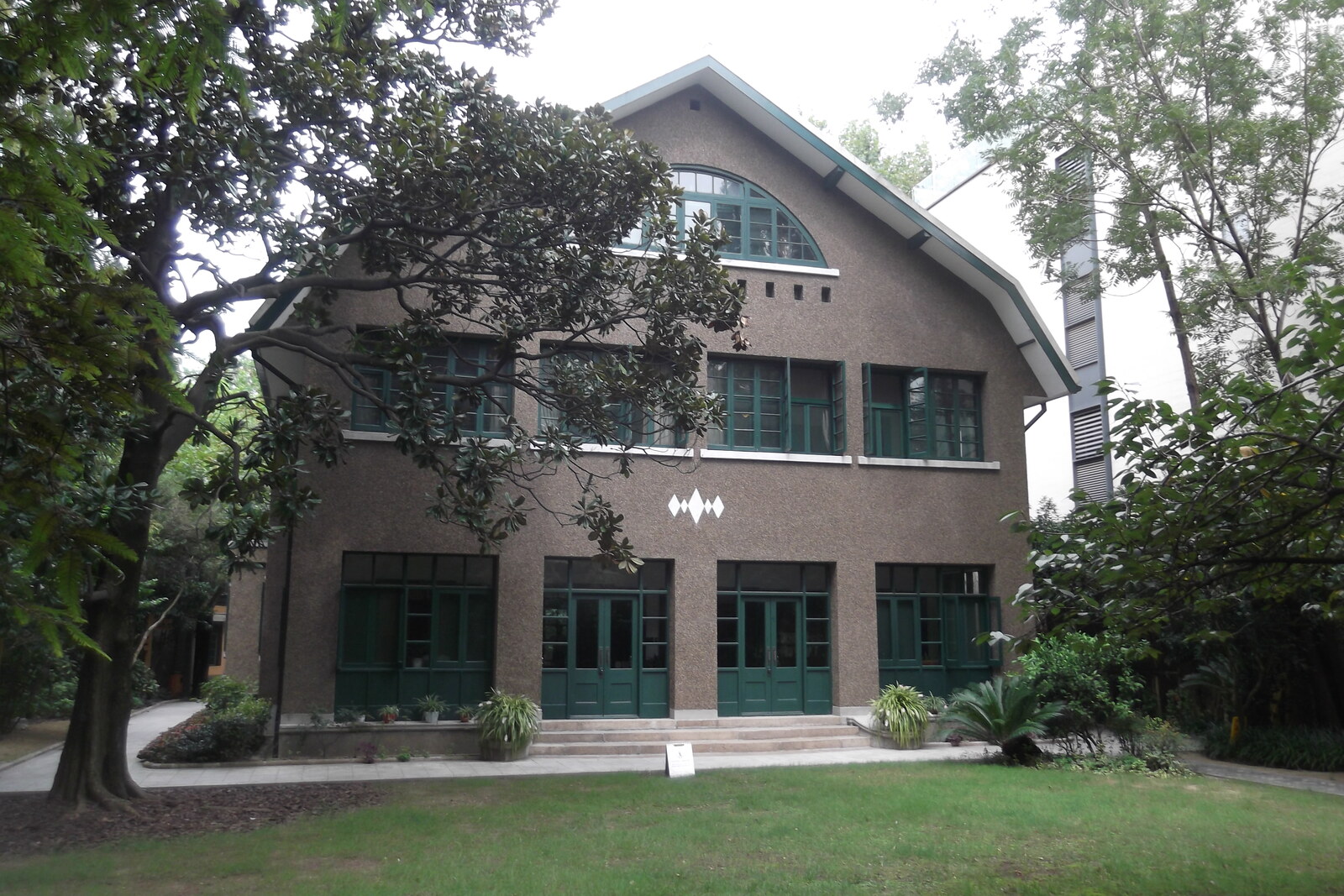
Look around first
What to notice
- The lawn in the garden
- The preserved living room
- The porcelain dog
The story of the place
The three-story house at number one hundred thirteen is built like a European villa: a gabled roof overhangs small-pebble walls and green wooden windows. People lived and worked here for almost half a century, and the rooms have now been turned into a memorial museum. A porcelain dog figurine remains in the preserved living room, and behind the house stretches a garden with a lawn.
Baodi lived behind this fence for seven years. Writer Ba Jin agreed to take the dog in nineteen fifty-nine specifically because his home on Wukang Road had a lawn. The yellow dog spent most of the day in the garden, and in front of guests he would stand on his hind legs and hold his front paws together, as though bowing.
The Cultural Revolution began in August nineteen sixty-six. Youth units of the Red Guards sought out and destroyed everything they declared a relic of the old world, while people were subjected to searches and public humiliation. Ba Jin was already facing accusations and was trying to protect his family, at least from another pretext for intrusion.
In the evenings, neighborhood children banged on the gate and shouted that they would kill the dog. Baodi answered by barking, and his owner feared that the Red Guards would hear him. Behind the bamboo fence, they were searching the house of a former factory owner: Ba Jin watched people carry things out and smash dishes. After that, he and his wife Xiao Shan spent the whole night discussing where to put the dog. No one agreed to take him. Only one option remained: to hand him over to a hospital as an experimental animal.
When Baodi was taken away, Ba Jin at first felt relief: there was no longer any dog barking at home that could attract uninvited guests. Then he took sleeping pills and still did not fall asleep. He imagined Baodi on an anatomical table. The dog never returned here, and the persecution of the writer himself was only beginning.
Thirteen years and five months later, Ba Jin was still living in this house. In nineteen eighty, he wrote the essay A Little Dog Named Baodi and included it in Random Thoughts—a book about what he had lived through during the Cultural Revolution. Ba Jin did not justify his decision by fear. He openly admitted that, for his own salvation, he had handed over an animal that trusted him for experiments and could not forgive himself.
Ba Jin lived in house number one hundred thirteen for about half a century, so it is now his memorial museum. A porcelain dog stands in the preserved living room. Once, a child asked the writer whether it was Baodi. Ba Jin replied that the real Baodi had long been gone: the figurine was a gift from a foreign guest. And the garden still has a lawn—the detail of the house that once made the family decide the dog would be happy here.
Useful on site
A recent city route indicates renovation and closed access; viewing is only from the street. Do not incorporate old ticket information without a new check.
Checked: June 28, 2026. Check the official source before visiting.Do not count on unrestricted entry: if the grounds are closed, limit yourself to the view from the gate and do not disturb the neighboring houses.