 Guide On Map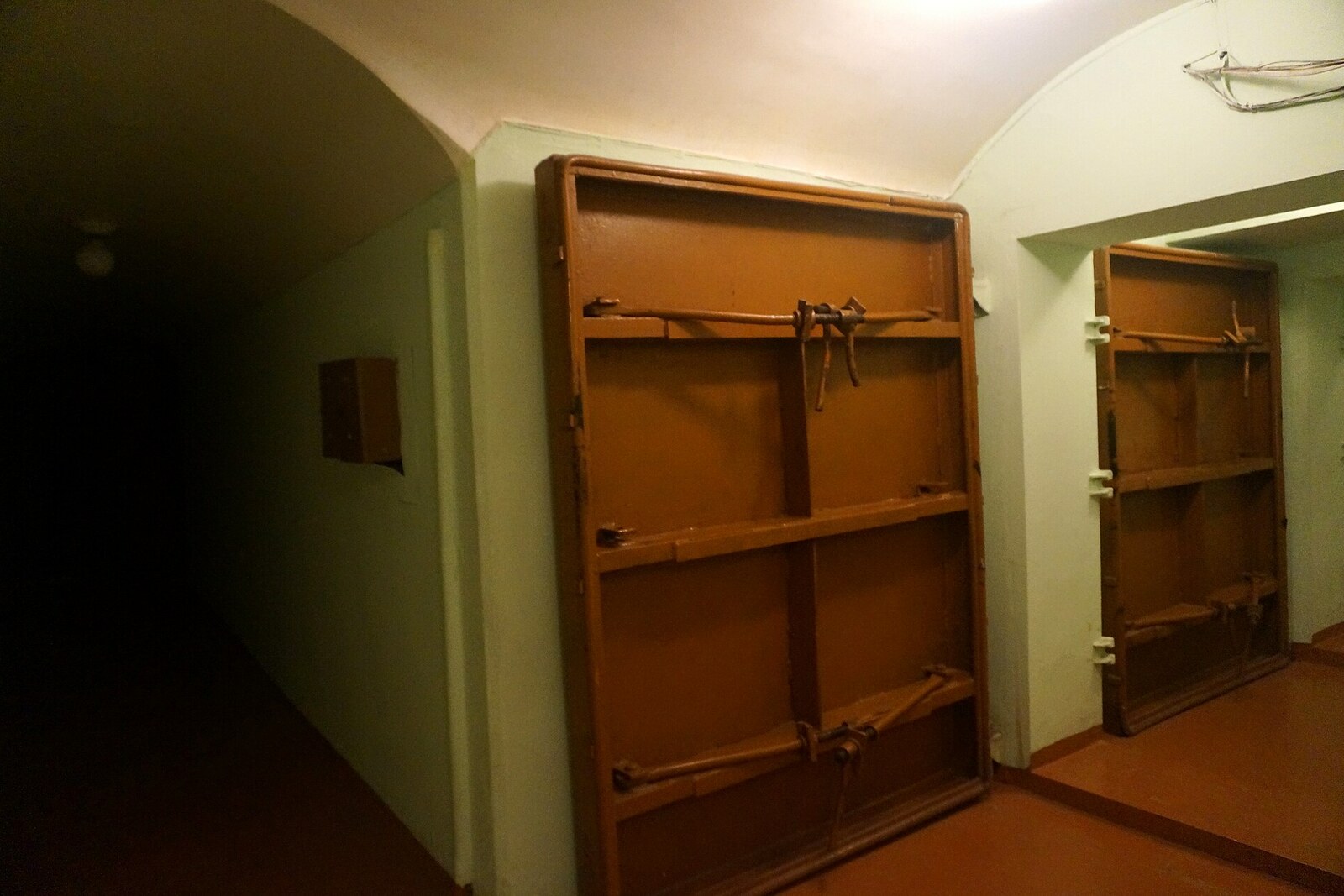
Look around first
What to notice
- An ordinary door in the courtyard
- A staircase descending underground
- Sealed doors
- A hall with oak parquet and false fireplaces
The story of the place
Beneath residential blocks, a command post for one hundred people was laid out from two vertical shafts. One contained rooms for people; the other housed ventilation, communications, water supply, and a diesel power station, so that an air or chemical attack could be endured. Metro builders assembled the walls from cast-iron tunnel rings, and on the lowest level, behind sealed doors, they created a meeting hall with herringbone oak parquet, a vaulted ceiling, and four false fireplaces. After the war, the structure was kept secret for decades; there is now a museum here, although the facility still belongs to civil defense.
In the courtyard of house one hundred sixty-seven on Frunze Street, an ordinary door leads to a staircase descending thirty-seven meters underground. During the war, the Kuibyshev Regional Party Committee stood above it. On the second floor, workrooms were prepared for Iosif Stalin—the chairman of the State Defense Committee and Supreme Commander-in-Chief—who was to lead the country and the army even if Moscow were lost. That is why the shelter was built directly beneath his intended residence: from the office above, he could quickly reach the command post.
On October fifteenth, nineteen forty-one, German troops were pushing the Soviet defenses toward Moscow. Members of the State Defense Committee, an emergency military governing body, decided to evacuate the government, the Presidium of the Supreme Soviet, and foreign missions to Kuibyshev. The city, then named after Valerian Kuibyshev, was chosen for its rail and river routes, industry, and distance from the front. The document separately stipulated Stalin's fate: he was to evacuate the next day or later, “depending on the situation.”
Six days later, the same committee ordered a protected shelter to be built here. Stalin remained in Moscow, but the situation could change, so preparations for his move continued. Metro builders—specialists able to work at great depths—were sent from Moscow to Kuibyshev. Construction of Facility Number One was led by engineer Nikolai Esakia. His crews were to create a command post for one hundred people beneath residential blocks and keep the construction itself secret.
Metro builder Lev Simak recalled twelve-hour shifts and accommodation in a school building, where four or five families lived in a single classroom. Below, workers assembled walls from cast-iron tunnel rings, laid concrete, and installed ventilation, communications, water supply, and a diesel power station. Soil was removed at night. The result was a structure like a section of metro line set vertically: one shaft contained rooms for people, while the other held equipment that made it possible to wait out an air or chemical attack.
At the deepest level, they fitted out a meeting hall for the Supreme High Command Headquarters—the headquarters from which the armed forces were directed—and Stalin's private office. Even underground, meeting participants were meant to find themselves in a familiar administrative interior. The hall was laid with herringbone oak parquet, given a vaulted ceiling, and fitted with four false fireplaces. Behind sealed doors, people could work in isolation while bombing continued above.
On January sixth, nineteen forty-three, a state commission accepted the facility. By then, German troops had already been driven back from Moscow, and Stalin's move to Kuibyshev had lost its urgency. The leader for whom Esakia and the metro builders had taken the command post to the depth of a twelve-story building never came here. Later stories of his secret nighttime visits are confirmed by neither documents nor independent testimony. Legends that the builders were executed have not been confirmed either: Esakia and other specialists named in the documents continued working on underground facilities.
The shelter was kept in full readiness until the end of the war, and its existence was then concealed for several more decades. Officially, it was called Facility Number One; Stalin's name became attached to it later and indicated its intended user. There is now a museum below, while the structure is still classified as a civil-defense facility. The office and meeting hall remain where they were prepared—beneath the workrooms of the man who never descended to his desk.
Useful on site
Under the published 2026 rules, tours are held on weekdays, with the first group at 11:00, a break from 13:00–14:00, and finishing around 15:00; entry is by prior arrangement only. The adult ticket is listed at 500 rubles and the children's ticket at 300 rubles. Call before visiting.
Checked: June 24, 2026. Check the official source before visiting.The underground section can be visited only on an organized tour, which must be confirmed in advance. Without a booking, visit this stop from outside, without attempting to enter the service rooms.