 Guide On Map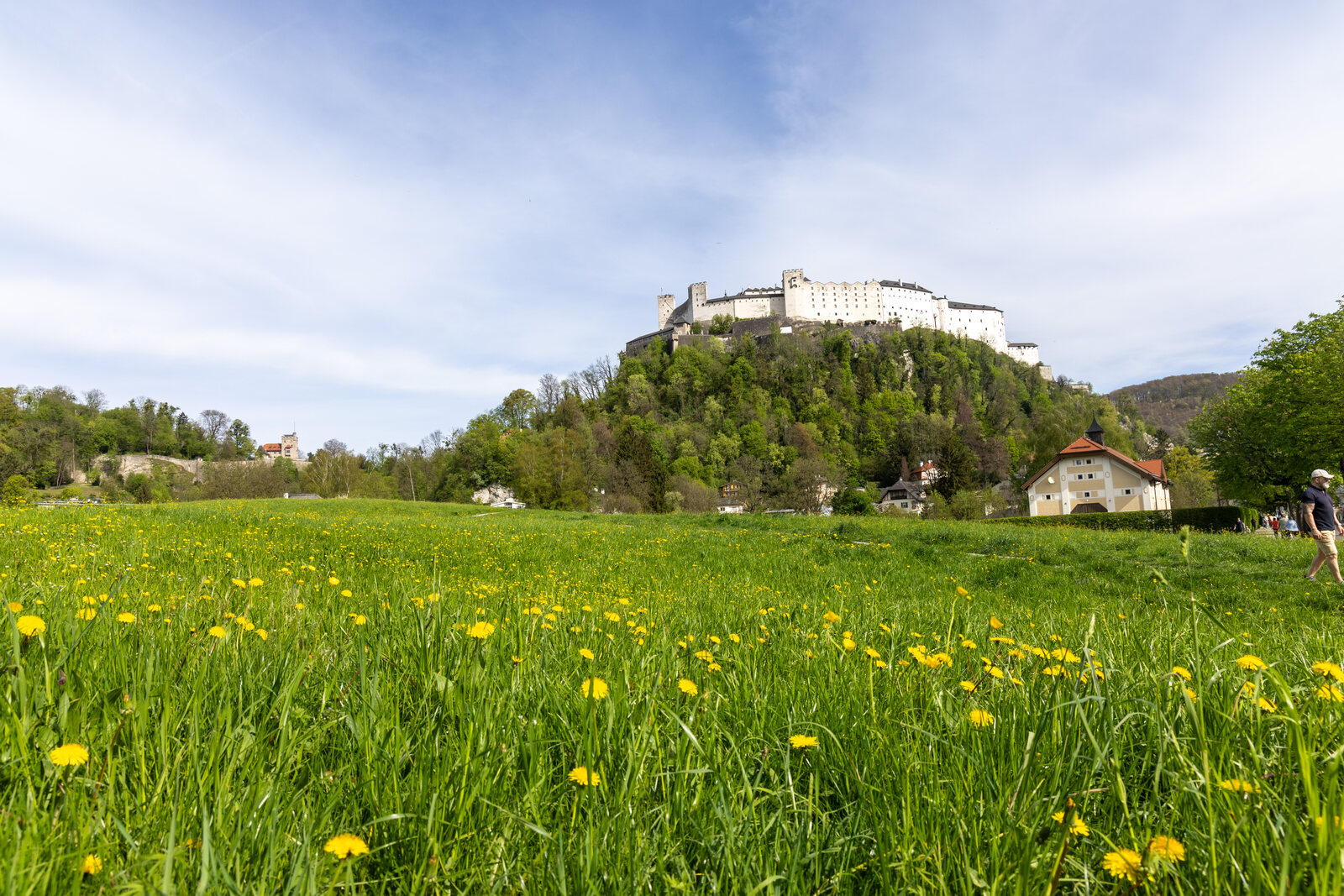
Look around first
What to notice
- Golden Hall
- Bricked-up windows
- Old flue
- Rainer Regiment Museum
The story of the place
The fortress began to be built in the eleventh century as a protected refuge for the archbishops of Salzburg. In the early seventeenth century, its height, walls, and single guarded ascent were needed to isolate an archbishop from his own city.
Wolf Dietrich von Raitenau, the former prince-archbishop—both a church leader and the ruler of Salzburg—was defeated in a dispute with Bavaria over neighboring Berchtesgaden and its salt revenues. In sixteen eleven, he was captured while trying to escape and brought to Hohensalzburg Fortress. In the spring of the following year, Wolf Dietrich was forced to abdicate. His relative and successor Markus Sittikus von Hohenems held the former prince here as a papal prisoner: Wolf Dietrich wanted to contact other rulers and secure his release, while the new archbishop feared his return.
There was no underground cell. Wolf Dietrich was assigned several rooms on the third floor of the High Storey, near the Golden Hall. The Duke of Bavaria demanded that he be housed so that he could not see Salzburg. When the prisoner managed to send out his first letters, some of the windows were bricked up and covered with wooden casings and iron grilles: the guards were preventing him from throwing notes to servants.
On October eighth, sixteen twelve, the fortress cannon announced Markus Sittikus von Hohenems's entry into the city. “Then we will fire too,” Wolf Dietrich replied, and smashed a tiled stove. Behind the damaged masonry, an opening was discovered into the space from which the stove was stoked. A church servant worked there. He and the fortress cook agreed to help the prisoner, expecting a reward if the former prince regained his freedom.
Ink and paper were hidden in a pie. Letters were raised and lowered through the flue. When warm weather came and continuing to stoke the stove became suspicious, the helpers climbed into the attic. They drilled through the floor and a thick ceiling beam directly above Wolf Dietrich's room. To pass papers silently, the prisoner had to place a chair on a table and receive the bundle just below the ceiling.
This is how his messages reached the princes gathered in Regensburg for an imperial assembly. Markus Sittikus von Hohenems learned of the correspondence and ordered an investigation. The cook managed to flee. One helper was driven with rod blows from the fortress to Klausen Gate; the other was banished from Salzburg forever. Later, three soldiers prepared another escape for the prisoner. The plot was discovered by chance: one soldier escaped, and two were sentenced to death.
Wolf Dietrich remained in Hohensalzburg Fortress until January sixteenth, sixteen seventeen, and died here after five years of imprisonment. Researchers located his rooms near the Golden Hall through archival descriptions, the bricked-up windows, and the old flue. The partitions have since been altered; this part of the third floor is now occupied by the Rainer Regiment Museum.
Useful on site
January-April 09:30-17:00; May-September 08:30-20:00, while the museums, State Rooms and Magic Theatre are 09:00-19:00; October-December 09:30-17:00; last admission 30 minutes before closing.
Checked: June 27, 2026. Check the official source before visiting.The ascent and the visit to the interior rooms require more effort and time than the outdoor route through the center. Plan the exhibitions separately; on the open areas, take wind, sun, and sections slippery after rain into account.