 Guide On Map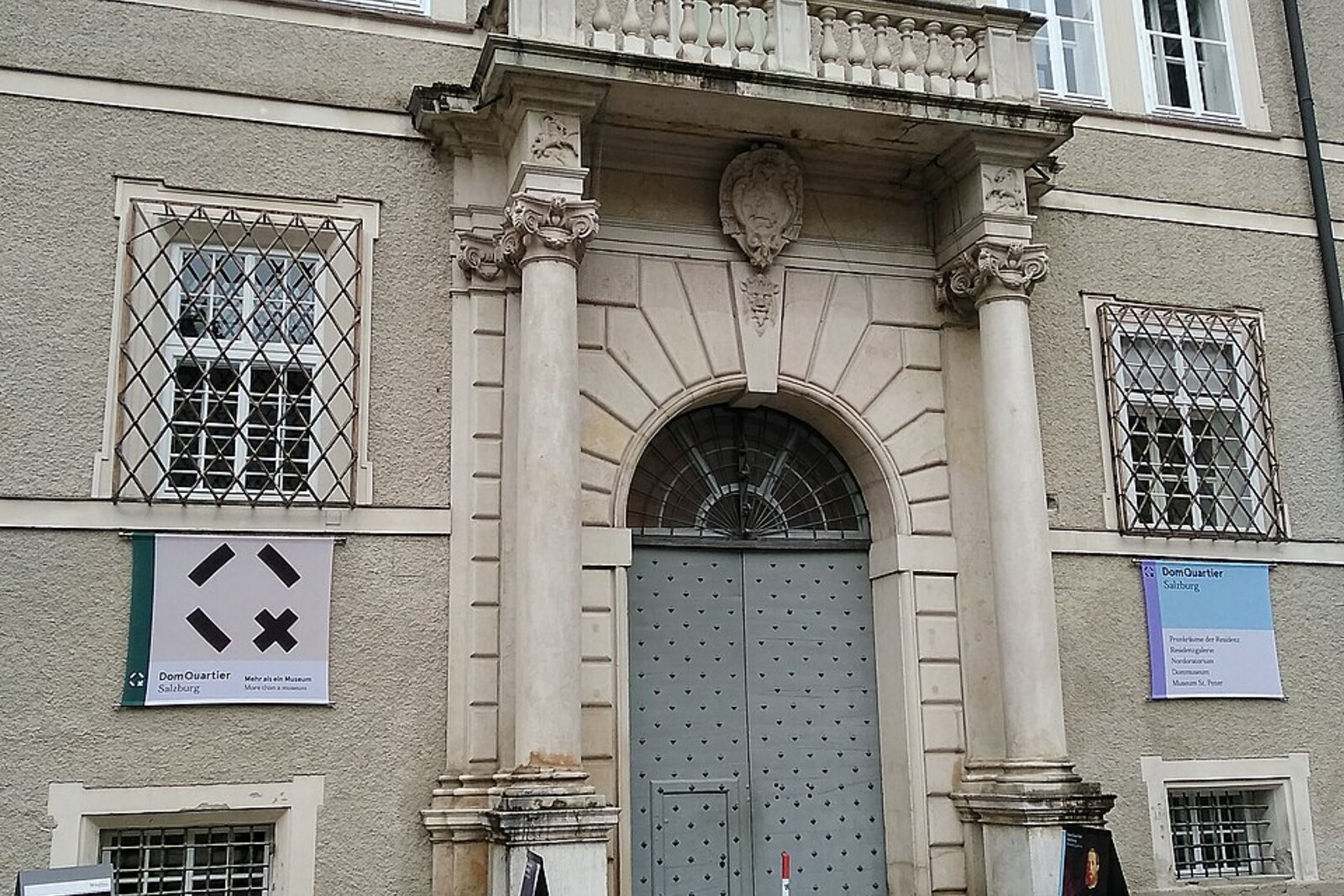
Look around first
What to notice
- Conference Hall
- Halls of the Old Residence
- Upper passageways between the residence and Salzburg Cathedral
- Cathedral organ gallery
The story of the place
Inside the Old Residence, the court halls followed two different schedules. During the day, the ruler of the Prince-Archbishopric of Salzburg met here with his closest advisers; in the evening, he received guests, sat down to cards, and listened to his court chapel. For holidays and the arrivals of important people, musicians were commissioned to write new works, so service at court meant steady work rather than occasional performances. The preserved Council Hall and the cathedral gallery with its organ still bring affairs of state and church music together.
The German name “DomQuartier” means “Cathedral Quarter.” This is the name of the museum route that leads from the ceremonial rooms of the Old Residence, through the upper passageways, into Salzburg Cathedral, and then to the collections of St Peter's Abbey. This route was arranged in the seventeenth century by Prince-Archbishop Guidobald von Thun: the head of the local church and sovereign of Salzburg could pass directly from his living quarters and administrative rooms to the cathedral galleries.
On February twenty-eighth, seventeen sixty-three, seven-year-old Wolfgang Mozart and his eleven-year-old sister Maria Anna first performed before the Salzburg court in the Conference Hall of the residence. Maria Anna was a harpsichordist in her own right, with whom her brother had already given concerts in Munich and Vienna. The occasion was the birthday of Prince-Archbishop Sigismund von Schrattenbach.
Behind the performance was the family's livelihood. The children's father, court violinist Leopold Mozart, had served here for twenty years, and on the morning of that same day received his long-awaited promotion to deputy Kapellmeister. Schrattenbach rewarded Wolfgang with a gold coin worth twelve ducats and entered the expense in his account book under the name “little Mozartl.” For the boy, it was his first concert at his home court; for his father, confirmation that the children's talents could strengthen the whole family's position.
The Conference Hall was also called the Council Hall. During the day, the prince-archbishop discussed affairs of state here with his privy councillors, while in the evenings he received guests, played cards, and made music with the court chapel. Musicians were constantly commissioned to write new works for the next reception, name day, or visit by an important guest. Mozart therefore returned here already as an employee: at thirteen, he was appointed third concertmaster without a salary, and at sixteen he was granted one hundred fifty gulden a year. He performed and composed for the residence, and wrote masses, litanies, and vespers for the neighboring Salzburg Cathedral.
After Schrattenbach's death, Mozart's employer became Prince-Archbishop Hieronymus von Colloredo. He required court musicians to remain in Salzburg and church compositions to be brief and festive. Mozart wanted to write operas and seek commissions in the great musical cities. In seventeen seventy-seven, he gave up his post and left, but found no permanent employment in Munich, Mannheim, or Paris. A year and a half later, he returned empty-handed and accepted the position of court and cathedral organist, with a salary of four hundred fifty gulden—three times more than before.
The final break came in Vienna in seventeen eighty-one. Mozart refused to return to Salzburg and lost his guaranteed salary; after that, he earned his living through lessons, his own concerts, and publishing music. Leopold remained in court service, and his son never returned here.
After the Prince-Archbishopric of Salzburg was abolished in eighteen oh three, the passageways between the residence and Salzburg Cathedral were closed. In nineteen fourteen, they were reunited as DomQuartier Salzburg. The present museum route passes through the preserved Conference Hall, where Schrattenbach rewarded “little Mozartl,” and then leads to the cathedral's organ gallery—to the second half of Mozart's Salzburg service.
Useful on site
Daily except Tuesday 10:00-17:00; in July and August daily 10:00-18:00; from December through January 6 daily 10:00-17:00; last admission one hour before closing, closed December 24.
Checked: June 27, 2026. Check the official source before visiting.The ceremonial rooms and chapel are part of the museum visit, for which you should allow separate time. If you are not going inside, look at the passageways from outside that link the residence to the cathedral complex.