 Guide On Map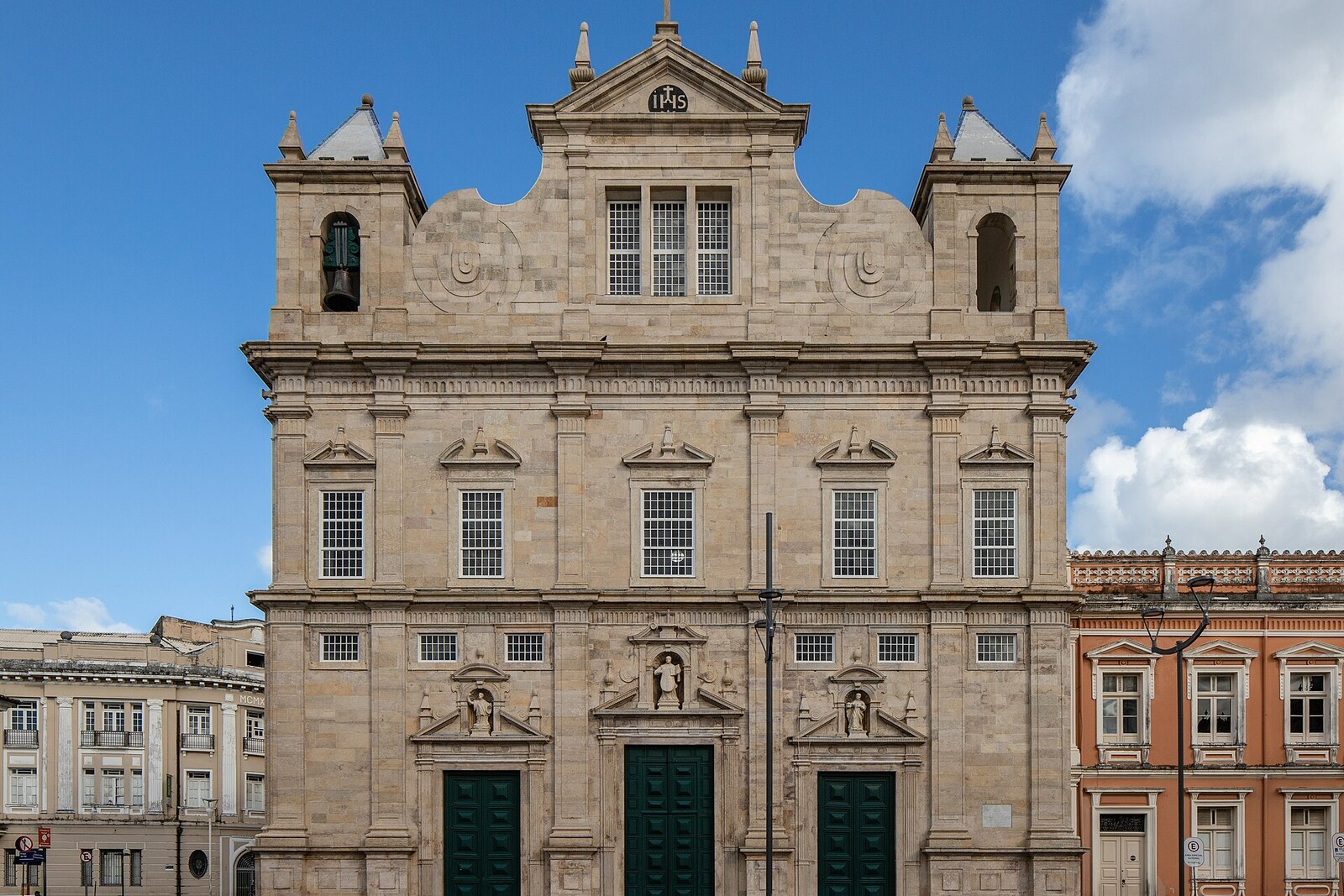
Look around first
What to notice
- The archbishop’s chair
- Images of Francis Xavier and Ignatius of Loyola above the high altar
- The side altar of Francis Xavier
- The reliquary of Francis Xavier
The story of the place
The archbishop’s chair by the high altar explains the word “cathedral” in the church’s name. The church of the Jesuit College originally stood here; after the expulsion of the Society of Jesus, the cathedral clergy moved here temporarily, but the move remained permanent. Later, the Pope gave the church the title of minor basilica, and its dedication to the Savior is echoed in the city’s very name.
On May tenth, sixteen eighty-six, the city council of Salvador, then called the Senate of the Chamber, summoned the governor, the clergy, and the townspeople to this church. They gathered because of an epidemic of yellow fever, known as “mal-da-bisha.” Doctors and those caring for the sick could not cope, the number of deaths was rising, and the disease struck people of different social ranks.
At that time, the church of the Jesuit College stood before those assembled. The Jesuits proposed seeking the intercession of Francis Xavier, their missionary who preached in Asia. He had no connection to Salvador: more than a hundred years before the epidemic, Xavier died of fever on an island off the Chinese coast, without ever receiving permission to enter China. It was precisely the similarity of the diseases that allowed the Jesuits to present him as a suitable protector for the city.
The councilors made a vow here with specific obligations. If the saint helped rid Salvador of the epidemic, the city would recognize him as its patron saint and would hold a grand service and procession every year on this day, at the expense of the city treasury. Those assembled chose Francis Xavier by public vote.
The fever did not stop after this. It continued to take lives for several more weeks, and then remained in Bahia as a permanent disease. Contemporaries attributed the epidemic’s decline to different saints, and they had no clear conviction that Francis Xavier had worked a miracle. But the city council did not abandon its promise.
The Portuguese king Pedro II approved the choice in sixteen eighty-seven. A year later, consent was granted in Rome, where they also required another vote—this time a secret one, involving the city council, the clergy, and the residents. After the repeat vote, the feast of Francis Xavier became an obligation of the municipality and one of the city’s most expensive ceremonies.
The building was not yet a cathedral. After the expulsion of the Jesuits, the cathedral clergy moved here in seventeen sixty-six; the temporary move later became permanent. The church is called a cathedral because the archbishop’s chair is here, and the Pope conferred on it the title of minor basilica in nineteen twenty-three. The cathedral is dedicated to the Most Holy Savior: “Salvador” means “Savior.”
Francis Xavier remained inside the former Jesuit church. His image is placed above the high altar beside Ignatius of Loyola, the founder of the Society of Jesus; a side altar is dedicated to Francis Xavier, and his reliquary is kept here as well. Every May tenth, representatives of the city council come to the cathedral again for a service and procession. They repeat the vow their predecessors made in this building while the epidemic was still ongoing.
Useful on site
Monday 10:00–16:30; Tuesday–Saturday 09:00–16:30; Sunday 11:00–15:00. Ticket — 10 reais. Masses: Thursday 08:30 and Sunday 10:00.
Checked: June 24, 2026. Check the official source before visiting.The interior details are visible only when the church is open; observe church rules and do not play the narration during prayer or a service.