 Guide On Map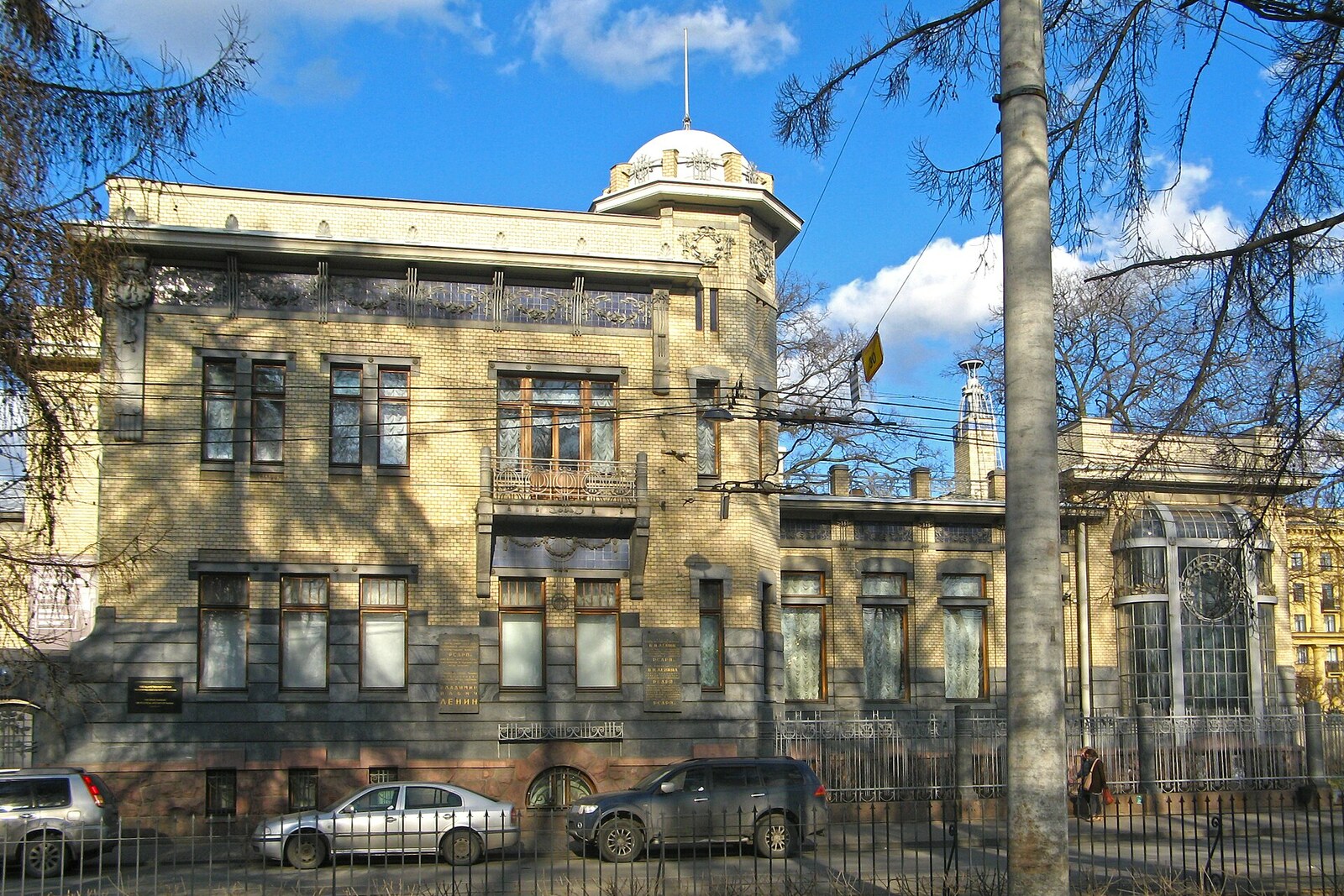
Look around first
What to notice
- Light brick
- Red and gray granite
- Colored facing tiles
- Corner bay window
The story of the place
Matilda Kshesinskaya, a prima ballerina of the Mariinsky Theatre, decided to build this mansion because of a single child's room. After the birth of her son Vladimir, whom everyone at home called Vova, he could be given only one room in the previous house. While the boy was small, that was enough. Kshesinskaya wanted her grown-up son to be able to continue living near her.
Nikolai Alexandrovich—then heir to the throne and her lover, later Emperor Nikolai II—had given her the previous mansion. The house required major repairs, and it was becoming ever harder for Kshesinskaya to remain among memories of a romance that had ended. She chose a plot on this corner: farther from the factory smokestacks, with space for a large house and a garden. She commissioned the design from Alexander von Hohen, architect to the Imperial Court, and decided herself how the rooms would be arranged.
Kshesinskaya was building the house for her work as well. In nineteen oh four, she left the permanent company but returned to the stage as a touring performer under a separate contract: the theatre paid for each performance. Four enormous oak wardrobes were installed in the downstairs dressing room for costumes, ballet shoes, wigs, and headdresses. Each held a complete inventory, and the ballerina kept a copy with her. While at her country house, she could send a note with the number of the wardrobe and the item she needed, and the servants would assemble everything for the performance without error.
The yard had room for a laundry, a garage, a carriage shed, and a cowshed. The cow was brought from the country house so that Vova would always have fresh milk. His favorite, a pig, was kept here as well. And in the mansion itself lived a little goat with which Kshesinskaya performed in Esmeralda. The ballerina fed it herself and took it to the theatre, training it to follow her across the stage. In the garden, the little goat walked with the pig and its owner's fox terrier.
Kshesinskaya pressed von Hohen to hurry, and before Christmas nineteen oh seven she moved in, although not all the rooms had yet been furnished. She sold the old house. For about ten years, this place accommodated rooms for the growing Vova, the costumes of the working ballerina, servants' quarters, and formal reception rooms for guests.
A museum now operates in the mansion. The White Hall and the winter garden have been recreated from archival photographs, while the exterior has survived almost unchanged: the light brick, red and gray granite, and colored facing tiles belong to the house Kshesinskaya planned for herself and her son.
Useful on site
Museum: Tue, Thu–Sun 10:00–18:00; Wed 10:00–20:00; Mon closed.
Checked: June 24, 2026. Check the official source before visiting.The balcony and the Art Nouveau character are clearly visible from the street; the mansion's rooms and the museum exhibition require a separate visit.