 Guide On Map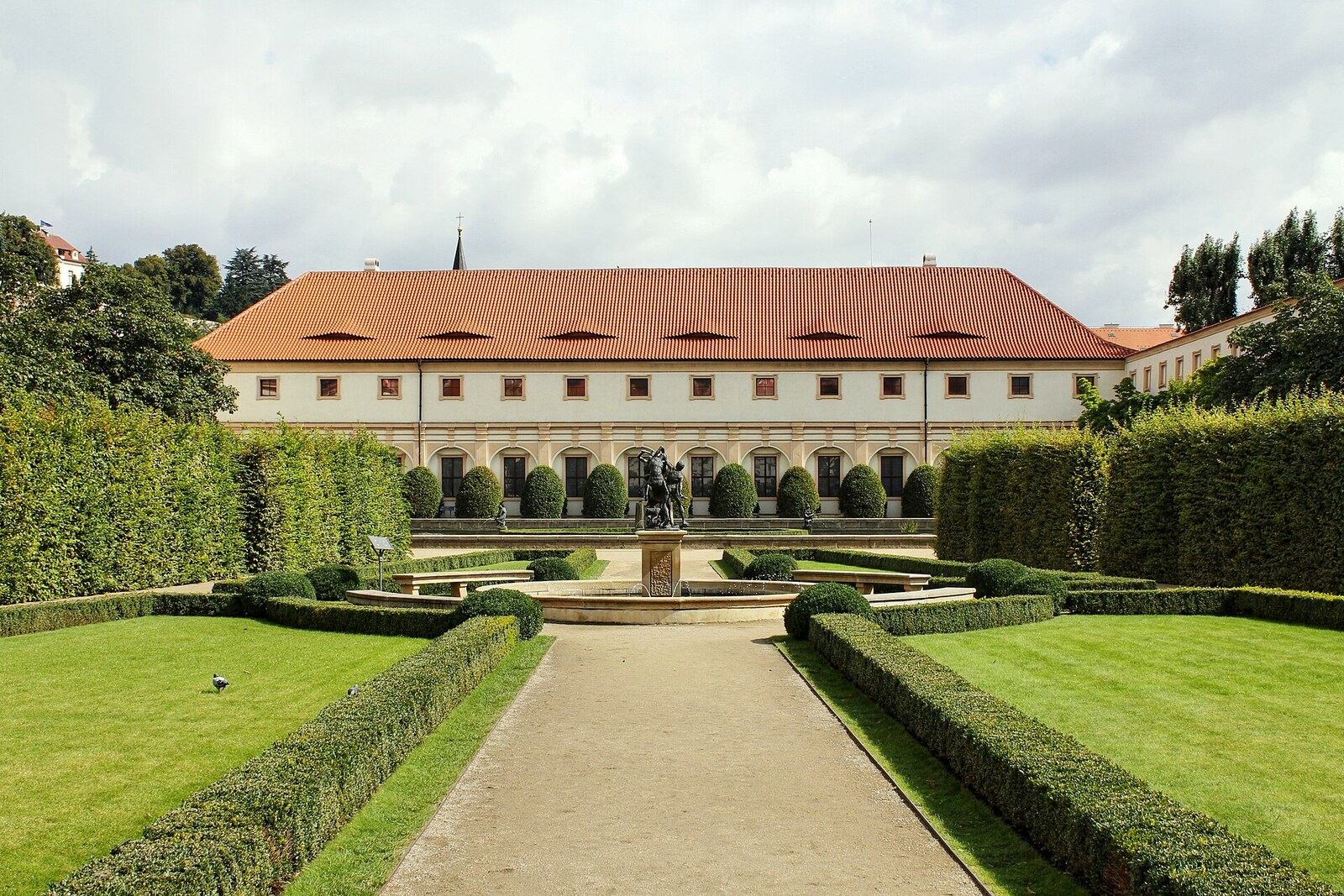
Look around first
What to notice
- Sala Terrena
- Artificial grotto
- Pond with an island
- Main avenue
The story of the place
Wallenstein Garden is named after Albrecht von Wallenstein, a Bohemian magnate who cleared part of Malá Strana for his residence but had less than a year to enjoy it.
Wallenstein’s fortune was tied to war. After the defeat of the Czech uprising against the Habsburgs, the emperor confiscated the lands of the defeated nobles, and Wallenstein bought up many such estates on favorable terms. He then offered Emperor Ferdinand II to raise an entire army at his own expense. At first, his estates and credit covered the costs; later, the upkeep of the regiments was shifted onto occupied territories in the form of military levies. The emperor gained a large army, and Wallenstein gained the post of commander-in-chief and a ducal title.
In sixteen twenty-three, Wallenstein began building a house in Prague befitting this position. For the palace and garden, he combined the plots of twenty-five houses, seven gardens, and a brickyard. Residents of Malá Strana and the monks of the neighboring Augustinian monastery resisted the expansion of the estate, but the buildings were demolished. Wallenstein sought a residence capable of rivaling Prague Castle.
He personally attended to the garden. Surviving letters from the Dutch sculptor Adriaen de Vries, whom he hired, show that the patron sent his own proposals and comments. This is how the garden acquired two geometric sections, a pond with an island, an artificial grotto, and the enormous Sala Terrena—an open hall extending the palace’s living rooms. It was intended above all so that the owner and his guests could be among the palace frescoes while seeing the entire garden at the same time.
The decoration was completed in sixteen thirty. That same year, yielding to pressure from the princes, the emperor removed Wallenstein from command. He obeyed and left for his estates. Two years later, military defeats forced Ferdinand II to return him to the head of the army, but the former trust was gone. Wallenstein refused to carry out a direct order, then demanded unconditional loyalty to himself from the regimental commanders without mentioning their duty to the emperor. Ferdinand interpreted this as treason and announced the removal of the commander-in-chief. The regiments abandoned Wallenstein. In February sixteen thirty-four, he fled to Eger (now Cheb), where officers who had remained on the emperor’s side killed him. The dead man’s property was confiscated.
Later, his distant relative Maximilian Wallenstein bought back the Prague palace for a symbolic price, and the family owned the complex for more than three further centuries. The garden is now part of the complex of the Senate of the Parliament of the Czech Republic, and concerts and performances are held in the Sala Terrena. Its main avenue still crosses the plots of twenty-five vanished houses and seven separate gardens that Albrecht von Wallenstein ordered combined into one.
Useful on site
Seasonally from April 1; usually weekdays 7:00–19:00, weekends and holidays 9:00–19:00; open-house days may differ.
Checked: June 28, 2026. Check the official source before visiting.The garden is seasonal and may close for events. Do not feed or chase the birds; view the sculptures and the grotto from the paths.