 Guide On Map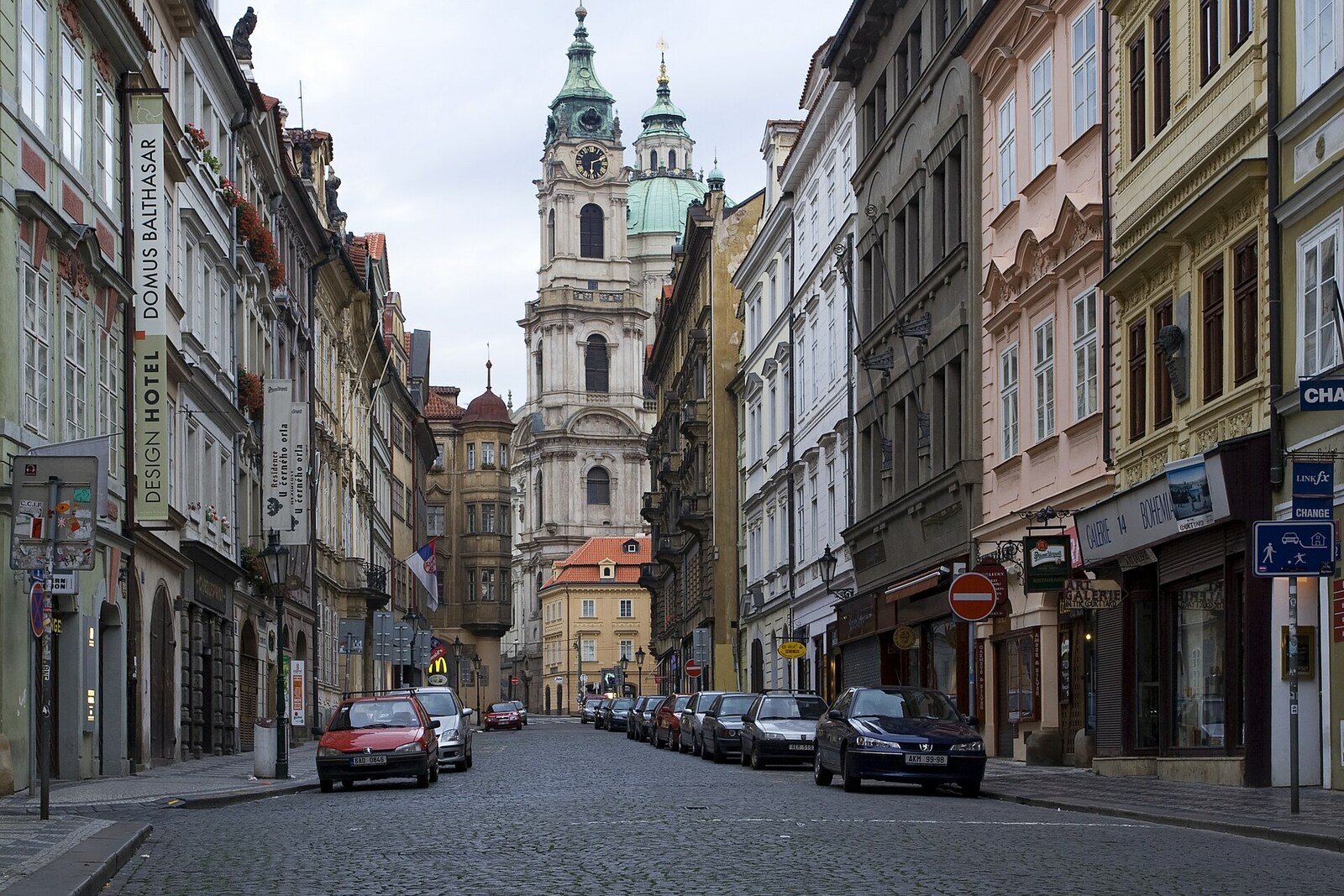
Look around first
What to notice
- Façade of house no. 17
- Ground-floor display windows
The story of the place
Mostecká means “Bridge Street.” The street got its name from its function: it leads from the bridge to Lesser Town Square and then on to Prague Castle. Kings passed through here for their coronations, but the same ground floors were occupied by shops and workshops. Behind today’s display windows, people traded and lived at the same time.
In the House at the White Rose, at number seventeen, one such room served as both home and glove shop for twenty-year-old Rudolf Mrva. It did not stand out from the street: the house’s façade was rebuilt in eighteen seventy-one, two decades before he appeared here.
Mrva sought a standing that his trade could not give him; glove sales were also going poorly. Documents do not explain exactly what led him to the police—ambition, money, or both motives. He became a confidant, that is, a secret informer.
At the time, the police were preparing a case against young Czech radicals who had taken part in demonstrations for electoral and national rights. The alleged underground organization was called Omladina—“the young people.” It was not possible to prove whether it existed as a single union with leadership and discipline. Mrva, however, listed its participants and described the structure of the conspiracy in detail. His testimony formed the basis of charges against dozens of people.
When the informer’s name reached the newspapers, the glovemaker Josef Kříž decided to take revenge on him. He persuaded two of Mrva’s acquaintances: eighteen-year-old locksmith Ota Doležal and seventeen-year-old painter’s apprentice František Dragoun. On December twenty-third, eighteen ninety-three, they came here, to the shop that also served as a home. Mrva let his acquaintances in and continued decorating the Christmas tree. Dragoun grabbed him by the throat, and Doležal struck him with a dagger.
The killers intended to deal with the informer, but they gave the investigation new grounds for a major political trial. Nearly eighty defendants appeared before the court in the Omladina case. Eight people were acquitted, and sixty-eight received a total of ninety-six years in prison. Most were released under an amnesty in the autumn of eighteen ninety-five. Doležal, Dragoun, and Kříž, who had persuaded them, were each sentenced to ten years of hard prison.
Mrva’s room is hidden inside the house. The façade that stood here on the day of the murder still faces Mostecká Street: the former glove shop remains behind the wall of the commercial street named for the road to the bridge.
Useful on site
Open city street; access may change only because of crowds, repairs, or events.
Checked: June 28, 2026. Check the official source before visiting.The street is narrow and crowded: view the upper floors from a safe place. The Gothic gate is in the courtyard and may be inaccessible.