 Guide On Map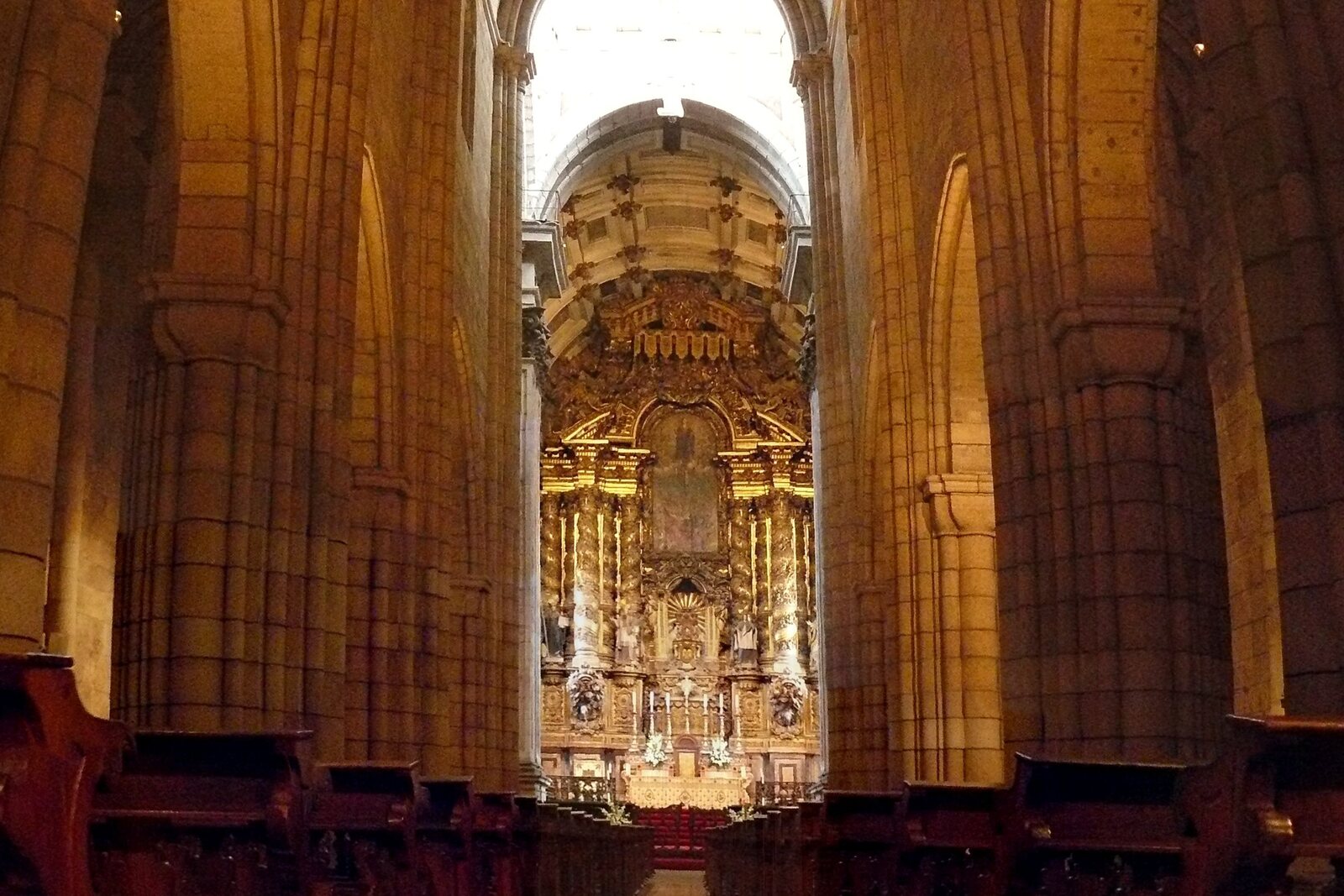
Look around first
What to notice
- The rose window on the western façade
- The massive supports of the three-aisled structure
- The Baroque main chapel
- The white Episcopal Palace of Porto
The story of the place
Porto's bishop still serves at Porto Cathedral today. Its medieval three-aisled structure can be recognized by its heavy supports and large round window on the western façade. The main chapel was added later, and most of the interior was decorated in the Baroque style. The white palace next door was built in the eighteenth century to replace the medieval episcopal chambers.
On February second, thirteen eighty-seven, João I and Philippa of Lancaster were married in this cathedral. The king needed this ceremony no less than he needed the bride.
João was the illegitimate son of a Portuguese king and had led the military-monastic Order of Aviz since childhood. After the death of his paternal half-brother Fernando I, the King of Castile—the husband of the late king's only daughter—claimed the crown. Portugal split. The Cortes, an assembly of clergy, nobility, and city representatives, chose João as king; his army defeated the Castilians at Aljubarrota. Yet the election and the victory still did not make the new dynasty indisputable. João borrowed money in England to pay his soldiers, and he sought a recognized European ally.
Such an ally needed him too. John of Gaunt, Duke of Lancaster, was seeking the Castilian crown for himself by virtue of his wife's rights. Without Portuguese troops, his campaign made no sense. In May thirteen eighty-six, England and Portugal concluded the Treaty of Windsor on mutual aid and trade. The duke then offered João his elder daughter.
Philippa was twenty-seven years old. She left her father's court and arrived in a country where her position depended on her future husband's disputed crown. João gained a wife from the house of the English kings, while Philippa gained the title of Queen of Portugal and her own court. Her court was supported by income from lands and towns assigned to her after the wedding: her ladies, scribes, and stewards served on that money.
Here, in Porto Cathedral, the Bishop of Porto's cathedral church, a military treaty was turned into kinship. This proved more important than the original calculation. John of Gaunt's campaign in Castile failed, and the duke gave up his claims in exchange for peace and an allowance. Their shared war ended, but his daughter remained Queen of Portugal. João gained a legitimate heir, Duarte. Philippa took part in court affairs, and in fourteen eleven, together with her paternal half-sister Catherine of Lancaster, regent of Castile, she helped the two kingdoms reach agreement on their long-protracted peace.
The cathedral still serves as the bishop's see and as a working church. Its present main chapel and most of its Baroque decoration appeared after the wedding. Of the building João and Philippa entered, the three-aisled structure, massive supports, and rose window on the western façade remain. The neighboring white Episcopal Palace of Porto is also later: the medieval chambers where Philippa lived before the festivities were replaced in the eighteenth century.
Useful on site
Keep quiet inside and be mindful of church activities; access to certain parts of the church may be restricted.