 Guide On Map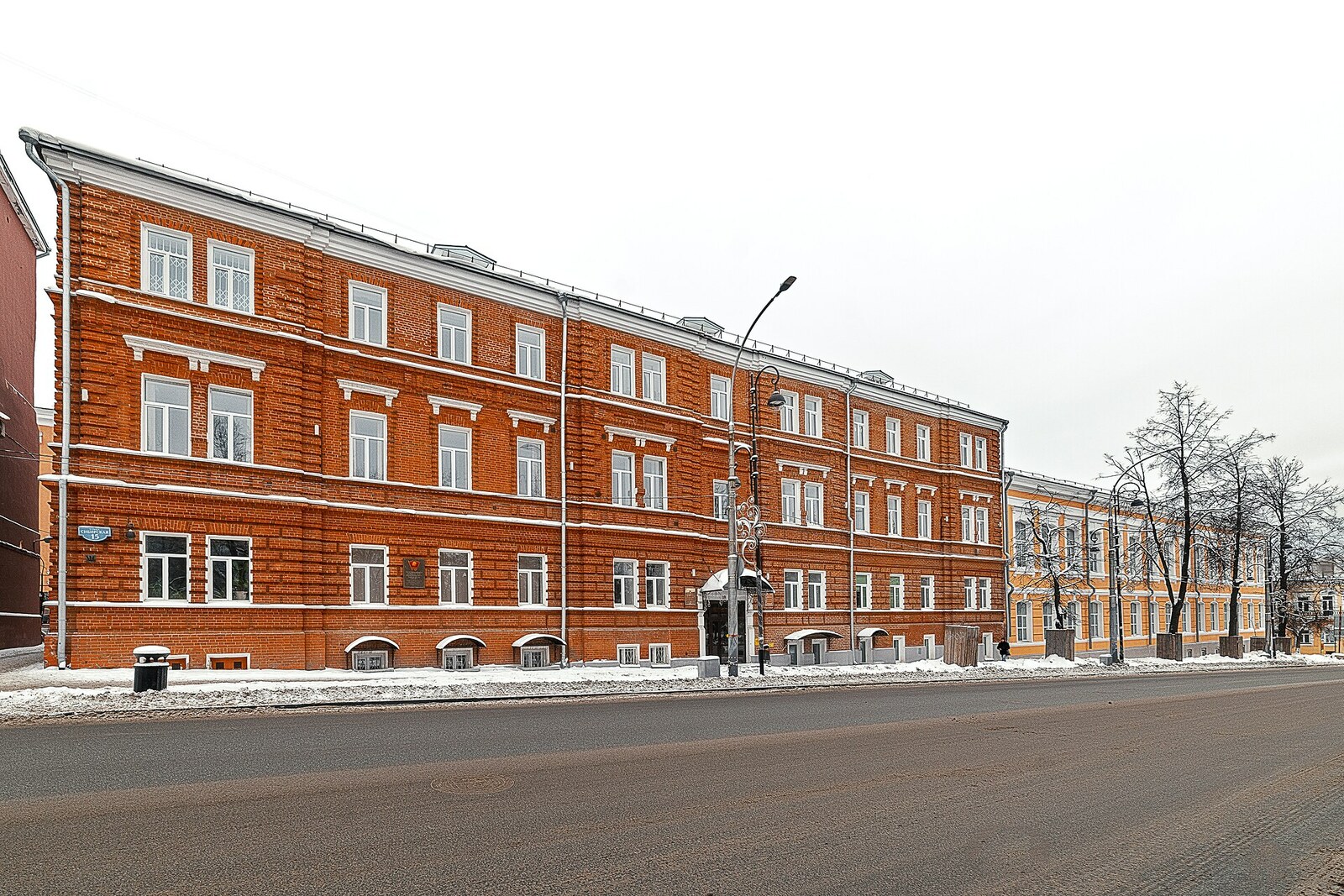
Look around first
What to notice
- Mammoth skeleton
- Dinosaur skeletons
- Therapsids of the Permian Period
- Orange exhibit markers
The story of the place
Perm gave its name to an entire period in Earth's history, and the museum is built around this connection between the city and the geological scale. In the hall on Sibirskaya Street, fossils, therapsids, dinosaurs, and other traces of eras separated by hundreds of millions of years stand side by side. Orange markers distinguish finds from the Permian Period from guests from other times, while measuring in steps translates the almost unimaginable length of this history into a human scale.
A mammoth stands at the center of this museum, although it has nothing to do with the Permian Period. It was placed here deliberately: curator Yulia Glazyrina and her colleagues were looking for a way to lead visitors from the most familiar thing to what gave the museum its name.
In eighteen forty-one, the Scottish geologist Roderick Murchison was trying to link into a single sequence the red sandstones and limestones that occurred separately across Western Europe. In the Perm Governorate, the necessary strata were represented more fully. After his expedition, Murchison proposed distinguishing the Permian geological system. The city's name entered the international scale of Earth's history, but for most residents of Perm this connection long remained a line from a textbook.
Glazyrina headed the nature department of the Perm Museum of Local Lore. Minerals, fossils, a mammoth, and dinosaurs were in her care—the usual collection of a large museum of local lore. She pushed for the new exhibition to tell specifically about the Permian Period and show its place in Earth's history. In the autumn of two thousand ten, museum staff mounted a trial exhibition at Perm-1 Railway Station. Fifty thousand people visited it in two months. After that experience, a separate paleontological museum no longer seemed like an undertaking for specialists alone.
The permanent exhibition on Sibirskaya Street opened in the spring of two thousand eleven. Poster graphic artist Eric Belousov was entrusted with his first major museum project: a small hall had to accommodate hundreds of millions of years, large skeletons, and a fossil collection. The creators arranged the route in reverse chronology so that the mammoth beloved by Perm residents would be the first thing visible in the doorway. Its silhouette was placed on the museum's mark. The visitor then moves on to the dinosaurs, and only afterward to the therapsids, which lived in the Permian Period long before them.
This decision had a consequence. Skeletons from different eras ended up side by side, and guides began receiving questions about a mammoth meeting a dinosaur and which of them was stronger. The staff came up with a way to measure Earth's history in steps: eras without humans take up almost the whole route, dinosaurs get two steps, mammoths one and a half, and humans a few centimeters. At the same time, the museum launched the annual Children's Paleontological Conference. In two thousand thirteen, its educational center received the top prize at the Intermuseum festival.
In the current hall, the mammoth still greets visitors first. Exhibits from the actual Permian Period are marked in orange, the color adopted for it on geological maps. The mammoth has no such marker.
Useful on site
Usually Tuesday–Sunday 10:00–19:00, entry until 18:00; closed Monday.
Checked: June 24, 2026. Check the official source before visiting.The main details are inside, so this stop requires a separate museum visit. If time is short, limit your visit in advance to a few key exhibits.