 Guide On Map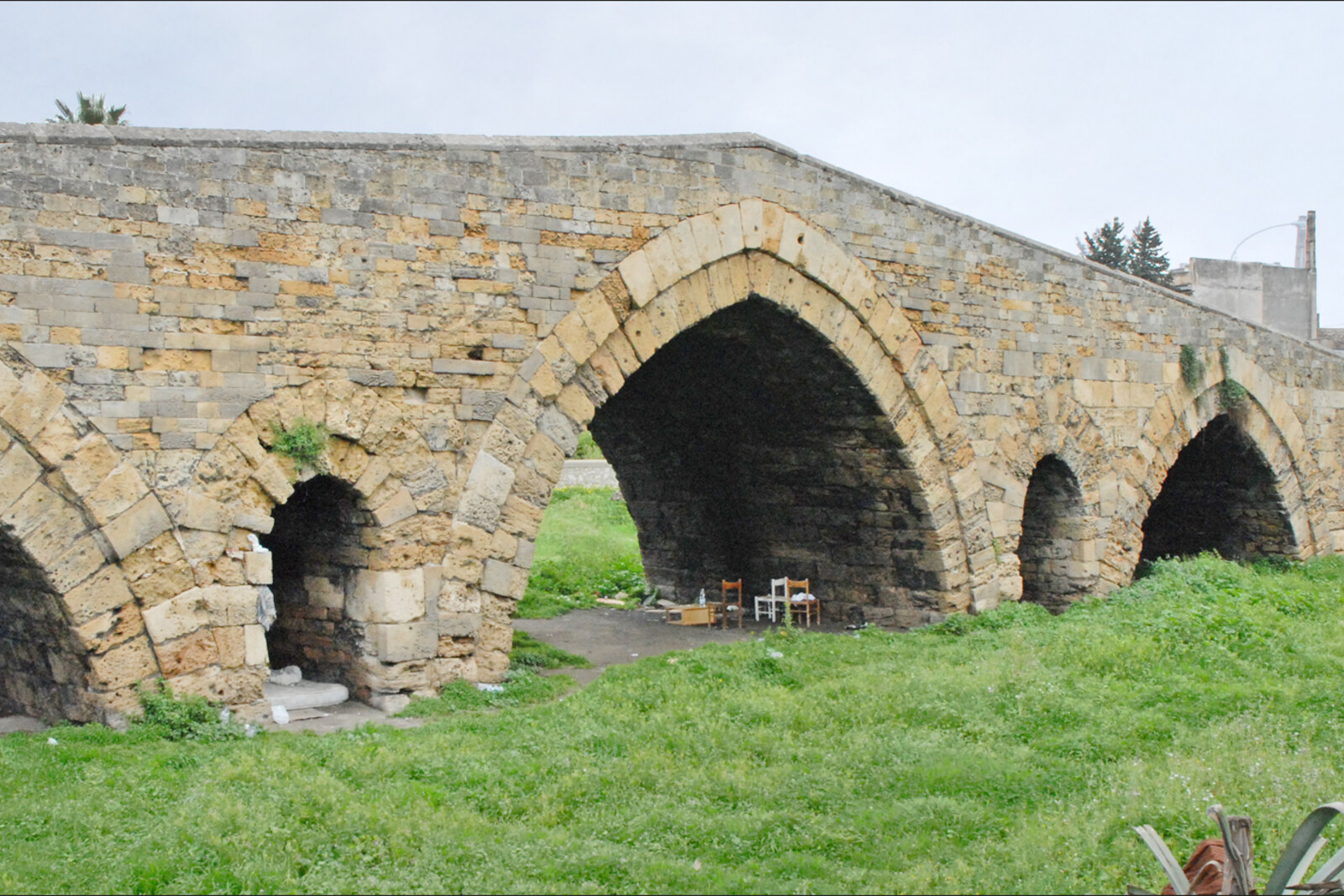
Look around first
What to notice
- Stone arches
- Lawn beneath the bridge
- Commemorative stele
- Stone paving
The story of the place
The city left this old crossing in place where the water long ago moved aside. The stone arches still raise the bridge above a level lawn: in the twentieth century, the Oreto River's channel was diverted, and the former riverbed became part of the city's land. The paving above and the stele beside it preserve the memory of the passage into Palermo, although neither the gates nor the barricades around it remain.
The admiral in the name is the George of Antioch you already know. Around eleven thirty-one, he ordered this stone bridge built across the Oreto River: the road from Palermo led over it to the royal gardens beyond the river. From the south, the same road led back to Porta Termini. The gates themselves were demolished as early as eighteen fifty-two, but the old name remained for the passage into the city.
At dawn on May twenty-seventh, eighteen sixty, Giuseppe Garibaldi, commander of the volunteer Expedition of the Thousand, intended to use this passage. He wanted to take the capital of Sicily and drive the troops of King Francis II of the Two Sicilies from the island. His column numbered about three thousand men, and many of the Sicilian volunteers had little combat experience. The Palermo garrison, commanded by General Ferdinando Lanza, was several times larger. Lanza sought to hold the capital for the king, so the royal soldiers blocked the bridge and the road with barricades.
The vanguard of several dozen experienced riflemen was led by the Hungarian officer Lajos Tüköry. After the defeat of the uprising in his homeland, he emigrated and made his living as an officer: he fought in the army of the Ottoman sultan, then joined Garibaldi. Now Tüköry was to lead the advance detachment quietly across the bridge and open the road for the main column.
According to participants' recollections, some of the Sicilians began shooting and shouting slogans too early. The surprise attack failed. The royal soldiers opened fire with rifles and artillery; some volunteers rushed from the road into the fields. Tüköry and the riflemen who remained with him went for the barricades. Some of the Sicilians returned behind them. The defenders retreated, and Garibaldi's column crossed the bridge.
At the next barricade, on the site of the former Porta Termini, a bullet shattered Tüköry's knee. He was carried out of the battle and his leg was amputated, but gangrene set in. On June sixth, Tüköry died. That same day, Lanza's representatives concluded an agreement under which the royal troops were to leave Palermo by sea: the breakthrough across the bridge allowed Garibaldi's men to enter the city, and its residents to raise their own barricades.
In the twentieth century, the Oreto River's channel was diverted aside, so a lawn now lies beneath the medieval arches. A stele commemorating the battle stands nearby. Porta Termini and both lines of barricades have disappeared; the bridge remains—the one across which Tüköry's vanguard opened the road into Palermo.
Useful on site
Open public space; viewing from outside without a ticket.
Checked: June 24, 2026. Check the official source before visiting.It is best to view the bridge as a whole from the level of the former riverbed; the stone may be uneven, so watch your step.