 Guide On Map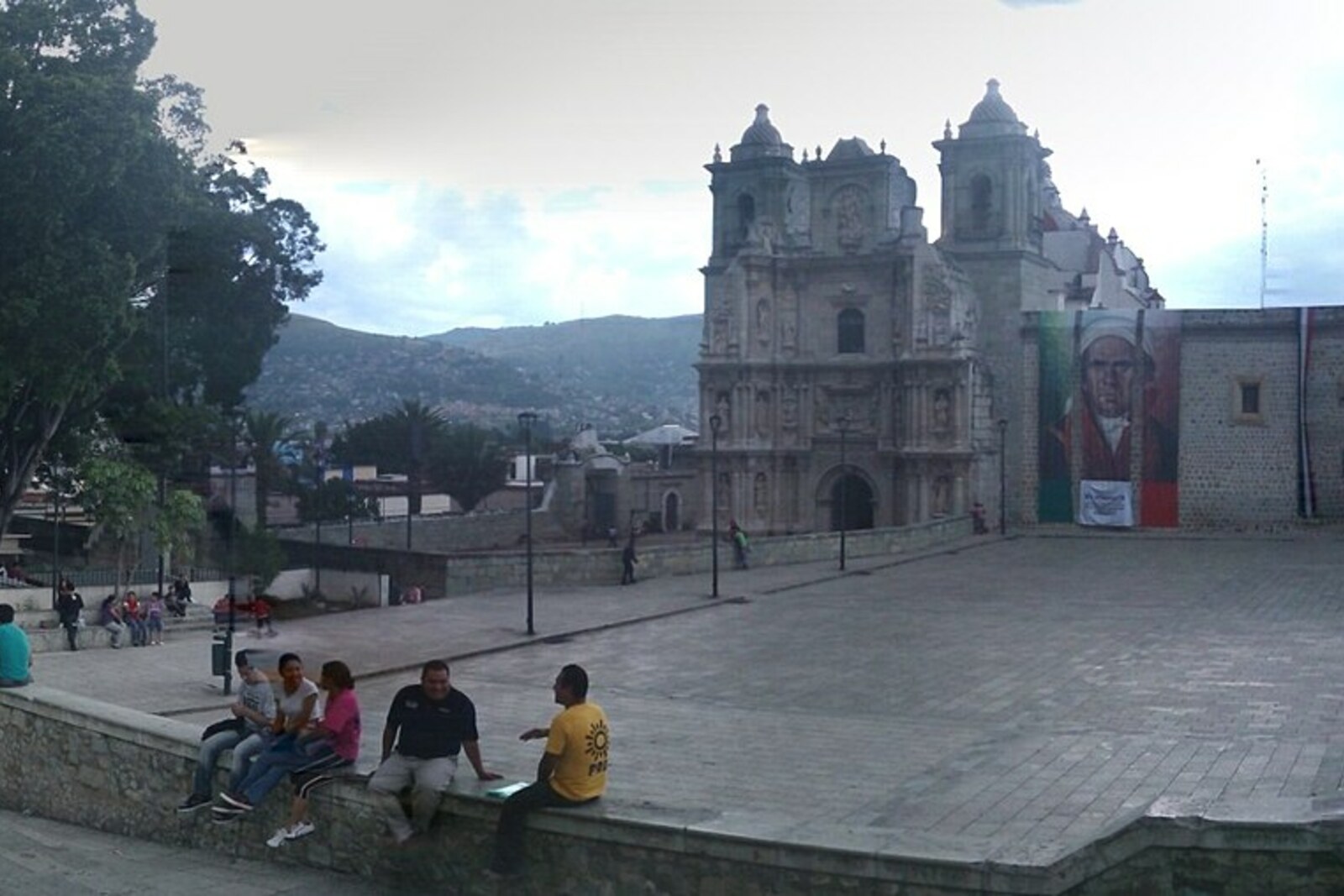
Look around first
What to notice
- Carved stone façade
- Image of Mary at the cross
- Otalora’s coat of arms
- Statue of Our Lady in the altar
The story of the place
The carved stone façade leads into an active basilica, one of Oaxaca’s major shrines. The Chapel of Saint Sebastian stood here before it, and monastic premises grew up beside the church; the city administration now works there. Inside is a statue made to be dressed: the face and hands are especially carefully carved from wood, while clothing conceals the rest; on December eighteenth, pilgrims gather here for the city’s main celebrations.
Above the entrance, Mary is depicted at the cross after Christ’s death. “Soledad” means her solitude and grief: both the church and the statue kept inside are dedicated to this state of Our Lady.
A local legend tells why the statue ended up here. In sixteen seventeen, a mule driver was leading a caravan of mules from Veracruz to Guatemala. Along the way, another mule joined the animals, carrying a large box. There was no owner nearby. At the former Chapel of Saint Sebastian, the mule lay down and did not get up again. The mule driver feared the unfamiliar cargo would be considered stolen, so he called the city officials. When the box was taken down, the animal rose and immediately died. Inside, according to the legend, were a crucifix, Mary’s carved head and hands, and a plaque with the words “Our Lady of Solitude at the foot of the cross.” Bishop Bartolomé Boórquez ordered the image to remain here and a shrine to be arranged for it.
This is indeed a legend. Documents report that no later than fifteen eighty, the Chapel of Saint Sebastian already stood on this site, and a confraternity of Our Lady of Solitude existed. The story of the mule explained why the venerated image had to remain here, although the dedication itself appeared earlier.
The large church grew out of a decision by people who made their living through trade. In the seventeenth century, Andalusian merchants settled in Oaxaca for cochineal—a red dye from local insects that was exported far beyond New Spain. In a city where social standing was affirmed through guilds and religious confraternities, they joined around the Spanish devotion to Our Lady of Solitude that was familiar to them. The confraternity obtained permission to replace the small chapel with a stone church, but there was not enough money for construction.
The merchants then turned to Pedro de Otalora Carvajal, an Oaxacan canon and church judge with a large fortune. He received part of his income from church offices and the collection of tithes; researchers link another part to trade in cochineal and wheat. They offered him the role of patron of the shrine: to pay for the church and receive the right to be buried inside it.
Otalora’s first donation amounted to one thousand pesos. The total later rose to twenty-eight thousand. This money paid for the church, the main altar, pulpit, and organ, and began construction of the neighboring monastery. The church was completed in sixteen eighty-nine and consecrated the following year.
On June twentieth, sixteen ninety-one, Otalora died. Shortly before this, he gave up his family burial place in the cathedral and transferred that chapel to a home for abandoned children. Otalora himself was buried here; after his death, his estate continued to pay for the monastery. His coat of arms survives on the façade and in the apse, while the former monastic premises are now occupied by the city administration.
Today this is the active basilica of Oaxaca’s patroness. On December eighteenth, pilgrims come here, and the city’s main celebrations in her honor take place. The statue in the altar was made to be dressed: the face and hands are the parts most carefully carved from wood, while clothing conceals the rest. These are precisely the two parts listed in the old legend of the box that the unnamed mule driver refused to claim as his own.
Useful on site
Daily 09:00–18:00; visits are possible outside Mass times.
Checked: June 19, 2026. Check the official source before visiting.Visit the church as an active place of prayer: keep quiet, do not block passageways, and do not use flash. During a service, limit yourself to the façade and atrium if visiting disturbs worshippers.