 Guide On Map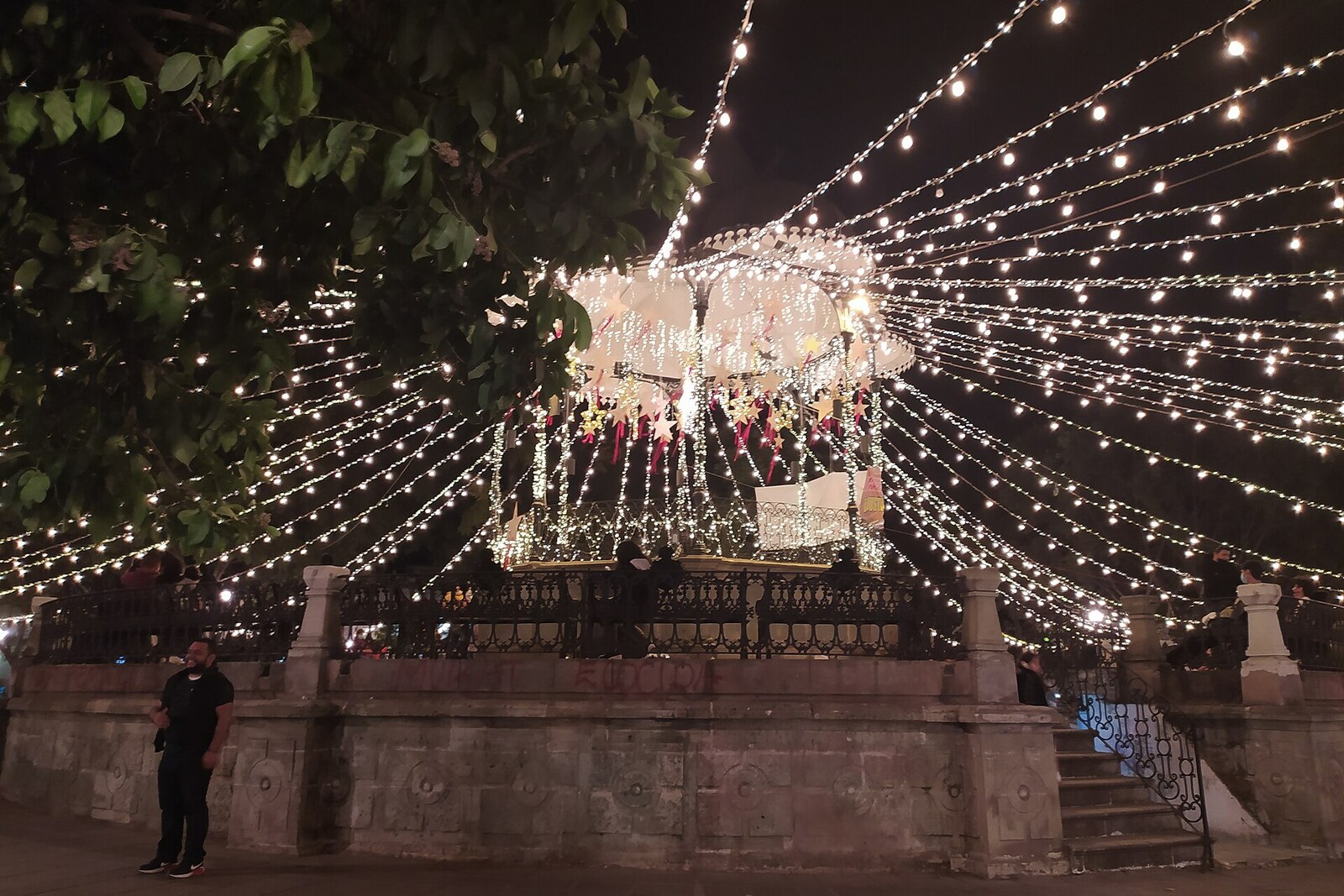
Look around first
What to notice
- Central bandstand
- Façade of the city council building
- Cathedral bell towers
The story of the place
The Zócalo (Plaza de la Constitución) is what Oaxaca's main square is called. Its official name, “Plaza de la Constitución,” repeats the inscription that city councilors ordered placed on their building. Before the central bandstand appeared in nineteen oh one, the open square served for citywide ceremonies: they were held at the council and at major churches. The council's façade and the cathedral bell towers still define the boundaries of this urban space.
Here, in Plaza de la Constitución, a platform stood on the site of the present bandstand on April twelfth, eighteen fourteen, beneath a richly decorated canopy. Above it they placed a portrait of the Spanish king Ferdinand VII. The royal commander Melchor Álvarez handed a printed volume to the secretary of the city council, who read it aloud to the gathered townspeople for about two hours. It was the Cádiz Constitution—a law by which deputies of the Spanish Cortes tried to limit the monarch's sole rule and introduce elected city councils.
In other parts of New Spain, the constitution had been proclaimed as early as eighteen twelve. In Oaxaca, the ceremony was delayed by almost two years because of the war. On November twenty-fifth, eighteen twelve, José María Morelos, commander of the rebel army seeking independence, occupied the city. He needed the capital of a rich province: its tobacco and cochineal provided funds to continue the campaigns. Morelos's supporters held Oaxaca until Álvarez returned the city to the Spanish Crown on March twenty-ninth, eighteen fourteen.
For Álvarez, the public reading of the constitution was the first way to restore governance. The main platform was set up right here, in front of the city council building; three more appeared by major churches. After the reading, bells rang. The next day, officials and townspeople gathered in the cathedral, heard the text again, and swore to observe it.
Five days later, elections for a new council began. Before that, its members had annually filled their own ranks behind closed doors. Now the townspeople elected electors, and those electors chose all the councilors. In the central district alone, nine hundred two participants chose eight electors until late in the evening. For residents, the constitution immediately changed from a two-hour reading into an opportunity to replace those who managed the city's affairs.
This arrangement lasted several months. Ferdinand VII returned to Spain, abolished the constitution on May fourth, and restored the former rule. When his decree reached Oaxaca, the elected council was dissolved.
Six years later, Spanish military forces compelled the king to recognize the constitution again. On June seventh, eighteen twenty, the ceremony was repeated in Oaxaca: this time the text was read from four platforms at the corners of this square. A plaque was installed on the city council building: “Plaza de la Constitución, sworn to in Oaxaca on June seventh, eighteen twenty.”
Those platforms and that plaque are no longer here. The present bandstand was installed in nineteen oh one. “Zócalo (Plaza de la Constitución)” is the customary Mexican name for the main square, while the official address still repeats the inscription that city councilors ordered placed here after the second oath: Plaza de la Constitución.
Useful on site
Open around the clock; on Sundays at noon Banda del Estado plays, and on Wednesday evenings people dance danzón.
Checked: June 19, 2026. Check the official source before visiting.The square may change character because of gatherings and protests. Do not enter a dense crowd unless necessary, do not photograph participants up close, and keep work and passage areas clear.