 Guide On Map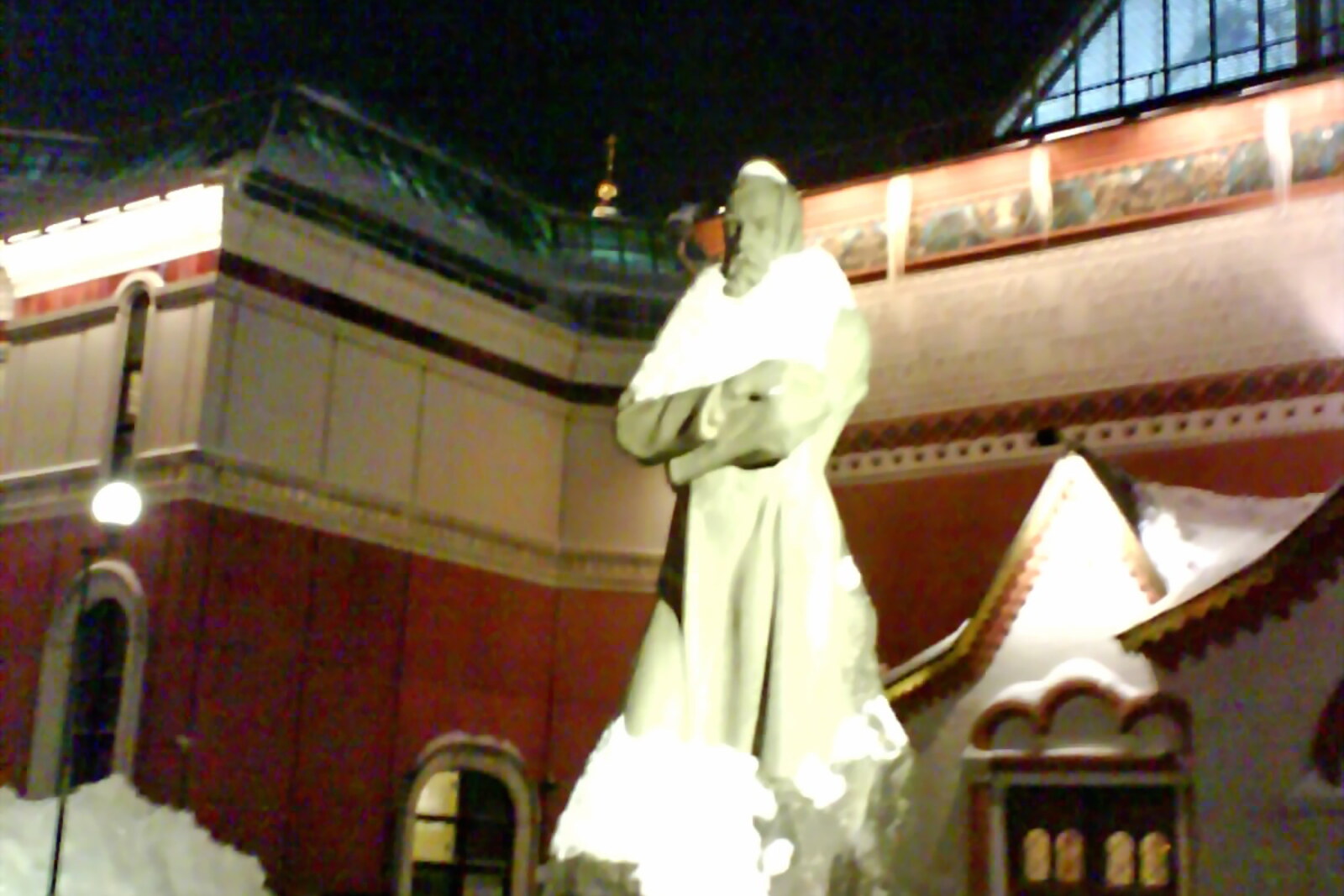
Look around first
What to notice
- The ornate main facade
- The Tretyakov surname above the entrance
- The old volume of the mansion
The story of the place
The ornate facade with the surname above the entrance appeared at the beginning of the twentieth century, after the house itself had already taken shape. Behind it, the old mansion acquired galleries for paintings: additions gradually occupied the courtyard and garden. The first visitors reached these galleries through the residential part of the house, where ordinary family life went on.
In the autumn of eighteen ninety-one, the Moscow merchant Pavel Tretyakov closed his gallery to the general public. He collected Russian painting and wanted anyone to be able to see it, but the museum was still his home. Visitors were admitted free of charge, and only two employees watched over the galleries. First pickpockets appeared among the crowds, then studies by Vereshchagin and Polenov and a small painting by Makovsky disappeared. After that, entry was possible only with the owner’s personal permission.
Tretyakov lived on the income from the family business and the Kostroma Linen Manufactory. Together with his younger brother Sergei, he inherited their father’s business and continued to run it even when paintings were already taking almost all his free time and enormous sums of money. The family acquired the house on Lavrushinsky Lane in eighteen fifty-one. Five years later, Pavel bought the first canvases for the future collection. At first, the paintings hung beside the living quarters; then there became so many of them that museum galleries had to be added to the mansion. The first two opened to visitors in eighteen seventy-four; a passage to them led directly from the house.
A closed door contradicted the very purpose for which Tretyakov had built these galleries. Sergei’s death in the summer of eighteen ninety-two hastened the resolution. The younger brother collected Western European painting and owned half the house. He bequeathed his paintings and his share of the building to Moscow, but on one condition: the city had to accept them together with the gift Pavel had long promised to make. As long as the elder brother’s collection remained private, it was impossible to carry out the will.
On the thirty-first of August, Pavel Tretyakov filed an application with the Moscow City Duma. He transferred to Moscow his collection of Russian art, Sergei’s collection, and the house where all of this was kept. Having ceased to be the owner, Pavel remained the gallery’s trustee for life. He did not want ceremonies of thanks and went abroad while the Duma accepted the gift and decided to call the museum the Municipal Art Gallery of the Brothers Pavel and Sergei Mikhailovich Tretyakov.
In January of eighteen ninety-three, the city allocated five thousand rubles annually for new acquisitions. In August, the gallery reopened to the public. Pavel continued to buy paintings for a collection that legally belonged to someone else, compiled catalogs, and added further galleries. By the time of his death, the central part of the museum had twenty-five galleries.
The facade designed by Viktor Vasnetsov appeared later, at the beginning of the twentieth century: Pavel Tretyakov never saw it. The basis of the building behind this facade remains the mansion where the family lived beside the paintings, along with the additions through which the owner gradually occupied the courtyard and garden. The surname above the entrance belongs to two brothers: Sergei linked his last will to the future gift, and Pavel transferred the house and collection to the city, after which the locked private gallery once again became a museum open to all.
Useful on site
Tuesday–Sunday 10:00–21:00, ticket offices and entry until 20:00; Monday is closed.
Checked: June 24, 2026. Check the official source before visiting.Do not try to fit the permanent exhibition into a short stop: plan your visit separately, and continue the route after the outdoor account.