 Guide On Map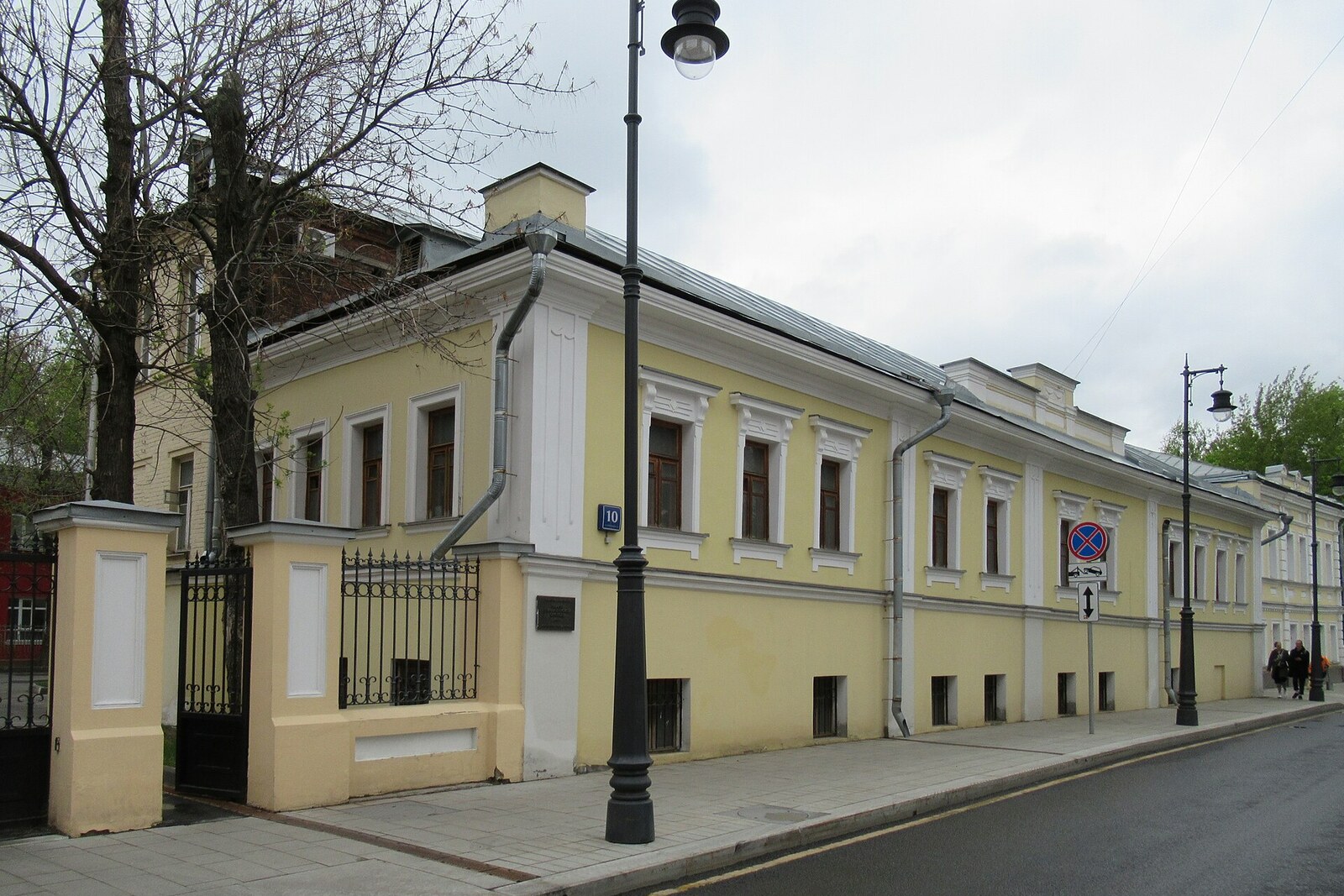
Look around first
What to notice
- Long two-story building
- Smooth plastered facade
- Lower-floor windows
The story of the place
The smooth plastered facade and long two-story building conceal an old estate that was adapted for rental apartments in the middle of the nineteenth century. The watchmaker who owned it replaced the wooden service buildings with a stone structure and gave the facade its present appearance. Behind it, the vaults of the lower service floor and an in-wall staircase from the end of the seventeenth century have survived: provisions were kept below, and people lived above. The chambers stand on the former main street of the sloboda, present-day First Kadashevsky Lane, beside the church after which the street was once called Resurrection Street.
At the beginning of the seventeenth century, the Kadashevites took on the supply of fine linen cloth for the tsar’s court. Kadashevites was the name given to the residents of the village of Kadashevo; historians dispute where the name itself came from. Documents do not support the familiar version that it came from craftsmen who made kadi—large barrels.
Kadashevo became the sovereign’s khamovskaya sloboda. At the time, kham meant linen cloth, and a sloboda was a settlement of people with a shared service or craft. Men and women wove at home and in shared workshops. Women were called delovitsy in documents. They were required to produce cloth, tablecloths, towels, and patterned strips for the tsar’s clothing.
For reliable deliveries, the Kadashevites received special charters: they were exempted from many taxes and municipal obligations. They traded and took leases on customs duties, taverns, and salt works. Some continued to be registered in the sloboda even when they left Moscow for a long time, so as not to lose the privileges. Income from trade enabled them to build stone houses where most Muscovites still lived in wooden ones.
One such house was built here, by the sloboda’s main street. At the time, what is now First Kadashevsky Lane was called Resurrection Street, after the neighboring church. The name of the client has not survived, so the client cannot be considered a weaver. Something else is known: the lower floor of the chambers was used to store provisions, while the living rooms were above. A ceremonial porch and a vestibule led inside, with separate chambers branching off from it.
By the turn of the seventeenth and eighteenth centuries, the former orders had ceased, the Kadashevites lost their special status, and the sloboda became absorbed into merchant Zamoskvorechye. The house passed from Commissioner Lev Shokurov to Mikhail Danilov, a servant of a Kremlin cathedral, and then to the merchants Ratkov and Mochalov.
In the middle of the nineteenth century, the property was bought by the watchmaker and merchant Mikhail Kalashnikov. He earned his living by trading in watches, and he decided to draw rental income from the old estate as well. Around eighteen fifty-one, Kalashnikov replaced the wooden outbuildings with a two-story rental building. At the same time, the facade received the treatment that is mostly visible today. After the merchant’s death, the property was inherited by his son Pyotr, who continued the family watch business; later, the heirs sold the estate.
The smooth plastered facade and the long building belong to the Kalashnikovs’ apartment house. Behind them survive the vaults of the lower service floor and the entrance to an in-wall staircase from the end of the seventeenth century—the stone part of the first owner’s house, whose name and occupation are not given in the documents.
Useful on site
Exterior viewing from 1st Kadashevsky Lane; regular public entry is not indicated.
Checked: June 24, 2026. Check the official source before visiting.The stop is intended for exterior viewing; look for the lost Red Porch in the story, not among the present-day entrances.