 Guide On Map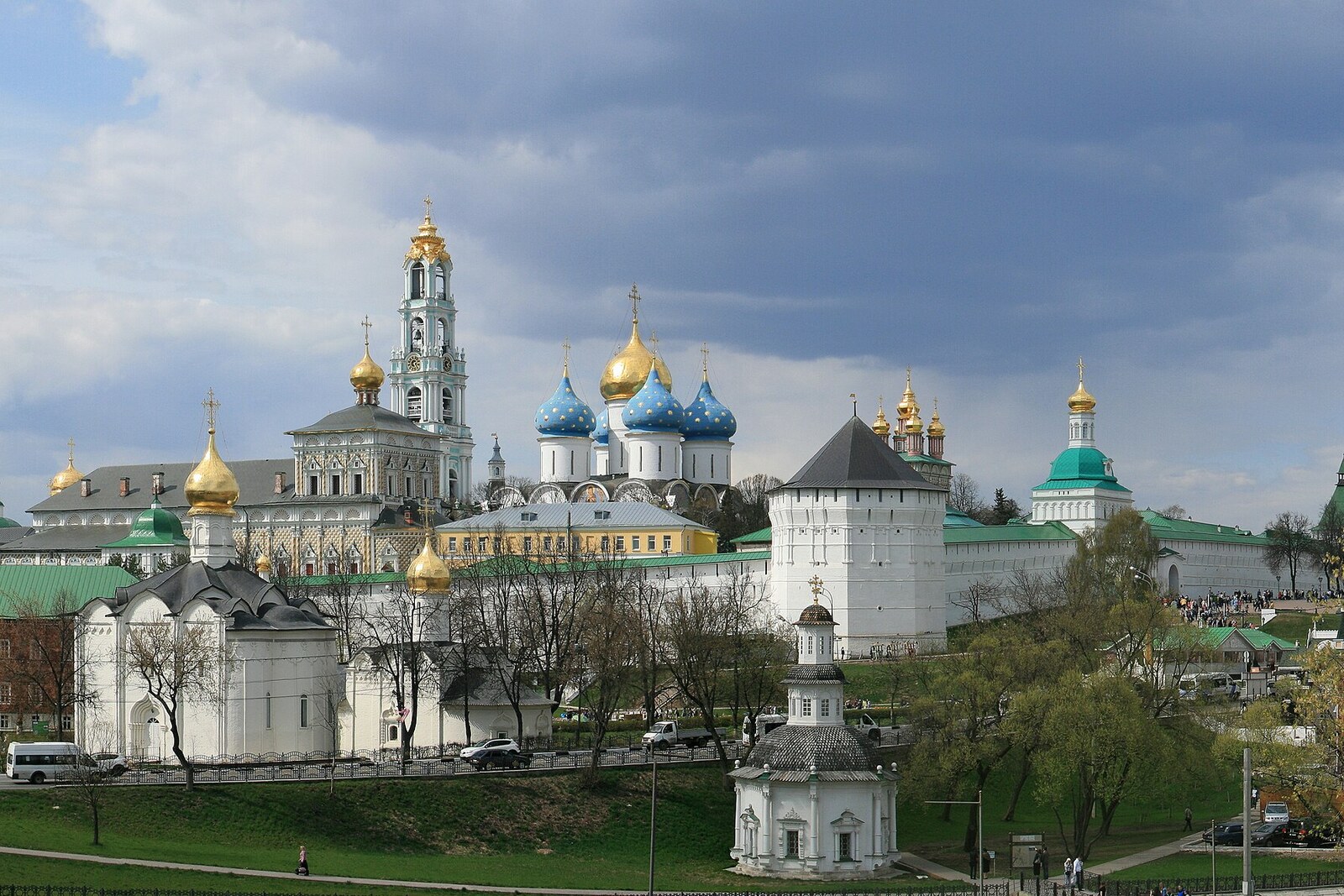
Look around first
What to notice
- White balustrade
- Viewing platform
- Slope of Blinnaya Gora
The story of the place
The white balustrade marks the edge of the viewing platform above the slope where three stone blocks with twelve trading stalls once stood close together. The Posad kept these buildings in city ownership and leased the ready-made premises to tenants. The blocks have disappeared, but the intersection of Sergievskaya Street and Voznesenskaya Street has retained the name Blinnaya Gora.
In eighteen seventy-eight, several local blini vendors asked the Posad administration to lease them a vacant plot near the Chapel of St. Paraskeva, below this slope. They made a living by feeding pilgrims and wanted to set up permanent stalls here. The plot lay roughly halfway from the railway station to Trinity Lavra of St. Sergius: people arriving by train passed it on their way to the monastery. The vacant plot was fenced off, and wooden blini eateries were built inside. Townspeople called the place Blinny Dvor, and the slope Blinnaya Gora.
In August of eighteen ninety-six, the wooden courtyard burned down. Left without an income, the blini vendors asked for permission to put up new wooden stalls. Konstantin Ivanovich Malyshev, a local icon painter and a member of the assembly of city representatives—one of the city's elected representatives at the time—then proposed building stone premises at the Posad's expense. His own house stood where the viewing platform is now.
At Malyshev's proposal, the city retained ownership of the buildings and leased the ready-made stalls to merchants. By eighteen ninety-seven, three stone blocks had appeared on the slope, with four blini eateries in each. For one stall, a tenant paid from one hundred ten to one hundred thirty rubles a year, plus an annual fee. The city gained a revenue-producing property, and the blini vendors returned to work.
Most of the establishments were run by single and widowed women. Their children helped them. Yekaterina Mikhaylovna Komarova later recalled how, as a child, she drew customers to the family blini eatery with little sayings and folk couplets. Children ran along the road between the station and Trinity Lavra of St. Sergius, trying to intercept pilgrims. Blini were cooked in front of visitors from early spring until the Feast of the Intercession. A dozen fasting blini cost twenty kopecks, with sour cream twenty-five, and with egg thirty. From such orders, the proprietor had to pay the city's rent and support her family.
After the monastery closed, the flow of pilgrims stopped. In nineteen twenty, the stone Blinny Dvor was dismantled, and a public strolling area was laid out in its place. The present viewing platform with its white balustrade was fitted out for the nineteen eighty Olympics. Now tour groups stop here on the road from the station to Trinity Lavra of St. Sergius. Malyshev's house, the three stone blocks, and the twelve blini eateries have disappeared; at the intersection of Sergievskaya Street and Voznesenskaya Street, the name “Blinnaya Gora” remains.
Useful on site
Open public viewing platform; temporary restrictions are possible during large public events.
Checked: date not specified. Check the official source before visiting.The view requires an open horizon; at dusk and in bad weather, details of the ensemble are harder to make out.