 Guide On Map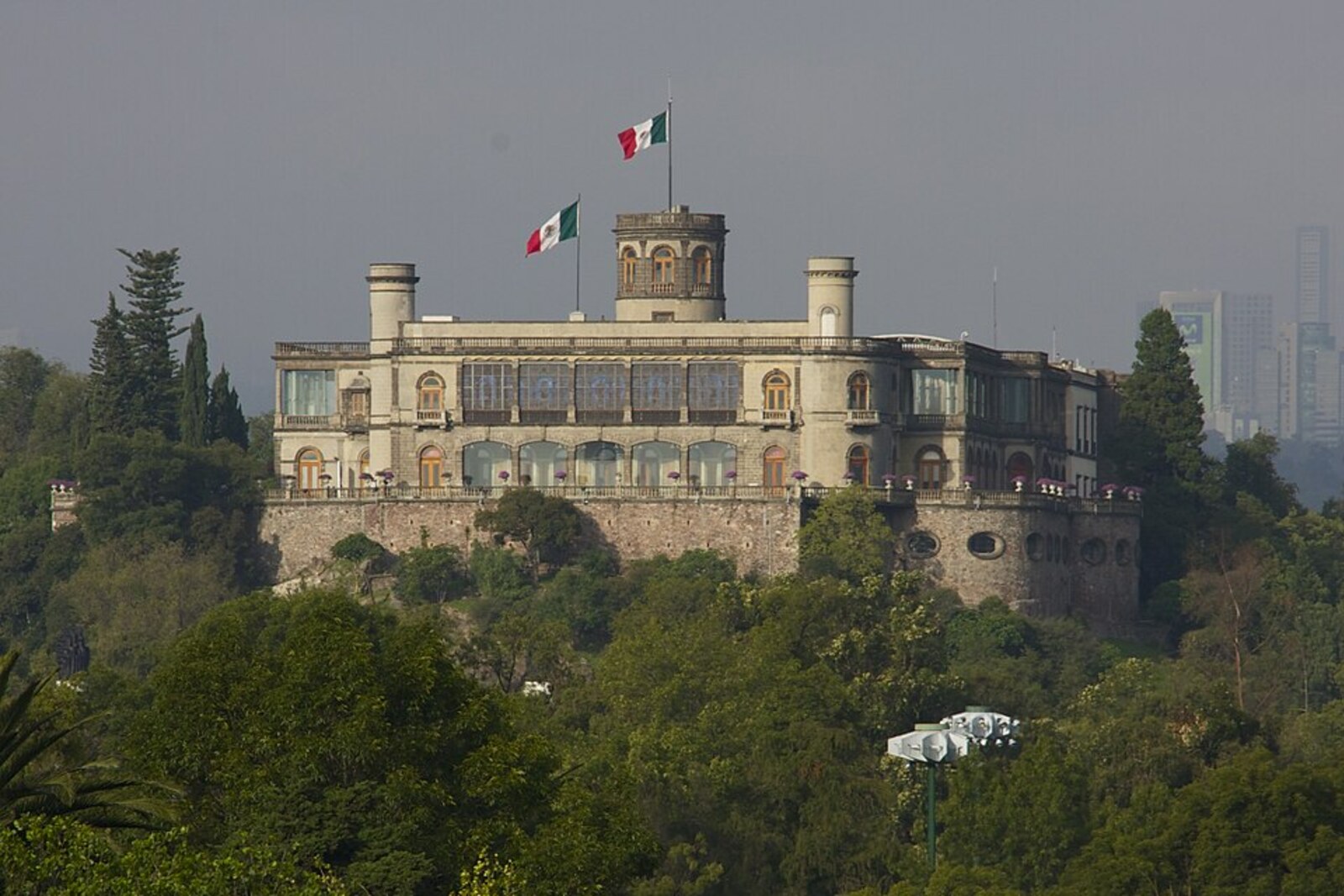
Look around first
What to notice
- Tall tower
- Arcades of the Alcázar
- Inner garden
- Maximilian's brass bed
The story of the place
The tall tower above Chapultepec rose over a country house that the Spanish authorities intended for their viceroy. Construction began in seventeen eighty-five, but its owner died before it was completed, and the vacant building was later occupied by the Military College. During its conversion, it received a tower and a fortress-like appearance, from which the name castle remained; the former eastern wing now contains museum rooms with arcades, columned galleries, a garden, and a terrace.
In June eighteen sixty-four, Maximilian von Habsburg and Carlota chose Chapultepec as their home. Maximilian was an Austrian archduke who agreed to accept the Mexican crown. His wife Carlota, the daughter of the Belgian king, also came to rule: when her husband left the capital, she convened ministers, received ambassadors, and issued orders.
The crown was offered to the couple by Mexican conservatives who had lost the civil war to the republicans. They wanted a monarchy that would protect their former privileges. The French emperor Napoleon III gave Maximilian money and an army, while those who invited him assured him that Mexicans were waiting for a new sovereign. If French aid were to stop, the emperor would have almost no forces of his own left.
There was no ready-made palace in Chapultepec. In seventeen eighty-five, construction began here on a country house for the Spanish viceroy Bernardo de Gálvez, but he died without seeing the house completed. Later, the Military College occupied the building. During its reconstruction, a tall tower was raised above it, giving the house the appearance of a fortress; that was when the name castle became attached to it.
The old government palace in central Mexico City had fallen into disrepair by the couple's arrival, so they moved to the hill. Maximilian called the residence the Palace of Chapultepec and Miravalle, with Miramare Castle, his former home on the Adriatic Sea, in mind. By order of the couple, the former rooms of the college were converted into the residential eastern wing, the Alcázar. Arcades, columned galleries, meeting rooms, an inner garden, and a terrace in front of the private quarters appeared. A piano, porcelain, silverware, carpets, clocks, and portraits of the owners were brought from Europe.
The distance from the center soon became a practical problem. To avoid reaching the capital by a roundabout route, Maximilian bought land and ordered a broad, direct avenue laid out from Chapultepec. It was named Paseo de la Emperatriz—the Empress's Promenade. Today's Paseo de la Reforma approaches the hill along the same line: this street appeared because the imperial couple settled precisely here.
By the middle of eighteen sixty-six, republican troops were approaching the capital, Maximilian's conservative allies were unhappy with his liberal decisions, and Napoleon III decided to withdraw the French army and stop funding it. Carlota left for Europe to seek aid from the French court and the pope. She achieved nothing and never returned to Chapultepec.
Maximilian left Mexico City, foreseeing defeat, and ordered the furnishings of his palaces dismantled. However, he did not abdicate or leave the country. In Querétaro, he was surrounded by republican troops; after the siege, the emperor was captured, tried, and executed by firing squad on June nineteenth, eighteen sixty-seven.
After the fall of the empire, the castle stood empty again. Later, presidents lived there, until in nineteen thirty-nine President Lázaro Cárdenas ordered the former residence transferred to the National Museum of History. The reconstruction and transfer of the collections took five years. In September nineteen forty-four, the museum opened: some halls displayed objects of Mexican history from the Spanish conquest to the revolution, while the living rooms of the former owners were restored in the Alcázar.
Maximilian's brass bed really is among the items that remained here after his death. The French suite in Carlota's current bedroom was bought later by President Manuel González because he considered it her furniture.
Useful on site
Checked 2026-06-29: Tuesday–Sunday 9:00–17:00; Monday closed. General admission 210 Mexican pesos, 105 for citizens and residents of Mexico; concessions and free Sunday entry apply under INAH rules.
Checked: June 29, 2026. Check the official source before visiting.The ascent takes time and effort; allow extra time to enter the museum, and on a short visit choose one historical period.