 Guide On Map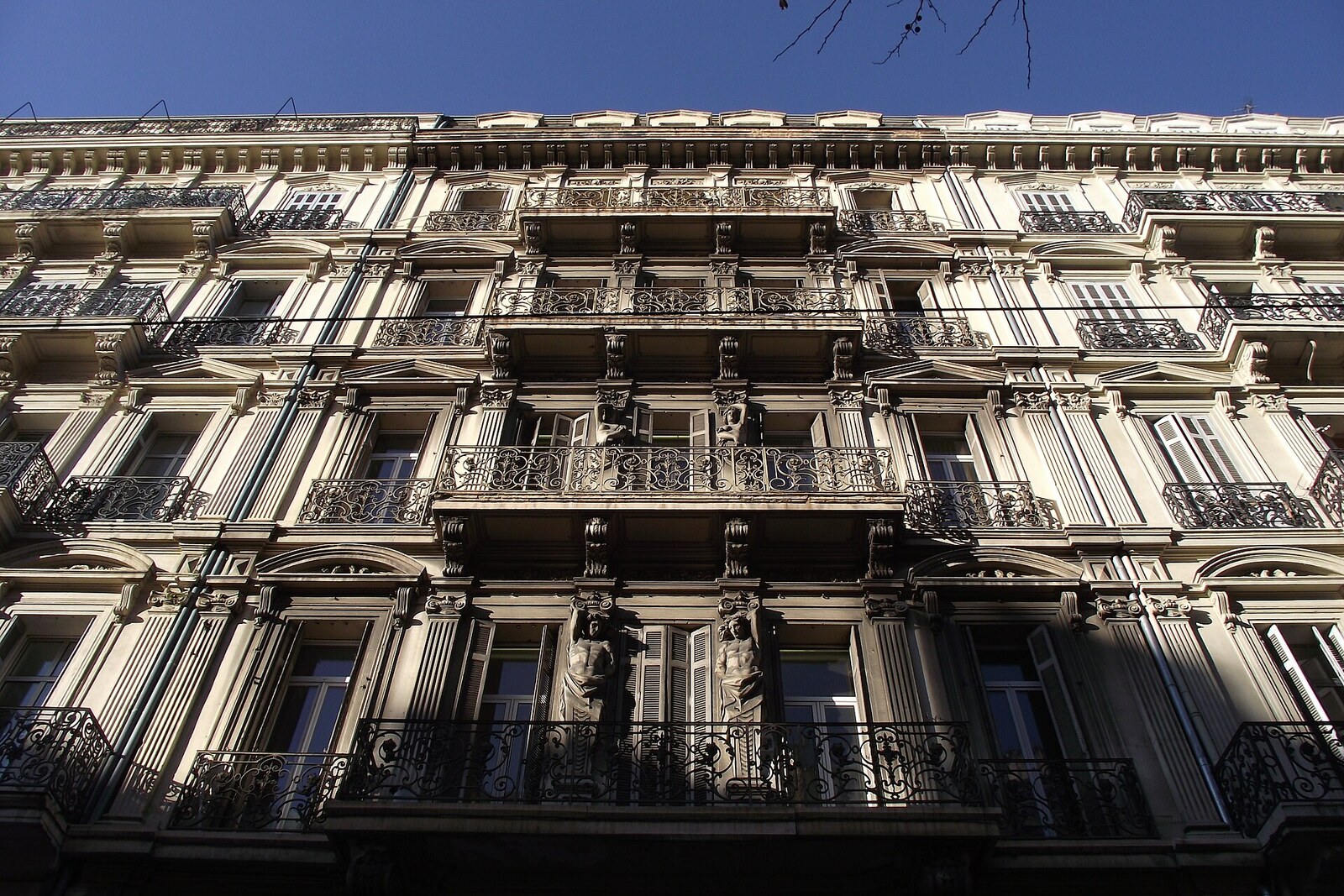
Look around first
What to notice
- The concrete Building Canebière
- The curved passageway gallery
- Tram tracks
- The view along La Canebière
The story of the place
On October twenty-eighth, nineteen thirty-eight, Rear Admiral Émile Muselier, who commanded the naval forces in Marseille, saw a fire on La Canebière from his office window. Nouvelles Galeries, a four-story department store occupying the site of what is now number seventy-three, was burning. Across the street, members of the French Government, who had come for a party congress, were staying at Hôtel Noailles. The catastrophe unfolded before their eyes.
The department store had opened in nineteen oh one. Parquet flooring, wooden structures, draperies, clothing, and other fabrics filled three thousand five hundred square meters. When a fire broke out during the building's modernization, a strong mistral helped it engulf the store in less than a quarter of an hour. Shoppers and salespeople were inside. Seventy-three people died, and more than a hundred were injured.
Municipal firefighters arrived quickly, but their chief was wounded at the very beginning of the operation. The crews were left without coordinated command, there was not enough equipment, and the crowd obstructed the delivery of vehicles. Muselier realized that the flames could spread to neighboring houses and hotels. He called the commander of the military port in Toulon and demanded that naval firefighters be sent.
At about five in the evening, three dozen sailors with specialized vehicles arrived on La Canebière. They served at the naval base and knew how to fight fires on ships, in warehouses, and in port facilities, where delay quickly cuts off people's way out. The men from Toulon raised a ladder to the upper floors and stopped the fire from spreading across the roofs. They could no longer save the department store, but the neighboring buildings held firm.
The government members saw two fire services and two outcomes side by side. After the catastrophe, the mayor was forced to resign, the city was placed under state administration, and the municipal fire corps was disbanded. On July twenty-ninth, nineteen thirty-nine, the government established the Marseille Naval Fire Battalion. Navy service members are still responsible here for fires, rescue operations, and assistance to victims.
The name La Canebière itself appeared on this stretch only shortly before the fire. In nineteen twenty-seven, the Marseille City Council united the lower section of La Canebière, Rue Noailles, and the upper Allées de Meilhan under one name. The result was a one-kilometer road from the Old Port to the Church of the Reformed. The Provençal word “canebière” means a hemp field: Marseille merchants supplied hemp fiber to shipbuilders, who needed ropes and cargo slings.
The burned department store was not rebuilt. After the war, architects Fernand Pouillon and René Egger built a concrete building with apartments, offices, and shops on its site. Its official name is Building Canebière. Behind the facade runs a curved gallery connecting the avenue with Rue Vincent-Scotto. Where firefighters had to be summoned from another city, there now stands a building bearing the street's name, and Marseille is protected by its own battalion of sailors.
Useful on site
The street is open around the clock; shops follow their own schedules.
Checked: June 19, 2026. Check the official source before visiting.Listen from a wide section of the sidewalk and do not linger by the edge of the tracks; all the stop's main details can be seen from the street.