 Guide On Map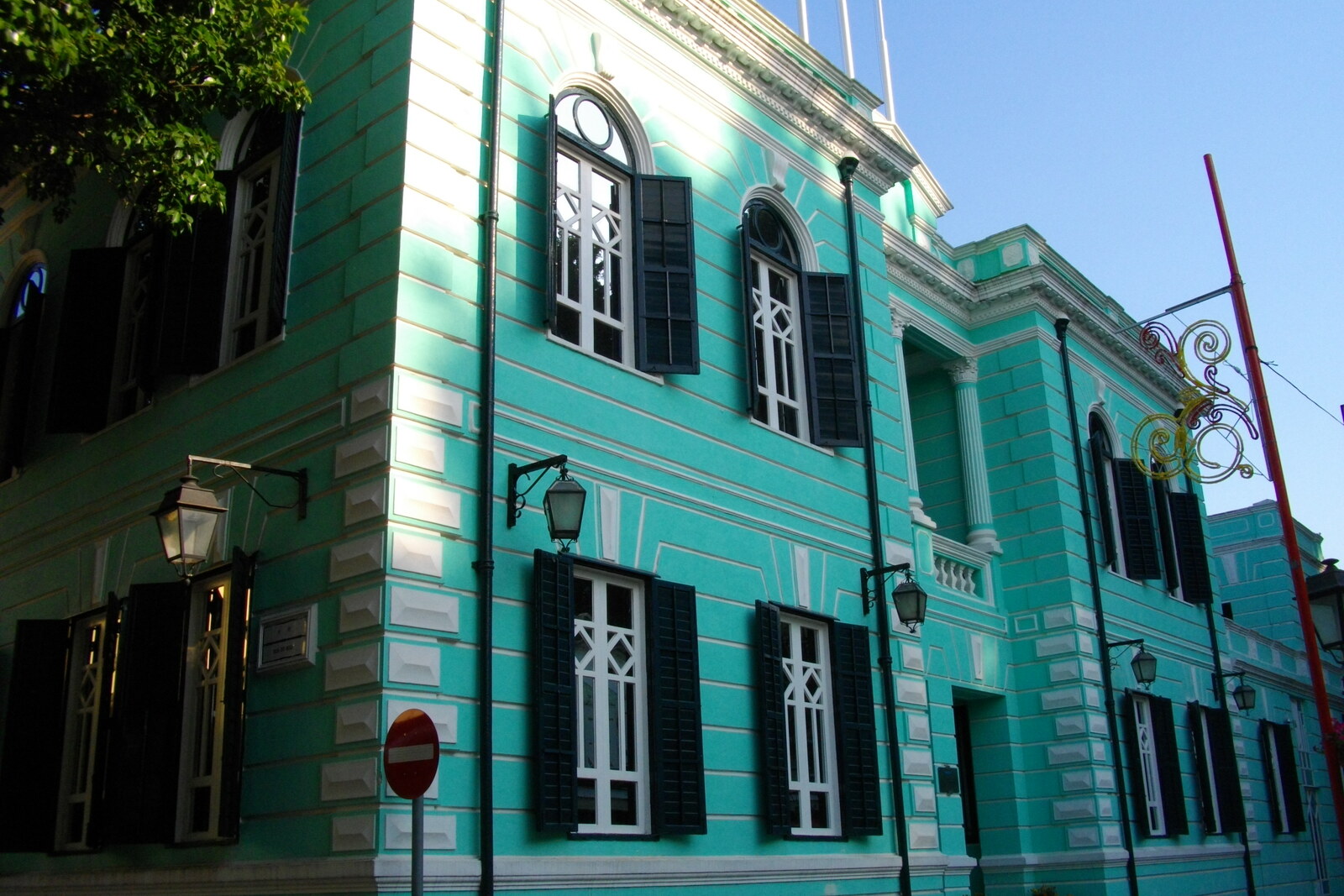
Look around first
What to notice
- Green facade
- Transparent floor
- Granite masonry
- Meeting room
The story of the place
The green building houses a museum named after Taipa and Coloane. The house itself was built in nineteen twenty-one for the Taipa administration, and the Municipal Council of the Islands later met here; older residents called it a yamen, the office of the local authorities. Beneath the transparent floor, old administrative premises have been preserved, while one floor above, the meeting room of their successors remains. A staircase links these two layers, separated by almost a century.
In two thousand four, the former island administrative office was being converted into a museum. When builders opened up the basement rooms, they found human-laid granite masonry beneath the floor. Beside it lay a stone pavement, wall foundations, a red brick floor, and a stone drain. All of this was older than the present building.
It was built in nineteen twenty-one for the Taipa administration. In nineteen sixty-three, it housed the Municipal Council of the Islands, the institution responsible for Taipa and Coloane. Older residents called the house a yamen, meaning the office of the local authorities. That is why the museum was given the names of both islands: their everyday affairs had previously converged in these very offices.
After the discovery, local archaeologists made four small excavations in the basement. These were the first archaeological works in Taipa and the first excavations in Macau entirely directed by Macau residents. Their position was complicated by the fact that the museum project was already under way. The completed layout had to be altered for the masonry, and part of the basement had to remain undeveloped.
The archaeologists established that the unearthed structures had appeared between the middle of the nineteenth century and the construction of the present house. Researchers linked part of the remains to earlier municipal premises established here in the eighteen eighties. This means that officials had worked on this site even before the green facade appeared: the new administrative building replaced the former one and covered its floors, walls, and drains.
Those responsible for the reconstruction preserved the discovery where it lay. When the Museum of Taipa and Coloane History opened on May seventh, two thousand six, the excavation became part of the display. Beneath the transparent floor of the first floor remain the foundations of the old office; one floor above, the furnishings of its successors’ meeting room were preserved. A staircase in the same house now leads between the two official premises, separated by almost a century.
Useful on site
Free admission; open 10:00–18:00, last entry 17:30, closed Monday.
Checked: June 27, 2026. Check the official source before visiting.Take your time examining the archaeological details, and do not use a flash; if the museum is closed, you can still appreciate the scale of the former administrative house from outside.