 Guide On Map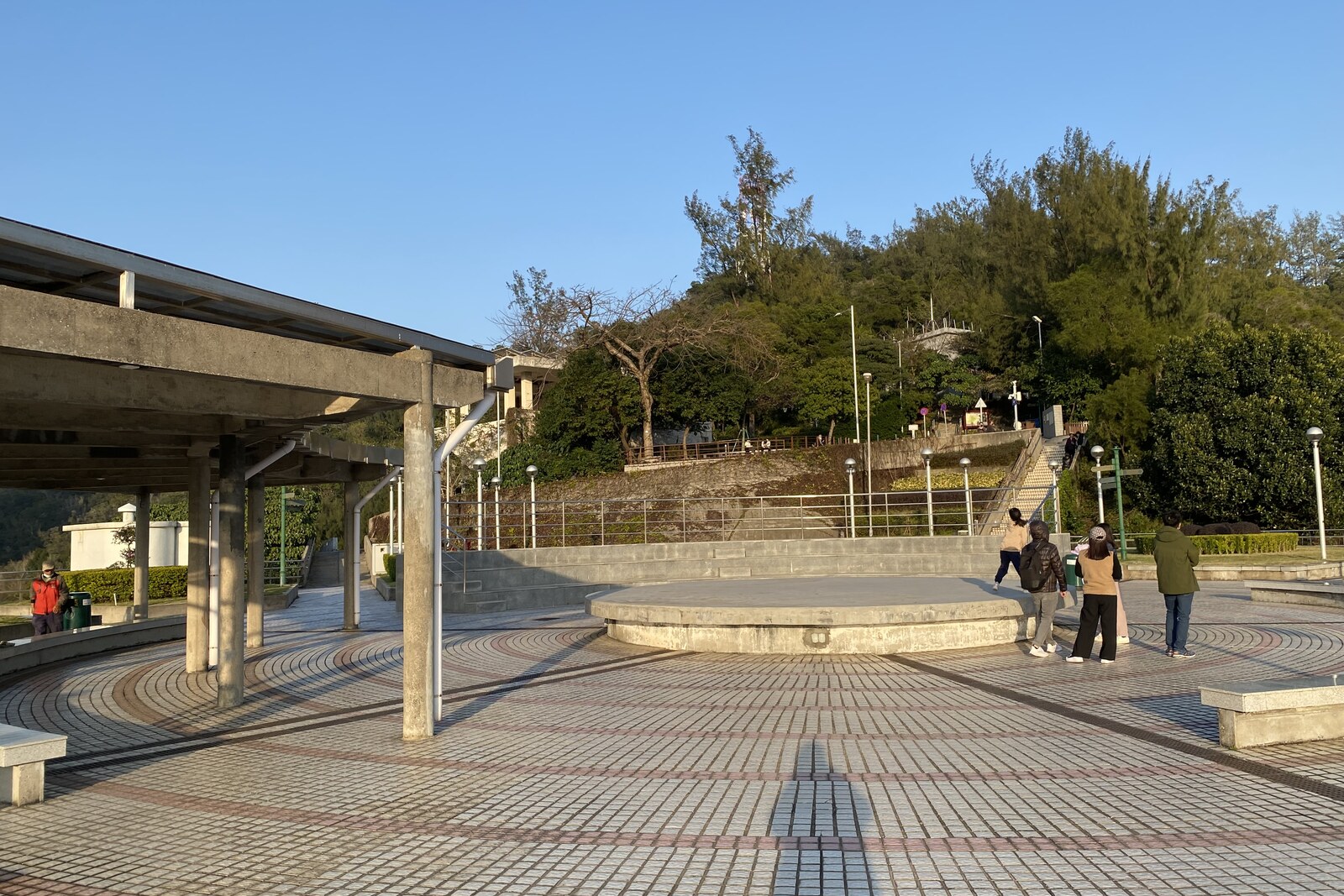
Look around first
What to notice
- The viewing platform's green roof
- The inclined elevator
- Development between Taipa's hills
- Cotai's towers
The story of the place
An elevated reservoir is hidden beneath the platform's green roof. Its supply of treated water helps maintain pressure in homes on the slope without the continuous operation of additional pumps. The platform's name came from two islets: the eastern, larger one was named Taipa Grande, while the western one was called Taipa Pequena. The channel between them was gradually filled with river sediment and human-made reclamation; where there was once water, streets and houses now stretch out, and beyond the lowland rise the towers of Cotai, created on land raised from the sea.
In the early nineteen eighties, the engineers of Macau's water-supply company had to run a water pipeline across the sea. Residents of Taipa and Coloane still depended on stored rainwater, mountain springs, and small local reservoirs. Their supply depended on the weather, so the islands lacked a reliable water supply.
As long as the population remained small, people put up with this. Then the University of East Asia—the future University of Macau—and a racetrack opened on Taipa. Both needed more water and electricity than the old island system could provide.
In nineteen eighty-two, engineers laid a water pipeline beneath the Governor Nobre de Carvalho Bridge. Treated water from the Macau Peninsula network flowed to the islands through it for the first time. Three years later, the water-supply company was also made responsible for serving Taipa and Coloane. In nineteen ninety-four, another pipe, about four kilometers long, was laid beneath the new Friendship Bridge. It could deliver up to sixty thousand cubic meters of treated water to the islands.
The water then had to be lifted up the slope. An elevated reservoir stores a supply and maintains pressure in homes without the constant operation of additional pumps. This viewing platform is built on just such a reservoir. Its Portuguese name means “Taipa Grande Lookout.” Taipa Grande was once the name of the eastern and larger of the two islets; the western one was called Taipa Pequena. A strip of sea ran between them, gradually filled with river sediment and reclaimed by people.
From here, the former islands are already hard to distinguish. Streets and houses lie between their hills, and Cotai, raised from the sea, extends to the south. In two thousand seventeen, Macau's first inclined elevator began operating to the reservoir, linking the old settlement with the trail on the slope.
The elevator ends at a green roof. Beneath it, treated water is stored—the water that engineers first brought to Taipa through pipes beneath the bridge in nineteen eighty-two.
Useful on site
The viewing platform and Taipa Grande Natural Park are open all day; check the elevator hours on site.
Checked: June 27, 2026. Check the official source before visiting.Clear weather is needed for distant views; at the edge of the platform, do not go beyond the barriers or block the passageway for a photograph.