 Guide On Map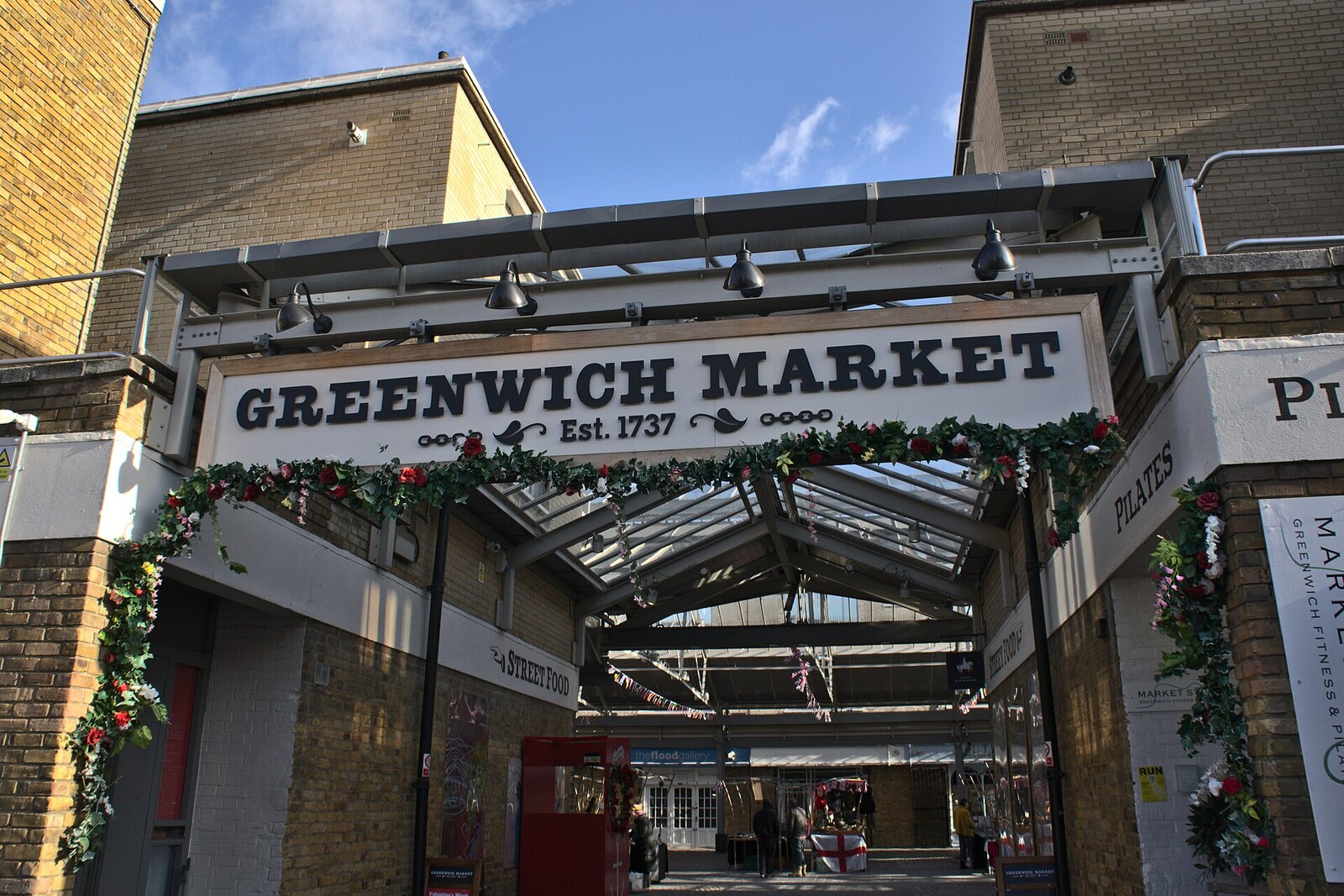
Look around first
What to notice
- Arch with the date 1831
- Inscription about false and just weights
- Steel-and-glass roof
- Market stalls
The story of the place
In eighteen twenty-four, the trustees of the toll road to Woolwich met to alter its route through Greenwich. Edward Hawke Locker, secretary of the Greenwich Hospital for Seamen, saw in the roadworks an opportunity to move the market and gather the hospital’s income-producing property around it. Locker was responsible for the institution’s property: traders’ payments were part of the funds used to support old and injured seamen.
The hospital’s governors had received the right to establish a market as early as seventeen hundred, and trading began in seventeen thirty-seven. At that time, the stalls stood by the hospital’s western gate. Butchers, fish sellers, and farmers from Kent paid for pitches; peddlers of crockery and household goods set up outside. After the new development of eighteen oh eight, the market was pushed into the neighboring streets. There, a seller could place a cart farther from the collector, keep the pitch fee, and still meet customers.
Locker proposed buying the closed Powis Brewery—it occupied most of the land beneath the present market. The architect Joseph Kay put Locker’s idea onto a plan: a market yard within the block, shops around the perimeter, and streets leading to the hospital. For the construction, the commissioners bought additional plots, including through compulsory purchase. In eighteen thirty-one, the new market opened. Separate covered rows were intended for meat, fish, and vegetables, while visiting traders were left pitches for crockery and small goods. The date of construction was placed above the entrance.
The fence and roofs did not make sellers come inside. On Saturdays, people came to Greenwich in covered carts and traded directly in the streets. Peddlers carried fish, poultry, vegetables, and fruit throughout the parish. This was convenient for customers, and traders did not have to pay for a stall. By eighteen forty-five, the meat rows were scarcely used, fish sellers avoided the pitches assigned to them, and income from market fees had fallen noticeably.
The hospital commissioners asked Parliament to grant them the right to set binding rules and collect fees. In response, Greenwich residents submitted a petition. They wrote of poor peddlers who had earned their living for years by calling out the names of their goods in the streets. If the law were passed, the petition’s authors warned, these people would lose their livelihood and would themselves become dependent on parish support.
Parliament passed the law in eighteen forty-nine. The commissioners received the right to set fees, allocate pitches, prohibit peddling within the market, and seize spoiled produce. Within a few years, revenue from fees had risen. A later attempt to restore street sellers’ right to trade freely outside the yard never became law. The hospital’s governors achieved what Locker had chosen this site for: trade could at least partly be kept within a defined area.
The food market survived here for more than another century, but after the Second World War wholesalers began to leave. By nineteen eighty-five, trading took place only occasionally, one day a week. The governors then began letting stalls to craftspeople and antiques sellers, taking Camden Lock Market as their model. On May fourteenth, the first new crafts market opened, and workshops soon occupied the shops around the perimeter as well.
The present single steel-and-glass roof appeared later than the first rows, but the entrance from the college side retains the date eighteen thirty-one. It also reads: “A false balance is an abomination to the Lord, but a just weight is His delight.” Beyond the arch, prepared food, jewelry, prints, and ceramics are sold—each from an assigned pitch for which the trader pays.
Useful on site
The market is open daily 10:00–17:30; closed at Christmas and on the first six Mondays of the year.
Checked: June 22, 2026. Check the official source before visiting.First walk all the way through the market to see how it is laid out, and only then choose food or handmade goods. Buying anything is not required: the architecture, inscriptions, and flow of the rows continue the route’s story on their own.